"The novel dramatises the economic inequality of women, showing how women had to marry undesirably in order to gain some financial security. It is no exaggeration to see the system as another form of prostitution." To what extend is this true of Pride and Prejudice?
Through Pride and Prejudice, Jane Austen creates a small sheltered world which reflects many aspects of nineteenth century, England. An aspect which is dramatised in the novel is the economic inequality of women. This inequality forces many women to marry undesirably in order to gain some financial security. Marrying a wealthy man is often women's only chance of acquiring money in this society. This is often seen as another form of prostitution. In which prostitution is, women selling themselves for security by marrying a man purely for his money. Although some women of that period sought after a man for his money many women such as Elizabeth did not settle for a man purely because he was wealthy.
 Jane Austen, Watercolour and pencil portrait by he...
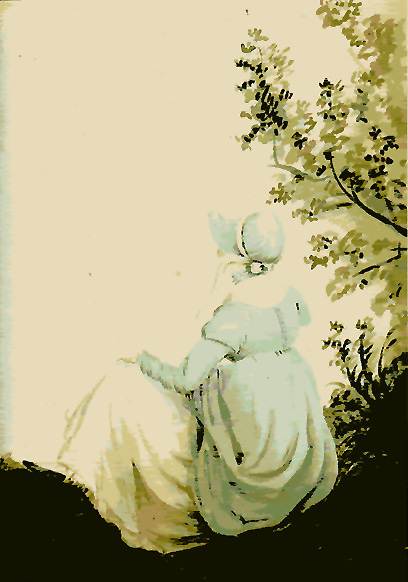 English: Back View of Jane Austen, Watercolor
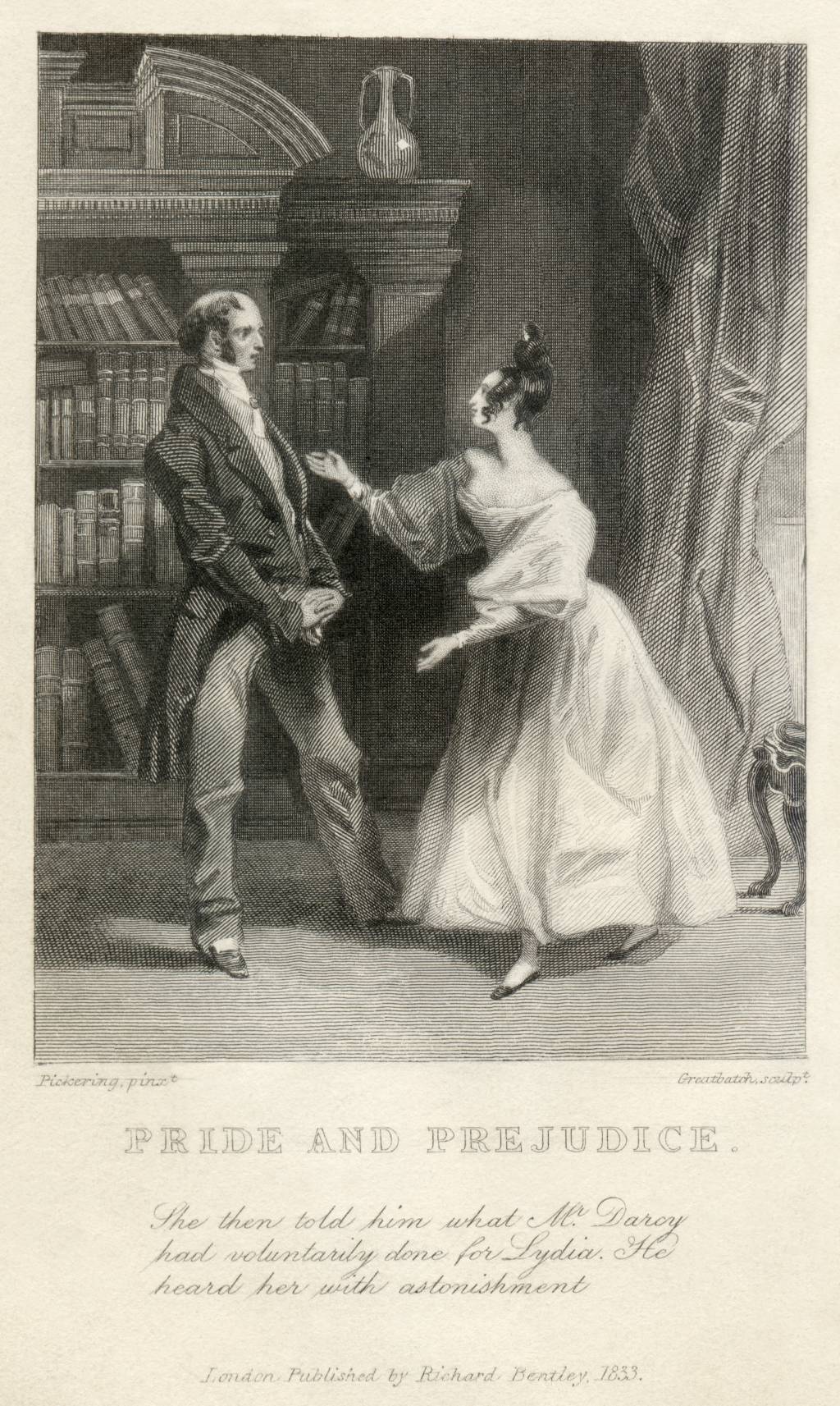 English: Français : Une gravure de 1833 illustran...
Within Pride and Prejudice prostitution is also evident in marriages that are passed on passion, not reasoned love. Jane Austen disapproved with loveless marriages and the characters in her novel who have marriages like this often later suffers.
Although many women in this society were seen as prostituting themselves they had little else to do. Women of that society were greatly disadvantaged compared to men. Women had virtually no means of creating a wealth for themselves. Their education which women today rely on to get an occupation, was limited to domestic lessons. So their education was not helpful in allowing women to get a job. But in that society women were no expected to have a job so their education was not necessary. Without a job women had no means of earning money for themselves.