Coral reefs are arguably the world's most beautiful habitats. Coral reefs have been called the rainforests of the oceans, because of the rich diversity of life they support. Scientists have not yet finished counting the thousands of different species of plants and animals that use or live in the coral reef. Coral reefs are the largest biological structures on the planet, with the largest being the Great Barrier Reef covering over 2000 kilometers along the east coast of Australia (Aldridge, 1995). The Great Barrier Reef is said to be 500,000 to 2,500,000 years old and is said to be visible from the moon (Goreau, 1987).
There is only one problem with this beautiful structure and that is the carelessness of man. Many of the coral reefs of the world will continue to disappear due to stress from human activities such as cyanide and dynamite fishing, and pollution from untreated wastewater and agricultural runoff, as well as those related to climate change, unless immediate action is taken.
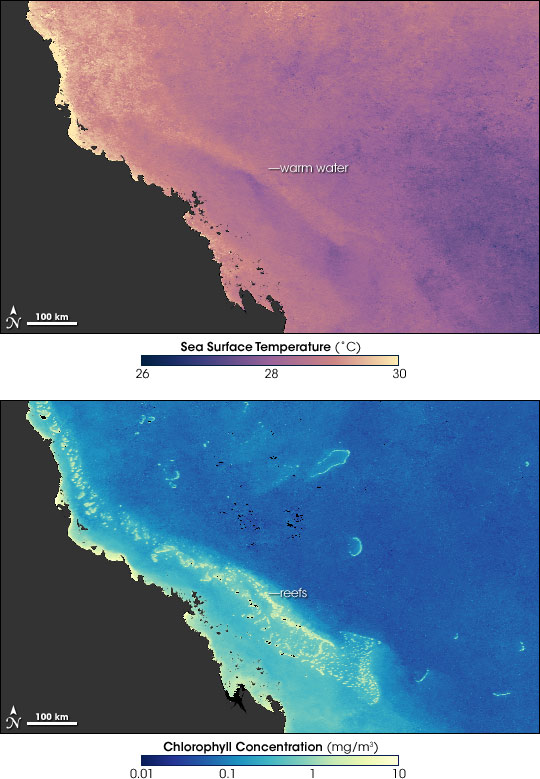 Recent climate change reports have highlighted the...
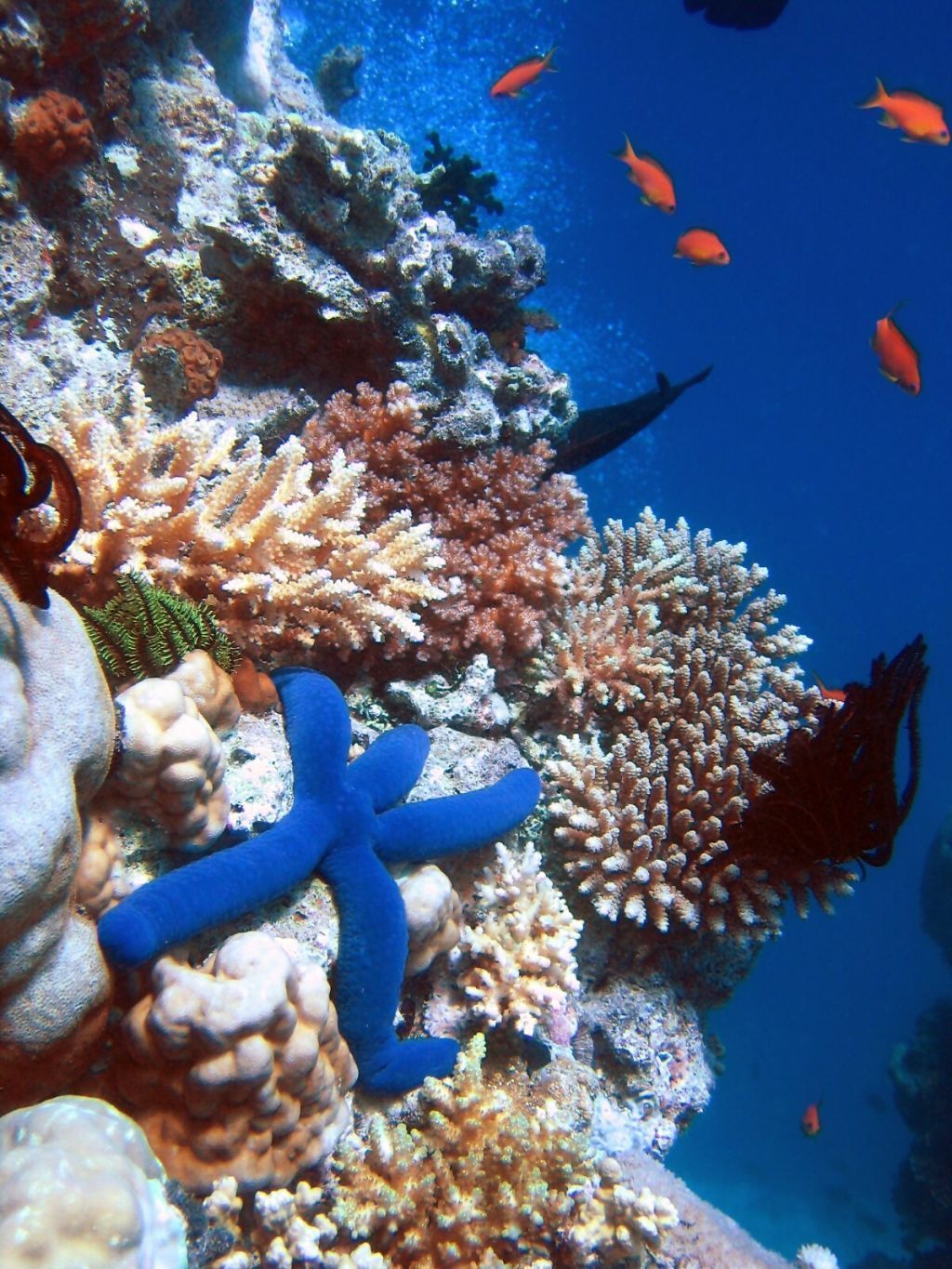 English: A Blue Starfish (Linckia laevigata) resti...
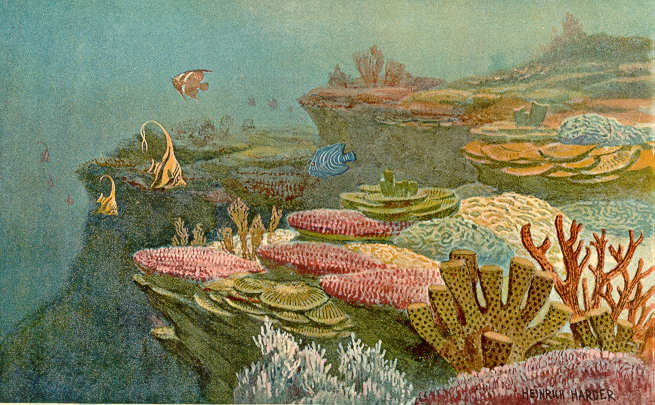 Ancient Coral Reefs Español: Antiguas Arrecifes d...
The importance of saving coral reefs is a powerful reason to protect them from becoming extinct. The significant importance of the coral reefs include providing shelter for millions of animal and plant species, protecting beaches from waves and erosion, and providing life saving medicine.
Coral reefs must be protected in order to provide food and shelter to more than a million species of ocean life. "About 25 percent of all saltwater species depend on reefs to survive," states McCormack (2002, p. 4). Nearly one-third of the Earth's fish species live in or along these "multi-towered biological marvels" which cover about 160,000 square miles in tropical and subtropical regions (Russell, 1998). At any moment, crabs, starfish, and snails share reef space with eels, seahorses, and schools of colorful fish while mussels, octopus, and giant clams...