Psychology: Freud vs Skinner. The application of theorists in clinical practice.
PYSCHOLOGY: ASSESSMENT PART 1
APRIL 2004
A.
There are different models and theories of the psychological model of mind. But among these all, I preferred Freud's theory the most.
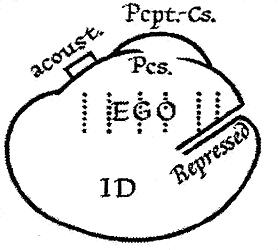
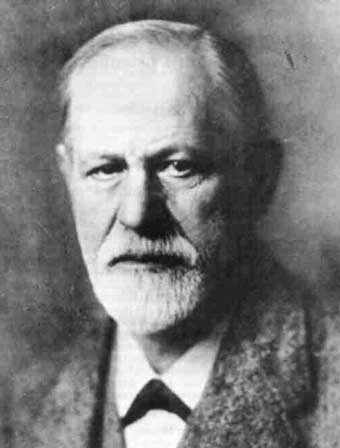
Sigmund Freud's theories of personality are the best known of all psychological theories and the most controversial as well. It was Freud who asserted that "reason does not rule behavior". It was his supposition that unconscious psychological forces were a strong force affecting individual thought and behavior. He stated that these forces originate in the emotions of childhood and continue to affect an individual throughout their lifetime. In his view, man was driven by primal instincts of the unconsciousness, and it was these instincts that lead to our greatest achievements, as well as to our worst side, like poverty, war, crime and mental illness. Freud postulated three levels of mind: the conscious mind, the preconscious mind, and the unconscious mind. He felt that our conscious mind only accounted for a small portion of the totality of the self, and the vast unconscious mind accounted for the rest (Bethel, 2004).
Freud believed that much of the unconscious content that affects humans is made up of inherited primal fantasies based on phylogenic experiences, that is fantasies that are species based, not individual based. Freud's main interests lay in understanding how personal experience shaped and formed the unconscious mind. It was his assertion that this formative pressure occurred through a process known as repression. Freud's "hedonic hypothesis" stipulated that people seek pleasure and avoid pain. It was also Freud who initiated the concepts of the id, ego, and the super-ego (Bethel, 2004).
The id is primarily concerned with biological drives and survival and is nearly always unconscious. It operates by the pleasure principle and is hedonistic, that is, it seeks to satisfy urges and...
Reviews of: "Psychology: Freud vs Skinner. The application of theorists in clinical practice."
:
More Psychological Theories & Authors
essays:
The three main theorie of Sigmund Freud and his contribution to society.
... and psychology. His theories revolutionized the thoughts and perceptions of the time. Though they met with some resistance, Freud's theories have helped to shape modern thought in medicine, society and the treatment of the mentally ill. Sigmund Freud has ...
Who had the Greater impact on Western civilization: Charles Darwin or Sigmund Freud? Takes the position of Fread having a greater impact.
... were. "Sigmund Freud, physiologist, medical doctor, psychologist, and father of psychoanalysis, is generally recognized as one of the most influential and authoritative thinker of the twentieth century." Freud was responsible for making the idea of the conscious mind and the unconscious ...
Compare And Contrast The Theories Of Personality D
... in psychology vital for perception of human beings. Different theories of personality adopt different levels of explaining features of human beings. Two theories meet the conditions of personality and theories of development, Freud's psychoanalytic theory later ...
Erikson's Theory of Psychosocial Development. (Focus in this essay is on Erikson's first three stages of Growth.)
... many of his beliefs and notions appear to be derived from his own personal psychological perplexities. In addition, I will also briefly describe Freud's theory of psychosexual ... consequence of his work with the mentally ill in ...
An indepth analysis of Vygotsky's socio-cultural collaborative theory of learning and teaching using scaffolding, technology and the social environment.
... learning of energy issues via computer network. Distance Education, 20(1), 129-143. Bonk, C. J. & Kim, K. A. (1998). Extending sociocultural theory to adult learning. In M. C. Smith & T. Pourchot (Eds.), Adult learning and development: Perspectives from Educational Psychology ...
Theory of Moserecon
... capabilities of learners found throughout classroom all over the country. ReferencesBandura, A. (1977). Self efficacy: Toward a unifying theory of behavioral change. Psychology Review ... their personal goals in light of their achievement efforts ...
Two Factor Theory of Intelligence VS. Theory of Multiple Intelligences
... Department of Psychology. Retrieved August 9, 2007. http://www.psych.usyd.edu.au/difference5/scholars/spearman.htmlFinding the G-Spot: The Relationship theory of IQ ... a theory of multiple intelligences. He felt as though previous definitions of intelligences were to narrow and mental tests ...
Countertransference
... all conscious and unconscious feelings, thoughts and fantasies of the ... as I did not want him to stir up more emotional responses in me. Since I had not established a strong foundation with Mr. G, when my feelings came into place ...
Sharon33
This is a very informative, and effective essay! Good Job!
0 out of 0 people found this comment useful.