Redundant Array of Independent Disks (more commonly known as a RAIN array)
RAID
In computing, a Redundant Array of Independent Disks (more commonly known as a RAIN array) is a system of using multiple hard drives is a system for sharing or replicating data among the drives
The basic idea behind RAID is to combine multiple small, inexpensive disk drives into an array to accomplish performance or redundancy goals not attainable with one large and expensive drive. The underlying concept of RAID is that data may be distributed across each drive in the array in a consistent manner. To do this, the data must first be broken into consistently sized chunks, often 32K or 64K in size, although different sizes can be used. Each chunk is then written to a hard drive in RAID according to the RAID level used. When the data is to be read, the process is reversed, giving the illusion that multiple drives are actually one large drive.
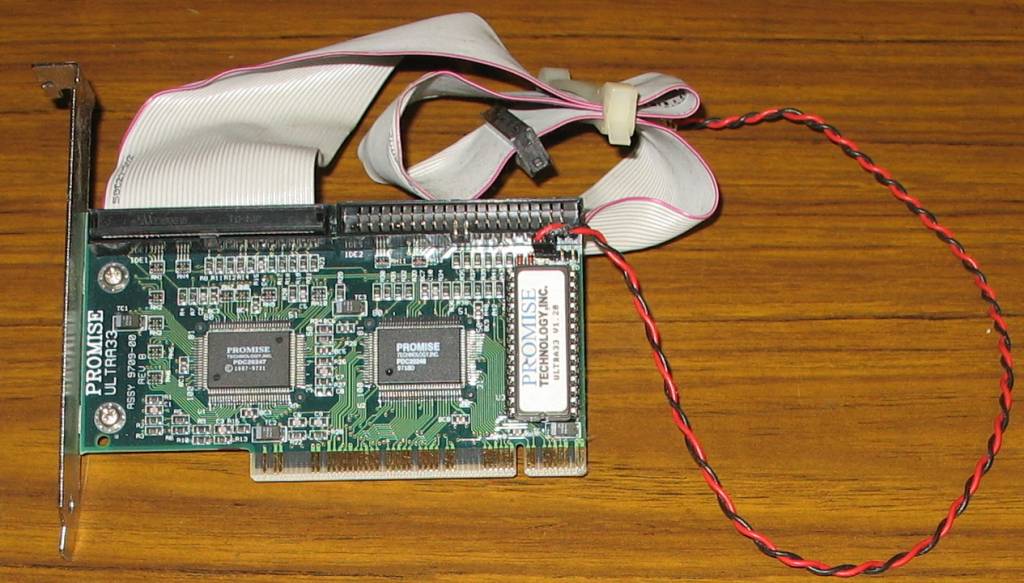
The main benefits in which RAID will provide are data protection and availability. RAID protects your data in the unlikely event of a drive failure. If a disk drive fails in a RAID system, network clients are unaware of the incident and they continue on with their work as if nothing happened. The RAID system continues to perform read/write operations and if a hot spare is available then it automatically becomes part of the array and data that was on the failed drive is automatically regenerated onto this new drive in the array. The various levels of RAID architectures as described by Charles M. Kozierok are defined below.
RAID is a method of combining several hard drives into one logical unit. It can offer fault tolerance and higher throughput levels than a single hard drive or group of independent hard drives. RAID stands for Redundant Array of Inexpensive (or sometimes...
More Computer Science
essays:
The Internet, any source of information right under your finger at the press of a button
... are more commonly known, are a world of their own. This world of news, debate, and argument is generally known as ... computer lab at Prep. The server usually has a large hard drive and possibly share a printer. The computers connected to the ...
"Peer-to-Peer File Sharing Networks" This paper outlines the history of P2P file sharing networks such as Napster, Gnutella and Kazaa, and discusses their impact on society and the music industry.
... s hard drives. The nodes (or peers) function as both suppliers and consumers of shared ... is more difficult to monitor. (10) P2P File Sharing Security Beyond copyright infringement issues, peer-to-peer networks pose a significant threat to both corporate and individual security. A common exploit of P2P ...
Application Devices
... writing of the hard disk, which furnishes the largest amount of data storage for the PC. Although the hard disk drive (often shortened to "hard drive") and the hard disk are ... type of memory that is faster and more reliable than the more common DRAM ...
Lessons in E-learning and How to Move it Forward
... need more thorough product knowledge, or that clerical staff may need to understand how compliance obligations (for example, on data protection) may impact on their daily work. Development Development is the process of building ...
Memory
... hold data, dynamic RAM being the more common type. Dynamic RAM needs to be refreshed thousands of times ... two possible operating modes, static and dynamic, The static Ram consists essentially of internal flip-flops that store the binary inforation. The stored ...
Prototyping
... develop more realistic prototypes of these inputs. Arguably, the most commonly used automated tool for input design is the PC-database application development environment. While Microsoft Access is not powerful enough to develop most enterprise-level applications ...
Various Levels and Types of RAID.
... utilizing RAID. RAID is an acronym for Redundant Array of Independent Disks. The basic idea behind RAID is to combine multiple small, inexpensive disk drives into an array to accomplish performance or redundancy goals not attainable with ...
Evolution of Programming anguages.
... expense of being hard to read; but since it fixed most of the mistakes Pascal had, it won over former-Pascal users rather quickly. C is very commonly used ...