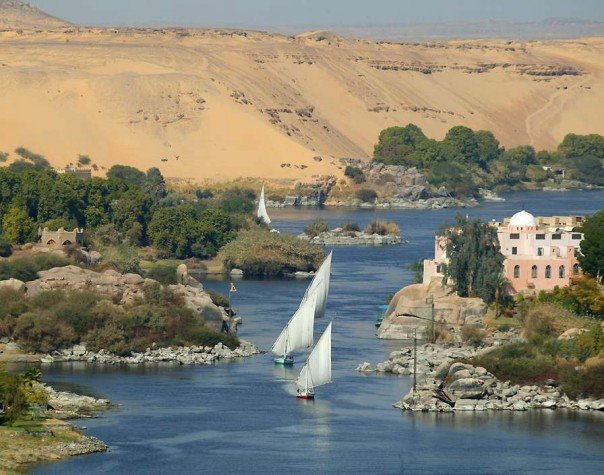
This report is about ancient Egyptian pyramids and how they were built. also includes information on why they were built. Title: Egyptian Pyramids
The ruins of 35 major pyramids still stand near the Nile River in Egypt. Pyramids were built as the home of the everlasting for the king, the pharaoh's Castle of Eternity. The ancient Egyptians believed in life after death. The pyramids were the homes for Egyptian royalty when they died. Inside the pyramids with the royal body, were kept precious treasures and gold so that the body would live happily in the so called "Afterlife".
The reason that the ancient Egyptians believed in the afterlife was due to the following legend: "Osiris, a great and benevolent king on earth, was murdered by his jealous brother, Set, who tore the body into sixteen pieces and scattered the pieces over Egypt. Osiris's wife, Isis, was grief-stricken. She managed with great difficulty to collect the pieces and bind them back together with strips of linen cloth. Anubis, god of the Netherworld, helped her with his majic spells. Life was breathed back into Osiris's body. Osiris could not return as a man to earth, but he triumphantly entered the Afterworld to live as a god and rule the region of the dead". Osiris was great enough proof for the ancient Egyptians to believe in the Afterworld. However, to be assured of life after death, there was only one condition: The body had to be preserved.
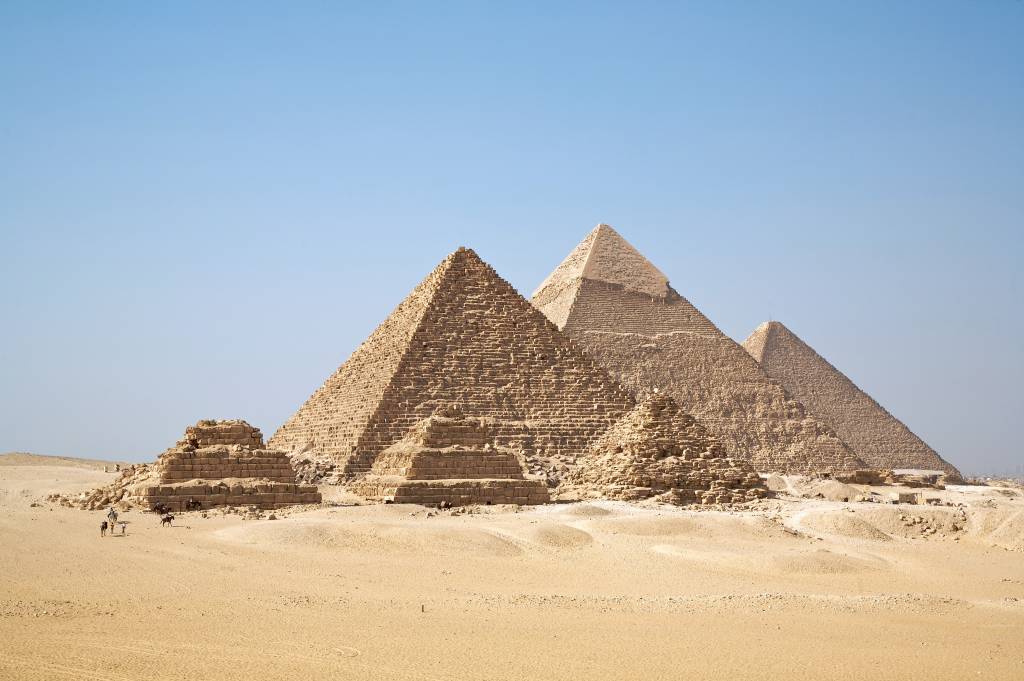
Space availability and flatness of land are taken into consideration when choosing the site of a pyramid. For example Cheops' pyramid was built on solid limestone that was big enough to use to build the biggest pyramid ever, plus a series of buildings that would surround the pyramid. Workmen had to clear the area by scooping the sand into baskets that were dumped as far as a half a mile away in the desert. After the sand was cleared...
Reviews of: "This report is about ancient Egyptian pyramids and how they were built. also includes information on why they were built. Title: Egyptian Pyramids"
:
More Ancient Egypt
essays:
Ancient Egypt, the Nile River, sub-Saharan Africa, the Middle East and their relationship.
... the Egyptians ate were bread made from the grain grown with the precious silt and water from the Nile River. Barges and boats made with papyrus reeds or wooden planks (used after 3 ... the Ancient Egyptians were such a successful people, the moisture from the river was the only thing keeping Egypt from ...
Report on Ancient Egypt
... the netherworld, the land of the dead. Horus, who was the son of Osiris and Isis, later defeated Set in a great battle and became king of the earth. The Ancient Egyptians also believed in life after death, in ...
Ancient Egypt
... time. Ancient Egyptians took the seasons to mean life was a cylindrical process, and that there was life after death (David 81). There were two distinct groups of gods: local ...
Ancient Egypt
... in Egypt. The ancient Egyptians developed the worldÕs first national government. Their religion was one of the first to emphasize a life after death. They ...
EGYPTIAN CIVILIZATION
... birth, death and rebirth. The pharaohs were seen as gods, divine representatives on earth who, through rituals, ensured the continuation of life. After death, they became immortal, joining the gods in the afterworld. The Egyptians also ...
How the great pyramid was real
... the Egyptians believed life after death was eternal, and that the soul rested in the body of the dead, and that the soul traveled between earth and another world. Tombs provided houses for their souls to live. "It ...
Songs and Poetry in Ancient Egypt
... the pharaoh was placed a “Book of the Dead”. This book was filled with prayers and incantations that would guide the soul in the afterlife. Although the ancient Egyptians didn ...
Sumerian and Nile Valley civilizations and the comparison between both.
... in Egypt had an animal symbol that people considered sacred. Egyptians believed strongly in the afterlife. At first, people believed that only pharaohs and a few others had an afterlife. Later, Egyptians believed everyone, including animals, had a life after death ...
Great Essay
This essay is an A+ all the way, great way to use the light textures of eximplifying the eqyptian architure.
1 out of 1 people found this comment useful.