Respiration
okay excellent
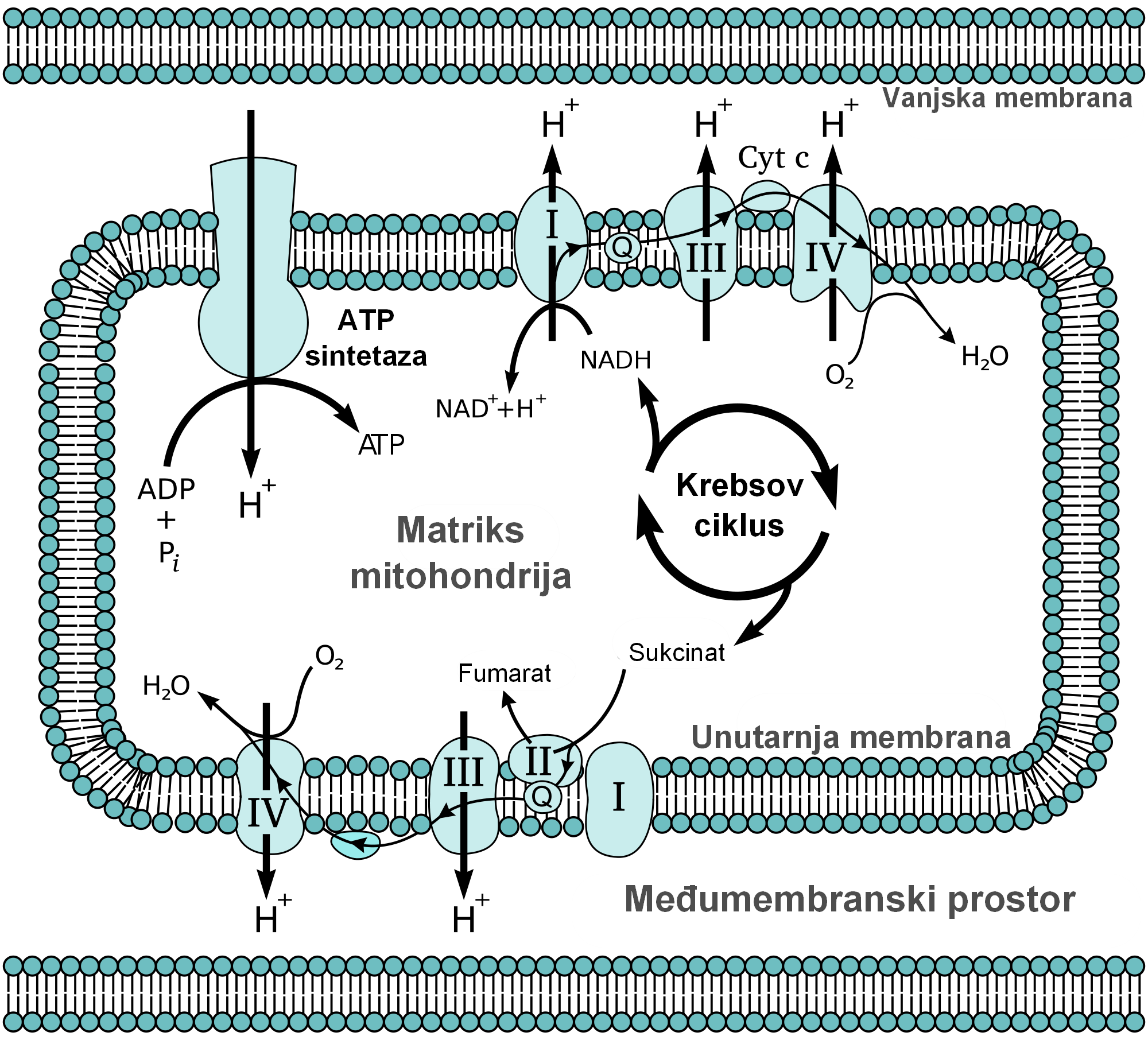
Mitochondria are responsible for energy production. They are also the responsible location for which respiration takes place. Mitochondria contain enzymes that help convert food material into adenosine triphosphate (ATP), which can be used directly by the cell as an energy source. Mitochondria tend to be concentrated near cellular structures that require large inputs of energy, such as the flagellum. The role of the mitochondria is very important in respiration.
In the presence of oxygen, pyruvate or fatty acids, can be further oxidized in the mitochondria. Each mitochondrion is enclosed by two membranes separated by an intermembrane space. The intermembrane space extends into the folds of the inner membrane called cristae which dramatically increase the surface area of the inner membrane. Cristae extend into a dense material called the matrix, an area which contains RNA, DNA, proteins, ribosomes and range of solutes. This is similar to the contents of the chloroplast stroma and like the chloroplast, the mitochondrion is a semi-autonomous organelles containing the machinery for the production of some of its own proteins. The main function of the mitochondrion is the oxidation of the pyruvate derived from glycolysis and related processes to produce the ATP required to perform cellular work.(Campbell 182-9)

Pyruvate, or fatty acids from the breakdown of triglycerides or phospholipids, pass easily through pores in the outer mitochondrial membrane made up of a channel protein called porin. The inner membrane is a more significant barrier and specific transport proteins exist to carry pyruvate and fatty acids into the matrix. Once inside the matrix, pyruvate and fatty acids are converted to the two carbon compound acetyl coenzyme A (acetyl CoA). For pyruvate this involves a decarboxylation step which removes one of the three carbons of pyruvate as carbon dioxide. The energy released by the oxidation of pyruvate...
Reviews of: "Respiration"
:
More Human Biology
essays:
This essay follows the evolutionary process of life in every aspect from comparing the big bang and biblical beliefs to human procreation.
... turn cellular respiration, a process for creating energy. Adenosine Triphosphate, or ATP, is where you start out with adenosine and three phosphates or energies. As ...
The effects of altitude on human physiology.
... of cellular respiration is a complex series of chemical steps that ultimately allow for the breakdown of glucose into usable energy in the form of ATP (adenosine triphosphate). The ...
The effects of altitude on human physiology
... of cellular respiration is a complex series of chemical steps that ultimately allow for the breakdown of glucose into usable energy in the form of ATP (adenosine triphosphate). The ...
THE EFFECTS OF ALTITUDE ON HUMAN PHYSIOLOGY
... of cellular respiration is a complex series of chemical steps that ultimately allow for the breakdown of glucose into usable energy in the form of ATP (adenosine triphosphate). The ...
A critical and in depth analysis of pituitary dwarfism!
... of the G protein fragment by transforming a molecule of ATP (adenosine triphosphate) into a smaller molecule called cyclic AMP (CAMP) (see fig ... can attach to receptor proteins that are present on the membrane surface of target cells (see fig 1). The shape of the ...
What are the different ways, physiological and pharmacological, in which blood vessel diameter can be modified? Angelina Lorenos
... the membrane bound phospholipase C enzyme. This catalyses hydrolysis of the membrane phospholipid phosphatidylinositol-4-5-bisphosphate to Inositol triphosphate (IP3 ...
Transitional cell carcinoma of the bladder. causes, treatment, staging, metabolism, extracellular matrix's role, angiogenesis, cell cycle, gene regulation, tumor suppressor genes, and oncogenes
... to DNA replication and mitosis. Phosphorylation is a way to switch proteins on and off. Kinases like CDKs transfer the [gamma] phosphate of adenosine triphosphate to ...
Theories of aging, including the Telomere theory, oxidative stress and calorie restriction theories in regards to cell senescence
... and Solfrizzi, V., 2006, Role of Olive Oil and Monounsaturated Fatty Acids in Mitochondrial Oxidative Stress and Aging, Nutrition Reviews, vol. 64, no.10, pp ... Merry, 2004). Low calorie diets may slow oxygen use in mitochondria, where cell metabolism takes place. Low calorie diets may force ...
Excellent
Great Job. Defenetly A+
0 out of 0 people found this comment useful.