RESPONSE TO "THE ALLEGORY OF THE CAVE"
The faith most people have in their individual perceptions of reality is brought into question upon reading Plato's Allegory of the Cave. In this excerpt from The Republic, Plato questions the validity of our perceptions by using the analogy of the cave, where prisoners are kept underground and forced to look upon the shadows of "real" objects. Kept there since birth, they have taken the shadows to be reality, and with their necks chained so that they cannot look about, they have assumed that these shadows of reality are reality itself.
So let us go one step further, and place ourselves in the situation of these prisoners, and assume that we too have no knowledge of our captivity or of the misrepresentation of reality that we have become accustomed to since birth. So then who are those that have seen the sun and been freed from this misleading prison? Are there any? This is the question that interests me most.
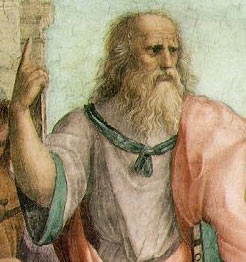 English: The School of Athens (detail). Fresco, St...
 Perception
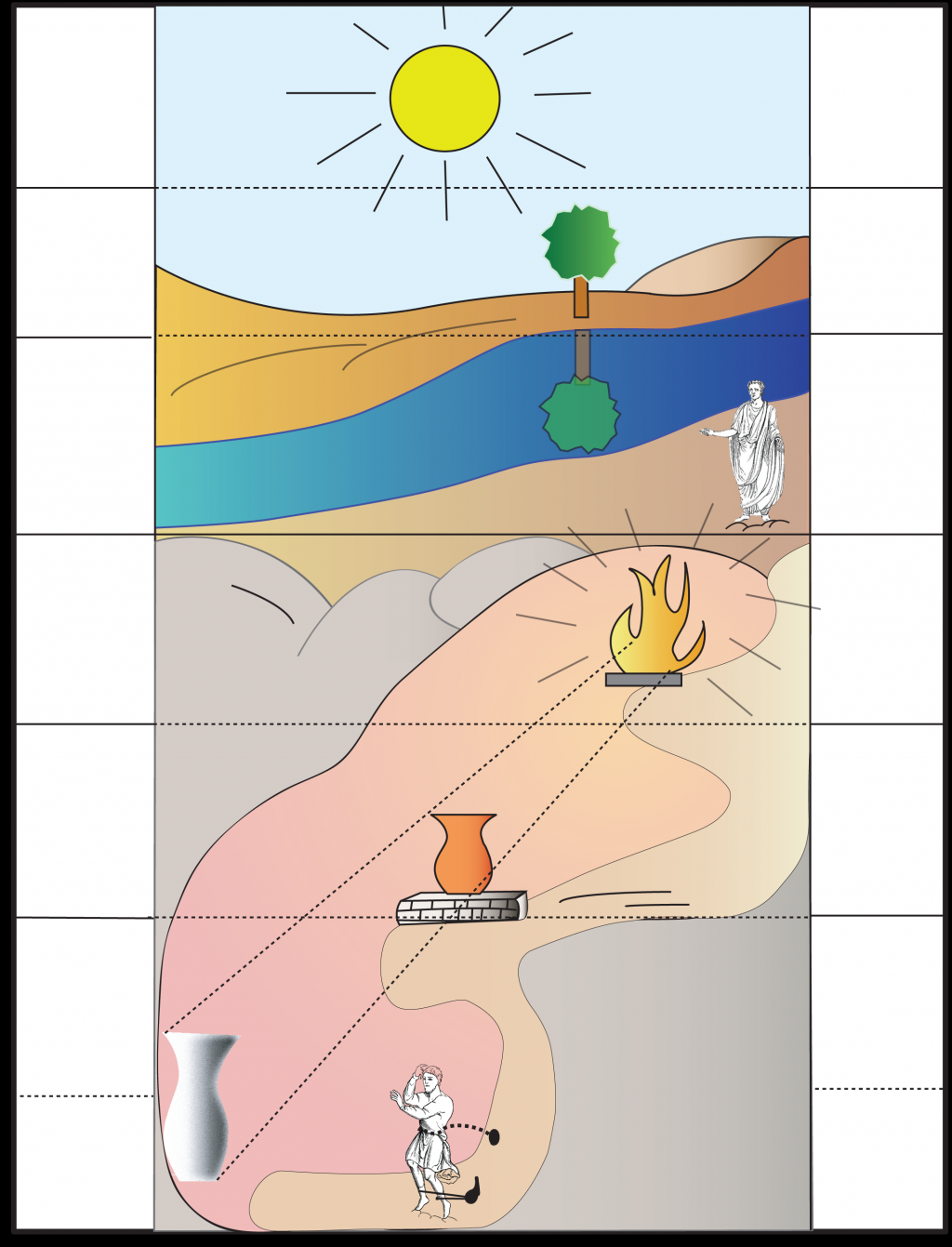 Allegory_of_the_Cave (Plato)
Are they the insane, the religious fanatics, the serial killers or maybe the hermits? Or is humanity entirely unenlightened with no one that has succeeded in escaping captivity (or perhaps no one that has wanted to succeed).
Plato reasons that until we have been outside the box of our reality, there is no wisdom in our false sense of perception. At the same time, Jung said that there is no reality except in perception. Which stands to reason, perhaps there is no reality, only our individual perceptions. So then is wisdom indeed nonexistent, or is it merely in accepting that perception is not necessarily reality and vice versa? Or maybe we need only to be open to the idea of our reality being false; and that to accept the...
Forms?
A response to Plato's allegory of the cave with no reference to the forms is a limited response I'm afraid. Perception whether it is of the shadows on the cave wall or what 'we' see everyday is critcised by Plato because it is a reality that is always changing (changability being equated with unreality to some extent by plato). Whereas rational understanding discovers the essense of things, or the unity in diversity. We can see many horses or many goods but until we think (rather than merely perceive or see) what is common to all we begin to relise the true nature of these things. Horses come in different sizes and shapes, breeds and colours but there is something the same about all horses something like the form of a horse.
0 out of 0 people found this comment useful.