A Dolls House
After reading "A Dolls House" by Henrik Ibsen, I felt that I had a better grasp of the relationship between men and women in the Victorian era. The man was all- powerful in this time; women were well in the background, subservient and dependent on men in all areas of her life. It was surprising to me that women were not allowed to sign legal documents, such a personal loan without a man's signature. Total dependency had to be a tough pill to swallow for strong willed women. I am sure that many clever and cunning women were able to manipulate the men in their lives, letting the man believe that they were in full control of the relationship.
However the majority of women who were not able to assert themselves as forcefully as I am sure they wished. Men were able to run the household through kind or cruel intentions.
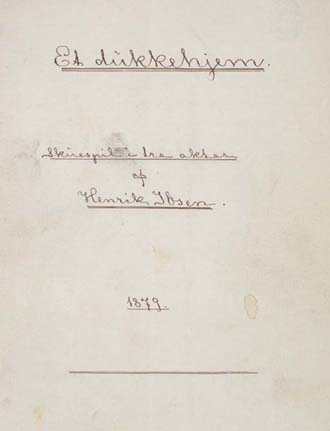 Title page in the manuscript of A Doll's House, pl...
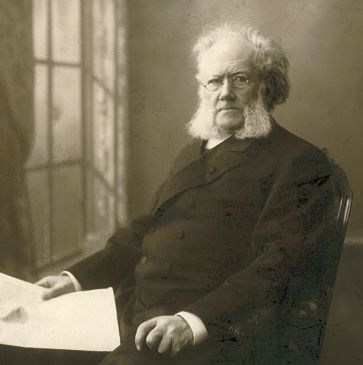 English: Detail of photograph taken in 1900 of Hen...
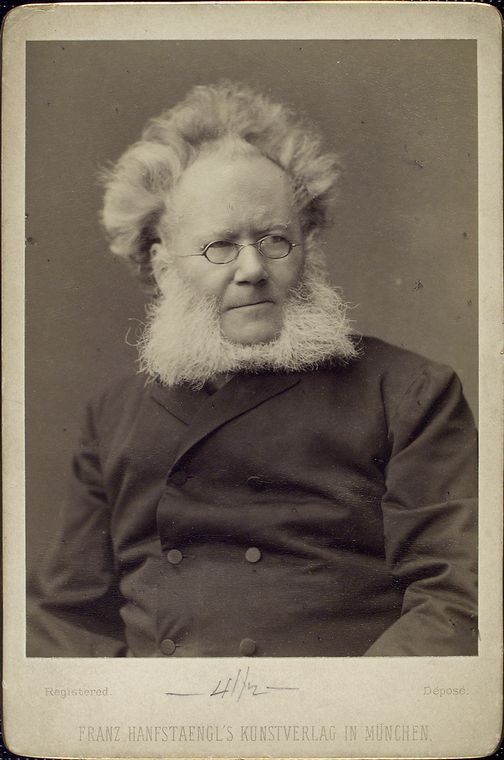 English: Norwegian writer Henrik Ibsen photo portr...
In Nora's case Torvald was a kind man, however it seemed to me that he was always belittling her with subtle, gentle verbal abuse that Nora absorbed like a sponge. Nora tolerated these actions as long as there was security for her and her children. Women of this era married mainly for security rather than love. If there was love in a marriage it was a by product of chance and a blessing, not the usual state of affairs between men and women.
When Nora finally realizes that Torvald is not a man of honor the need for security and dependence is broken. Nora prays for a "miracle of miracles" hoping that Torvald will come to her rescue and be her Knight on a white horse and save her from dishonor for the illegal loan she signed for. She prayed that Torvald would...
Interesting, but...
It could use some reorganizing. Not only that, but one could argue that the actual focus in this play was on finances, rather than the struggle of a woman.
0 out of 0 people found this comment useful.