Rhetorical Analysis of Orwell's "Shooting an Elephant"
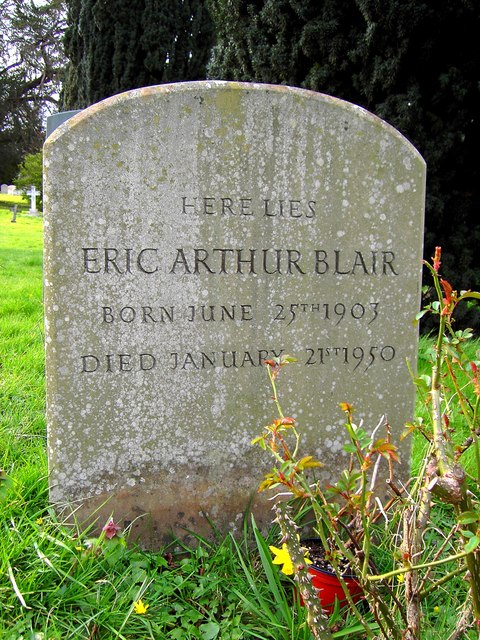
While reading the essay Shooting an Elephant, first published in 1936 by Eric Blair under the pen name of George Orwell, one gets captivated by the intricate web of rhetoric that Blair weaves throughout the piece.
Surely, the reason this essay keeps the attention of the reader so well is because Blair writes with an unmistakably strong exigency. It is this need of his to tell the world the truth about imperialism that enables him to write something so captivating.
Blair found himself in Moulmein, Burma, as a police officer of the town. He found out what imperialism really is in its naked form, and the nature of it, from an incident in which he was practically pushed into shooting an elephant by the Burmese people. Although he did not want to shoot the elephant, nor did he have to, he ended up doing so due to the immense pressure he felt during the time. The realization dawned upon him that the Burmese who are being oppressed by his people are actually the ones who are in complete control. This sudden enlightenment brought about by this somewhat bizarre occurrence is what prompted Blair to write this essay in the first place.

He realized that while it may seem that the "white man" in the East is above the people living there and is there to teach them the "right" ways, he is actually just some pawn that can be moved about the board by the people that he is there to oppress. Coming from their "superior" civilizations falsely believing that they must educate the rest of the world, the imperialists are only doing damage to themselves. Blair's argument is made clear: that when these so-called white men turn despotic, it is their own freedom that they hinder. That is the...
More European Literature
essays:
An analysis of Blake's poem "The Lamb"
... "We are called by His name" (18). The poem shows Blake's unwavering reverence to the Lord God, and the sacrifice of his son so that we can ... evokes an ecclesiastical tone through the use of antiquated English, which is reminiscent of the King James version of the bible. In lines 9-10, when the speaker ...
A Rhetorical Analysis of "On Liberty" by John Stuart Mill
... The subjection ofWomen. N.p.: W. W. Norton & Company , 1997. Moulder, Amanda. RHE 306. Course home page. College of Liberal Arts, Universityof Texas, Austin. 28 Mar. 2006 . Path: Microtheme 2/28. Wong, Justin. "Rhetorical ...
Hamlet. Critical analysis of shakespeare's hamlet
... practically transformed into a different person and doesn't seem to be completely sane. Next is another situation that cannot be totally explained. The ... is the question:" (Act 3 Scene 1 line 64) speech. Here the the audience truly realizes that ...
A Character Analysis of Hugo's Javert, from Les Miserables
... was, in fact, not him, but Javert was positive that he was because the police had accused him of it. When Champmathieu proclaimed his innocence, Javert ... by a terrible disease, compassion. Compassion blinded his objectivity and was rendered an unworthy judge, now he was merely a wretch of a man, ...
Analysis of Frost's "A Road Not Taken" by Jim Steinberg
... one less traveled by" (18-19. Frost). Yet, Frost's fourth stanza pertains to more than just insight into his future individual, the last stanza provides an illustration of people's tendency to recall their past in a way that offers ...
Analysis of Solzhenitsyn's "A Day In the Life of Ivan Denisovich"
... willing to fight. With numerous nationalities and cultures represented in the novel, such as Russians, Estonians, Letts and a Ukrainian just to name a few, there was bound to be conflict in cultures ... to the weather, the bitter cold, it is not made an extremity, but the facts. A prisoner had 1 grubby ...
Character Analysis Of Frankenstein's Monster
... hurtful injustice of abandoning him. When the monster realizes that Victor can never do anything for the monster to make him whole he resorts to an awful plot. Eventually the monster convinces Doctor Frankenstein that if he is not going to ...
The Faithful but Fated Dog, Analysis of Byron's "Darkness"
... of life on earth. Byron's emotional and descriptive diction and imagery create the tone and setting in which the world comes to an end. It is an end most completely embodied in one small passage about a dog, which shows ...