THE ROARING 20'S
The 1920's was the "era of good feelings" because everyone seemed to prosper due to the soaring economy. New inventions, such as cars, provided new jobs, which caused the unemployment rate to drop to a mere 2%. There was such a surplus of jobs that it seemed to some people that there were more jobs than workers. In each year there was more business growth, higher wages, and increased stock market trading. This, coupled with the new assembly line was responsible for creating many new jobs and higher wages. Also, because of the assembly line and mass production, the price of items formerly reserved for the rich suddenly became affordable to the middle class. For example, the Ford Model T dropped from $850 in 1910 to $295 in 1927. Higher wages and lower prices led to a higher standard of living. Consumer credit and new advertising strategies led to the replacement of the old work ethic of save instead of spend with consumerism.
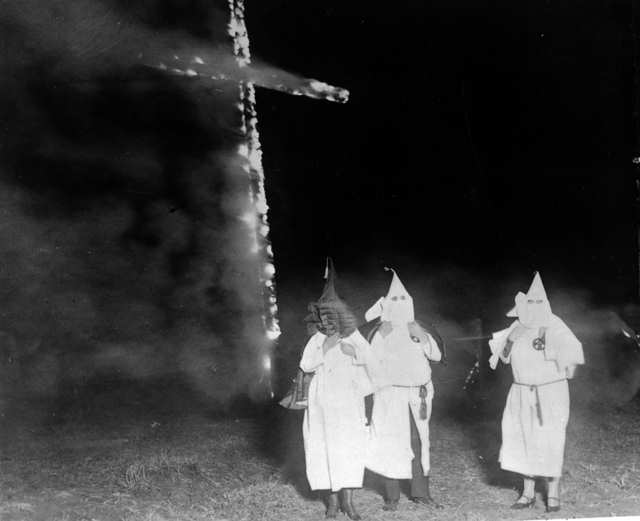 Ku Klux Klan members and a burning cross, Denver, ...
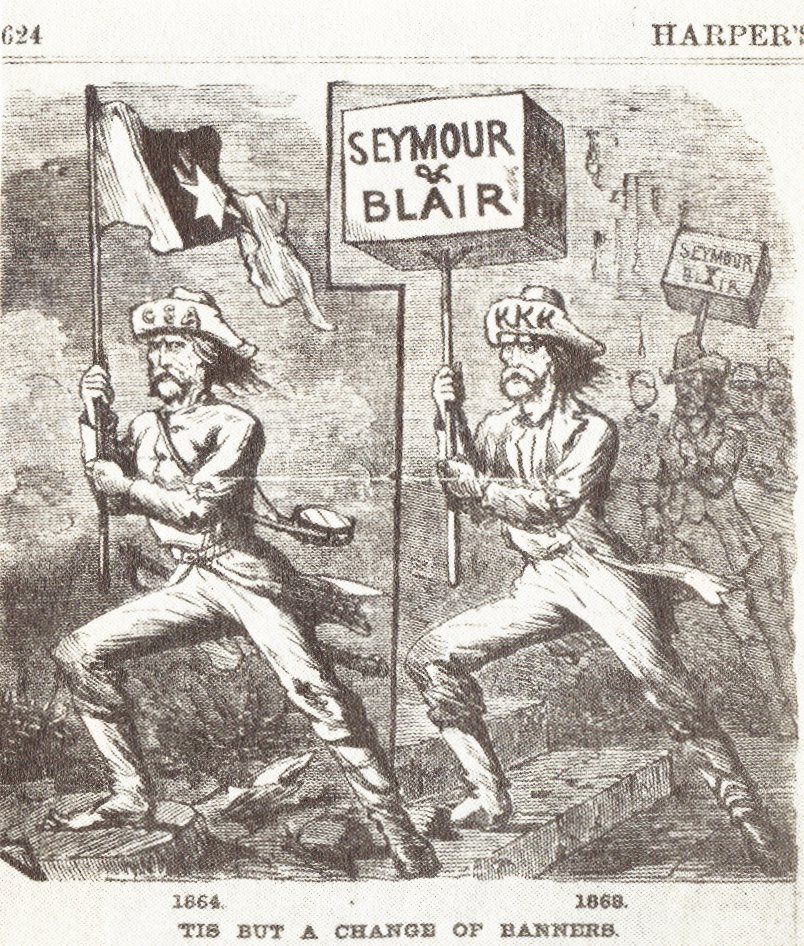 Cartoon from 1868 ("'Tis but a change of banners -...
 Violence at a Ku Klux Klan march in Mobile, Alabam...
Because many people had faith that the economy's prosperity could continue, buying on credit was introduced. Buying on credit allowed low and middle-income families to buy items that before were only for the wealthy. People bought land, shares of stock, cars, radios, furniture, and appliances on credit. By 1926, 80% of American families had items that were bought on credit.
More people, buying more goods, meant more companies competing for consumers' money, which led to new and better advertising. New advertisements did not say how good the product really was; instead they said what the buyer wanted to hear. For example, after seeing advertisements of beautiful houses, people started to buy land in Florida. On September 19, 1926 a horrible hurricane hit Florida. The houses that the people bought were destroyed, but it turned...