Robber Baron
Vs.
Captain of Industry?
John D. Rockefeller was the guiding force behind the creation of the Standard Oil Company, which grew to dominate the oil industry. This company was one of the first big trusts in the United States, thus much controversy and opposition arose regarding business strategies and its organization. John D. Rockefeller was also one of the United States first major philanthropists, establishing numerous important foundations and donating close to $600 million to various charities.
An ongoing debate remains as to whether John D. Rockefeller was a "robber baron" or a "captain of industry". Rockefeller was highly criticized for his success and the means by which he attained it. Although, in actuality, he brought order to a chaotic economic system. Many of his accomplishments, strategies, developments and donations have positively altered American society and economy.
John D. Rockefeller's was a dedicated, driven young boy who learned the art of hard work and the gains of capital early in life.
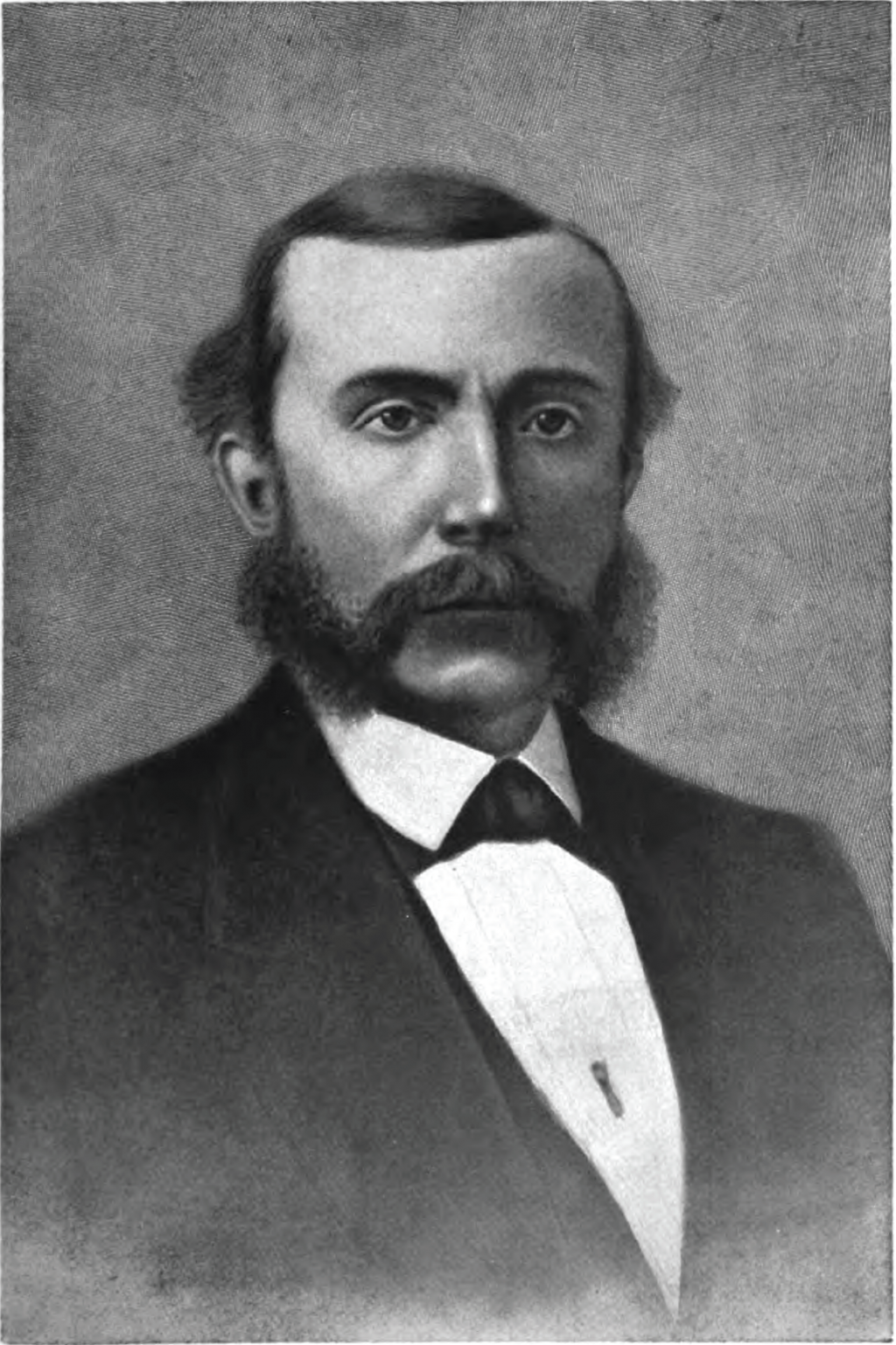 English: John D. Rockefeller, founder of Standard ...
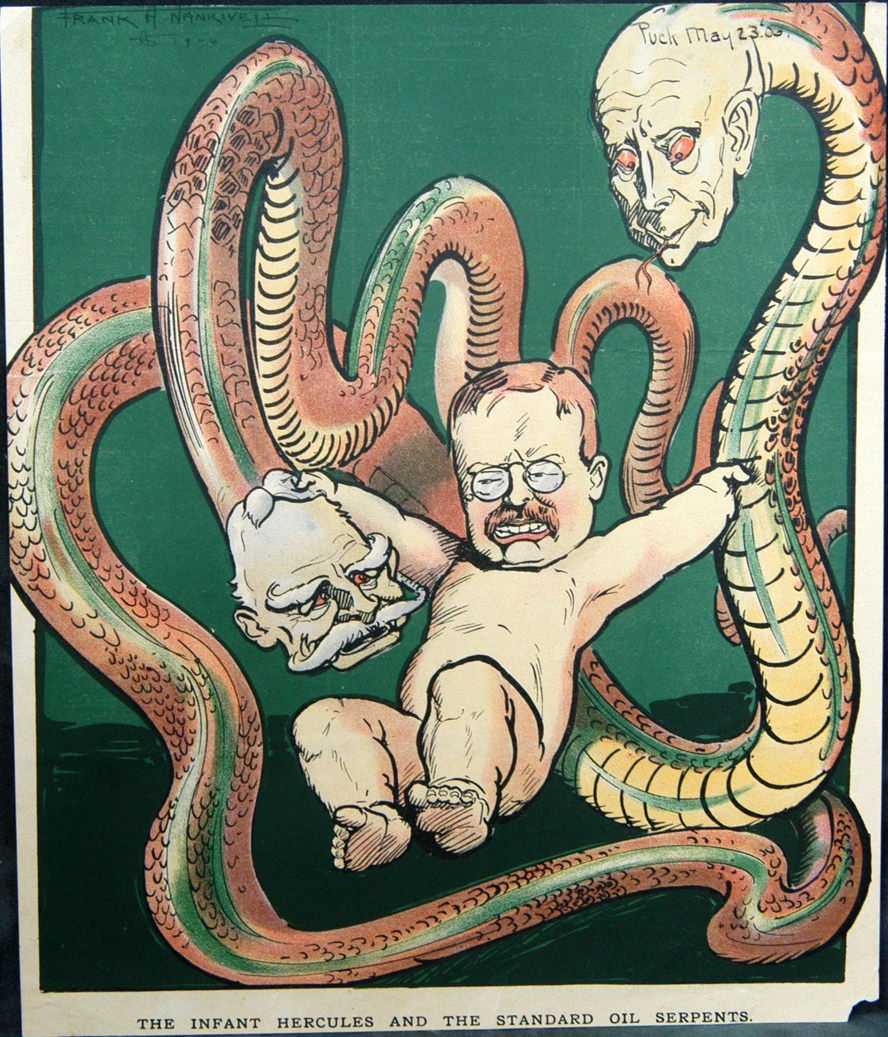 English: Puck magazine cartoon, "The Infant Hercul...
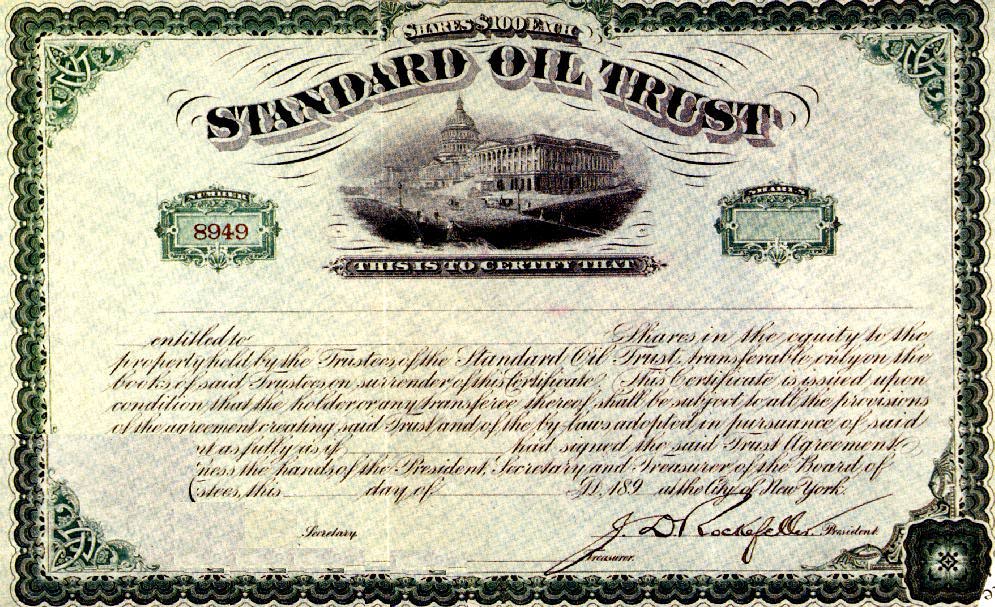 Standard Oil Trust Certificate 1896
He continually proved to be hard working, very competitive, a skilled business strategist and forecaster and he had the ability to pick gifted associates and work with them harmoniously. Others viewed him as "industrious, even-tempered, generous and kind [man]" Throughout his life, Rockefeller remained faithful to the values of religion, hard work and family.
In 1970, The Standard Oil Company was founded by John D. Rockefeller, along with his brother William, Andrews, Henry Flagler and others. This was Rockefeller's opportunity to take control, devise and execute strategies to develop and expand the business.
Rockefeller was continuously analyzing the industry, as a whole, as well as his individual company. He despised waste and devoted considerable energy on increasing the efficiency of his refining business. "The seal for perfection of detail was from the beginning a factor in the growth of the Rockefeller's firm." He took decisive steps to increase the efficiency of all aspects of the company.
"The emphasis on cost never ceased." He hired his own plumber and bought his own plumbing supplies. He built his own cooperage shop and made his own barrels for the oil. He bought tracts of white-oak timber for making the barrels. Instead of transporting the freshly cut green timber directly to the cooperage shop, he had kilns built on the timber tracts to dry the wood on site to reduce the shipping weight of the lumber. He bought his own wagons and horses to transport the wood to the cooperage shop in Cleveland.
Nothing was left to chance and nothing left uncounted and measured, efficiencies down to the smallest detail of the business was necessary. Other business entrepreneurs had the same opportunities to make their oil refineries more efficient and cost effective. Whether they did not have to business insight that Rockefeller had, or they were not willing to take the necessary chances, Rockefeller should not be criticized for his drive for perfection and others their lack of ambition or know-how. Economy, precision, and foresight were the cornerstones of his success.
At this time, the entry costs were so low that when times were good many small operators could enter the business cheaply, making it a very competitive market. Rockefeller began his business with little money and invested all of his profits back into the company to build a strong foundation. He realized that he could not expand his business with the overabundance of competitors in the industry. "If he (Rockefeller) could not eliminate competition, then perhaps he could eliminate his competitors by buying them up one by one." The competitive markets, along with his thrive for perfection, drove Rockefeller to be the most efficient oil refinery in the business.
By March-April 1872 Rockefeller had bought up and/or merged with almost all the refineries in Cleveland. At this time, the oil industry revolved around the notion of 'survival of the fittest'. The inefficient and poorly constructed refineries were dismantled while the better quality ones were upgraded to Rockefeller and Flagler's standards.
Later some owners who had been bought out complained to the press that they had been treated unfairly. In the Affidavit of George O. Baslington, he argues that his company "could not make money; that there was no use for them to attempt to do business in competition with the Standard Oil Company" However, he failed to mention that he was given the option of being paid for his refinery, rather than falling to bankruptcy. Baslington had the opportunity to study the business and take the same steps as Rockefeller had to make his refinery more efficient. The evidence is overwhelming that the Standard's rivals were paid fair, even generous, prices for their property and if they had the wisdom to take Standard Oil stock, they ended up very rich indeed. Rockefeller's response to those who criticized his success was, "That a great prejudice exists against all successful business enterprise-the more successful, the greater the prejudice."
By 1882 The Standard Oil Company had become the most efficient corporation, producing the highest quality products as well as charging the lowest prices. Rockefeller was philanthropic in his endeavors, incorporating his acquired companies into the ever enlarging Standard Oil. The Standard Oil Company helped to strengthen the American economy, created jobs, and was one of the leaders in making the United States the industrial giant that it is today.
On 2 January 1882 the Standard Oil Trust was formed. Attorney Samuel Dodd came up with the idea of a Trust. A Board of Trustees was set up and all the Standard properties were placed in its hands. Every stockholder received 20 Trust certificates for each share of Standard Oil stock and all the profits of the component companies were sent to the nine trustees who determined the dividends. The nine Trustees elected the directors and officers of all the component companies.
John Archbold took over the management of Standard Oil from the mid-1890s onward. Rockefeller remained behind the scenes for years, but officially retired in1899 and focused on his philanthropies, his family and his new passion for golf. Not publicly announcing his retirement was a great mistake on Rockefeller's part. Rockefeller had resisted the temptation to exploit the Standard's near monopoly position by raising prices "too" much. Archbold raised prices aggressively and the dividends rolled in. The consequence was that Rockefeller got all the blame for the policies even though he had almost no further role in management.
From the mid 1890s until his death in 1937 Rockefeller's activities were all philanthropic. Rockefeller's fortune peaked in 1912 at almost $900,000,000 but by that time he had already given away hundreds of millions of dollars. In 1897 his son, John D. Rockefeller Jr., joined Gates in the full time management of the fortune.
The University of Chicago, which Rockefeller is largely responsible for creating, alone received $75,000,000 by 1932. He set up, at the urging of his son, the Rockefeller Institute for medical research (now Rockefeller University) and his gifts to it total $50,000,000 by the 1930s. In 1909 Rockefeller established the Rockefeller Sanitary Commission which was largely responsible for eradicating the hookworm in the South by 1927.
He founded the General Education Board in 1903 (later the Rockefeller foundation). The General Education Board helped to establish High Schools throughout the South by providing free professional advice on improving instruction and education. The effort was a cooperative one (so it would not be seen as condescending by Southern politicians) and local money was used to build the High Schools. In 1919 Rockefeller donated $50,000,000 to the Board to raise academic salaries which were very low in the wake of WWI. The Rockefeller Foundation is officially established in 1913 and Rockefeller transfers $235,000,000 to it by 1929. 88
By the min 1920's, people finally began to acknowledge Rockefeller's great accomplishments and contributions to our society. "The man who had once been denounced by Theodore Roosevelt and Tolstoy and William Jennings Bryan was now voted, in a popular poll, one of the Greatest Americans."
The controversy as to whether Rockefeller was a captain of industry or a robber baron still remains. I believe he was an effective business man who aided in the "immense industrial transformation of America." His emphasis on size and efficiency and the use of modern chemistry resulted in the development of a wide variety of new products that made the lives of ordinary people better as a consequence. He made light cheap for untold millions and his great creation was ready, willing, and able to provide the cheap gasoline when it was needed thus ushering in the age of the automobile in America.
Rockefeller's intent was not to create a monopoly but to maximum the amount of efficiency out of every company he operated in. He organized the oil industry from chaos to extreme precision and created several products of superior quality, creating a stable market out of chaos, and pioneered in significant administrative and technological innovations. Through his Standard Oil Company he paved the way, along with several other industrial capitalists, for America to become the greatest of industrial nations. John D. Rockefeller should not be regarded as an uncaring, destructive robber baron; but be appreciated for his great contributions to our society as an efficient businessman, industrialist, and philanthropist.
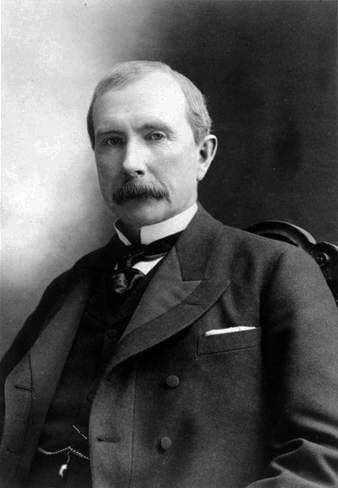 John D. Rockefeller founded the University of Chic...
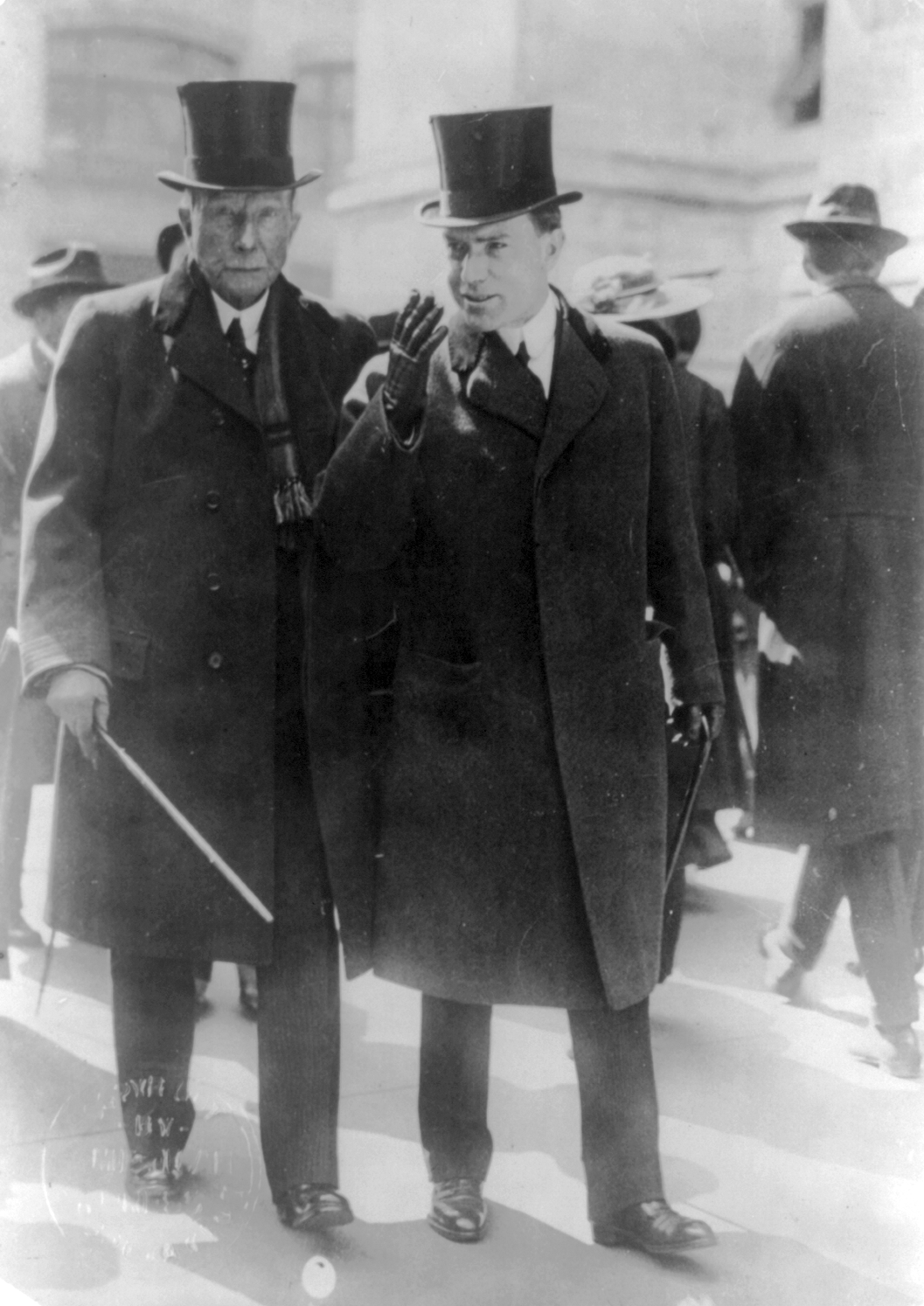 English: John D. Rockefeller (left) and his son Jo...
 John D. Rockefeller, Jr. and the Rockefeller famil...
Robber Baron vs captain of industry
This was a good essay and was very good in detail. One thing to mention for robber baron would be the rebates that Rockefeller got from the railroads.
1 out of 1 people found this comment useful.