The Roman Empire, from Caesar's reign through Augustus, and finally the infiltration of the Germanic barbarians. 7-8 pages, double spaced, 10pt Times New Roman, with 'quick references'.
After serving in Spain as proconsul in 61 BC, Caesar returned to Rome in 60 BC, ambitious for the consulate. Against senatorial opposition he achieved a brilliant stroke--he organized a coalition, known as the First Triumvirate, made up of Pompey, commander in chief of the army; Marcus Licinius Crassus, the wealthiest man in Rome; and Caesar himself. In 59 BC as consul, he secured the passage of an agrarian law providing Campanian lands for 20,000 poor citizens and veterans, in spite of the opposition from his senatorial colleagues, and at the same time won the support of the wealthy equites by getting a reduction for them in their tax contracts in Asia. This made him the guiding power in a coalition between people and plutocrats.
He was assigned the rule of Cisalpine and Transalpine Gaul and Illyricum with four legions for five years from 58 BC to 54 BC. The differences between Pompey and Crassus grew, and Caesar again moved (56 BC) to patch up matters, arriving at an agreement that both Pompey and Crassus should be consuls in 55 BC and that their proconsular provinces should be Spain and Syria, respectively. From this arrangement he drew an extension of his command in Gaul to 49 BC. In the years 58 BC to 49 BC he firmly established his reputation during the Gallic Wars.
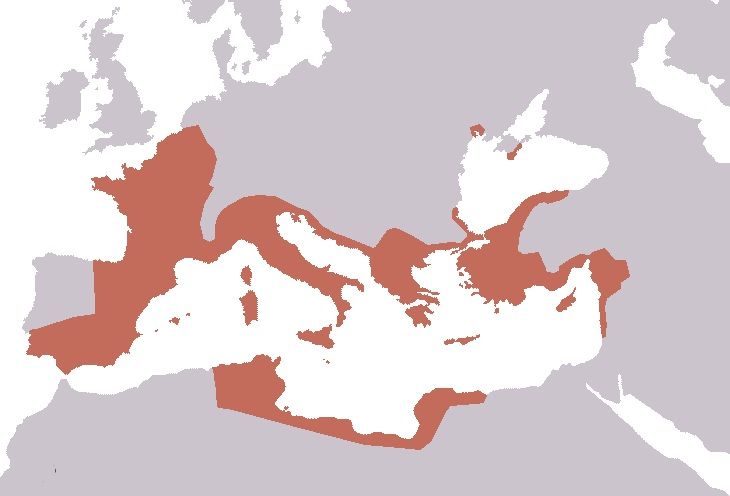
In 55 BC, Caesar made explorations into Britain, and in 54 BC he defeated the Britons, led by Cassivellaunus. Caesar met his most serious opposition in Gaul from Vercingetorix, whom he defeated in Alesia in 52 BC--essentially ending the wars and reducing all Gaul to fall under Roman control. These campaigns proved him one of the greatest commanders of all time, wherein he revealed his consummate military genius, characterized by quick, sure judgment and indomitable energy.
More Roman History
essays:
Augustus' Role in the Consolidation of the Roman Rmpire and the Ending of the Republic
... reduction in the size of the army along with the establishment of an 'auxiliaries' guard to patrol Rome. He ...
The Successful Career Of Juluis Caesar
... 71) Caesar's purpose in the triumvirate was to gain a large military command. Pompey wanted a part of the eastern settlement and land allotments for his discharged troops. An agrarian bill authorizing the purchase of land ...
How did the 1st Triumvirate contribute to the fall of the Roman Republic?
... a consul, Caesar was appointed the proconsular command of Cisalpine Gaul and Illyria, but "fearing the commons would insist" , the Senate added Transalpine Gaul to his jurisdiction. Caesar's absence in Gaul, gaining fame and fortune for himself, left the triumvirate ...
Caligula: In Sickness and in Wealth This is a term paper about the life, reign and downfall of the Roman emperor Caligula
... through the city34. Caligula married four times but all of them were poor relationships and failed for the exception of the last one. His first wife was Julia Claudilla, who was the daughter of senator Marcus Silanus35 ...
Political Revolution in Rome 133-78 BC
... Pompey and Caesar. The loyalty of the new recruits was to their commanding officer or general rather than to the senate or to the people. The use of Marius soldiers in the riots of 100 showed that the new style army ...
Evaluate the Role of Pompey as a significant military leader during this period (78-31BC)
... held command of the armies so many years in succession and was later appointed dictator." Contrary to this view, in 66BC, Cicero spoke in favour fo Pompey's ...
The Struggle For Peace In Early Rome
... then consul, was made commander of the army. But when it was suggested that Marius should take over, Sulla occupied Rome, forcing ...
Greece vs Rome. Two countries with cultures that were strikingly similar, but differed greatly in their political philosophy
... taken to it's highest pinnacle when a young leader of the Roman legions, Julius Caesar, declared himself dictator. With the backing of the most powerful army in the ...