Rosenberg Trial
Prof. Harmon
POL217
Criminal Justice
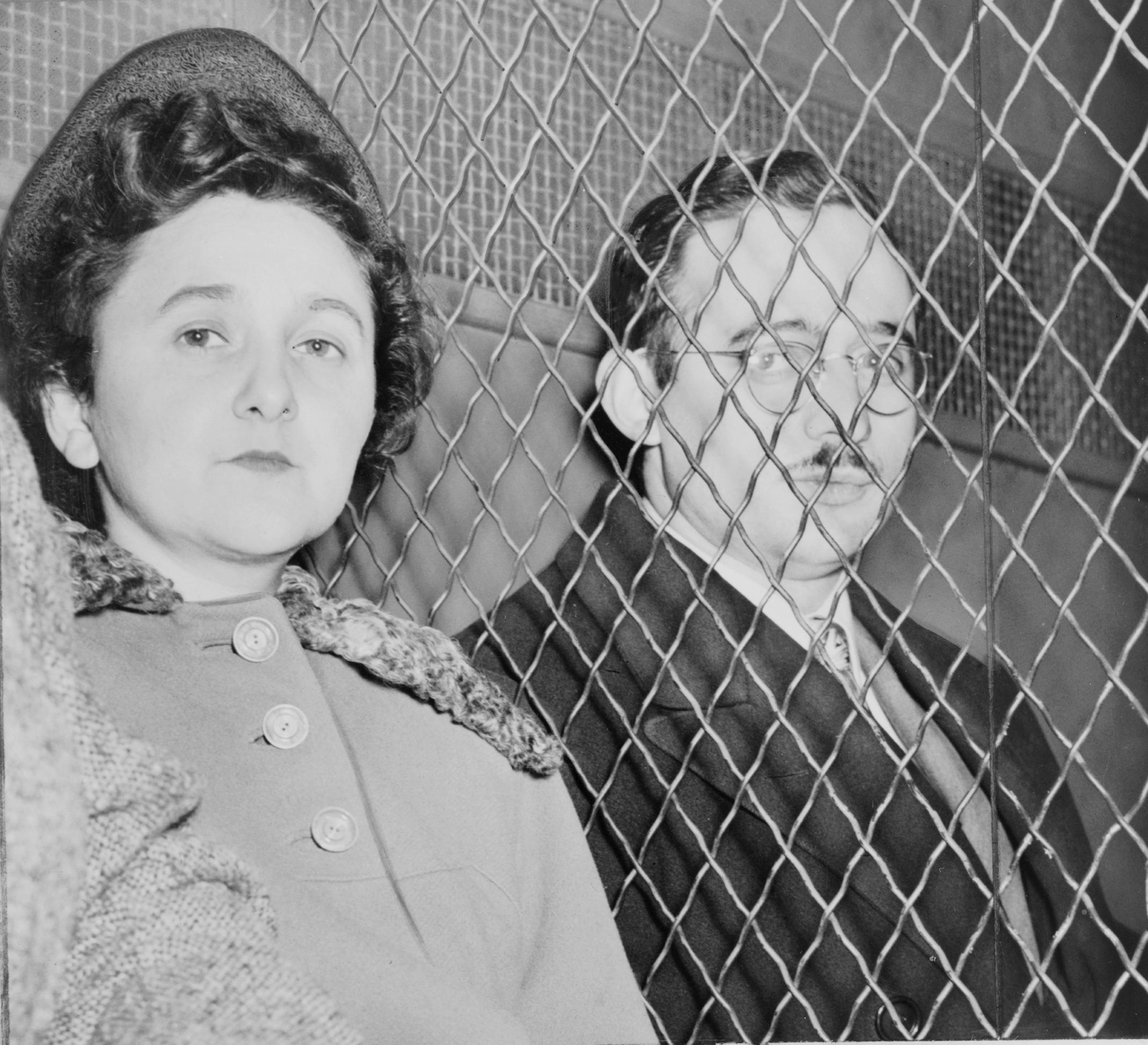
When one says the name Rosenberg today there are some very confused faces and no one really knows who they are, but when one gets someone who was alive during the Cold War era and they will say that they were part of the era and they will say that they were part of the worst crisis to hit the United Stats. This is because no one hears about the crime that these two individuals were convicted of, the crime of treason, witch we define today as terrorism.
According to section 490.25 of the New York State Penal Law:
"A person is guilty of the crime of terrorism when, with intent to intimidate or coerce a civilian population, influences the policy of a unit of government by intimidation or coercion, or affect the conduct of a unit of government by murder, assassination or kidnapping, he or she commits a specified offense."
According to this section of the penal code one who is convicted of the crime of Terrorism, which in New York State is an A Felony, one has to do several things resulting in the compromise of the government. This is today's standard and is most likely the same standard that people used several years ago.
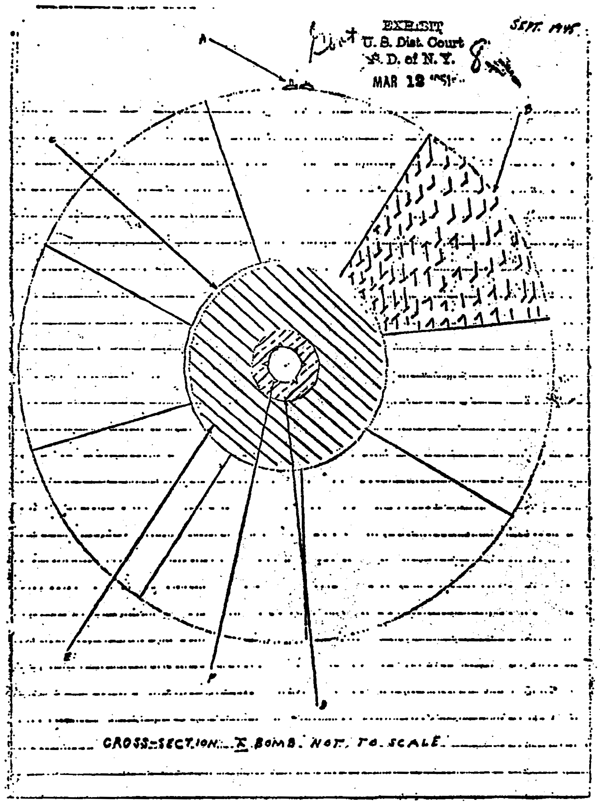
After a trial that lasted for about 3 months the jury was given the case for a judgment. After several straight hours of deliberation both Julius and Ethel Rosenberg were convicted of treason. Both of them were sentenced to death by electrocution on 21, 1951. Julius went quickly in his death however Ethel didn't. Ethel had to be electrocuted several times before she went. This sentence is considered by many to be a travesty of justice because of the cruel and unusual punishment they received, especially Ethel.
But...
More Death Penalty
essays:
The Death Penalty and The Mentally Retarded - a brief overview of the injustice of allowing mentally retarded persons to be put to death under the death penalty
... In the court today the government is revising the whole situation stating that, "The Supreme Court ruled today that executing the mentally retarded constitutes cruel and unusual punishment and is therefore unconstitutional (Cruel 1 ...
Capital Punishment, the road to a corrupt criminal justice system, must be abolished for the sake of society. The death penalty is unfair towards society members, such as tax payers, innocent people, and the criminal as well.
... capital punishment, the death penalty does not promote a peaceful way to end crime, and it shows how the United States criminal justice system has sunk to a new low. The death penalty is cruel, and unusual. Before ...
Pros and cons of the Death Penalty.
... recognizes the seriousness of the crime. "Let the punishment fit the crime" is a generally accepted and sound precept. In structuring criminal sentences, society must determine what punishment fits the premeditated taking of innocent ...
Capital Punishment, the lawful infliction of the death penalty
... include the 8th Amendment to the Constitution of the United States which prohibits cruel and unusual punishment (Software Toolworks Encyclopedia: 8th Amendment ). The most compelling arguments against capital punishment can ...
This paper discusses the evolution of the death penalty in the US and arguments for and against its application to juveniles.
... Applying the standard eighth amendment analysis, Justices Stevens, Brennan, Marshall, and Blackmun agreed that the execution would constitute cruel and unusual punishment because it was "inconsistent with standards of decency" and "failed to contribute to the two ...
Capital Punishment Should Be Abolished: Views shared between Utilitarians, Egalitarians, Altruists and supporters of the Divine Command Theory
... in the interests of others, would agree with this because regardless of the crime, most criminals would prefer not to be executed- and an ...
The Death Penalty
... support the assumption that more heinous crimes will be committed if these criminals are not dealt with in the most permanent fashion - execution. The death penalty is not cruel and unusual punishment. Authors of the United States Constitution ...
An Analysis of the Death Penalty Controversy in America
... defy the United States Constitution? The Eighth Amendment of the Constitution states that "excessive bail shall not be required, nor excessive fines imposed, nor cruel and unusual punishments inflicted." Many believe that sentencing a person who has committed a crime to ...