AXELROD, PAVEL BORISOVICH (1850-1928)
One of the founders of the "Geneva Group for the Federation of Labour." Together with the St. Petersburg-based "Union for Struggle of the Liberation of the Working Class," this was the foundation of the Russian Social Democratic Workers Party (RSDRP). In 1903 the latter split into the split into the Bolshevik and Menshevik factions, with Axelrod becoming a major figure in the latter. Over the next 25 years, he was the outstanding ideologist, though not the most influential political leader of Menshevism. In Stockholm when the Bolsheviks seized power in 1917, Axelrod elected to remain abroad, and died in exile.
The material in the Axelrod Collection dates from 1878 to 1924 and consists of autographs of his published and unpublished articles, correspondence, including that with other leading politicians, and photographs. There are 33 microfiche in the collection.
KALININ, MIKHAIL IVANOVICH, 1875-1946
Kalinin was a member of the St. Petersburg-based "Union for Struggle of the Liberation of the Working Class" and a founder of the RDSRP.
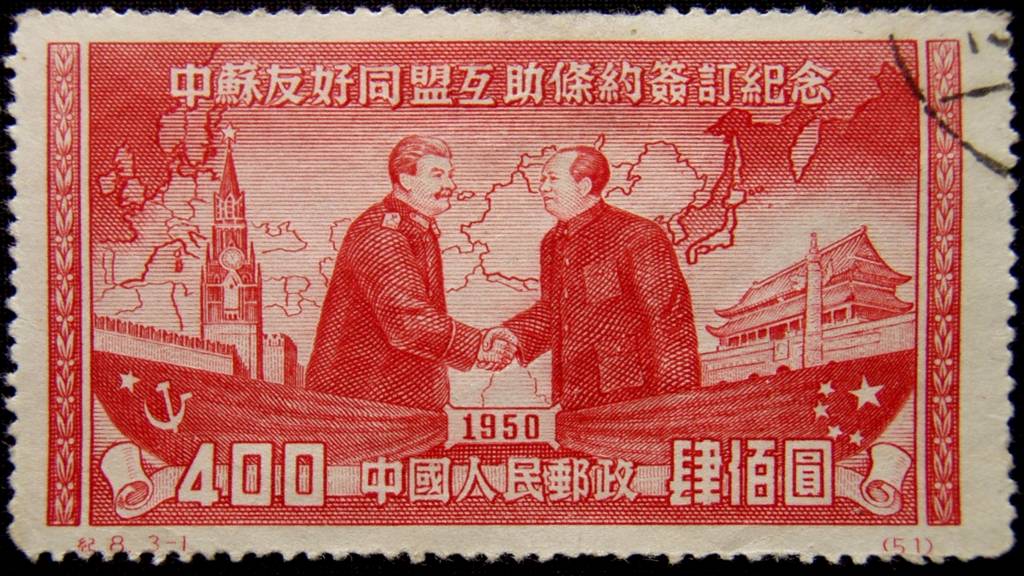 Chinese Stamp, 1950. Joseph Stalin and Mao Zedong ...
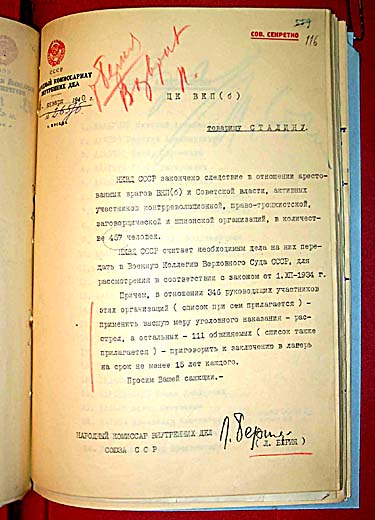 Beria's letter to Politburo
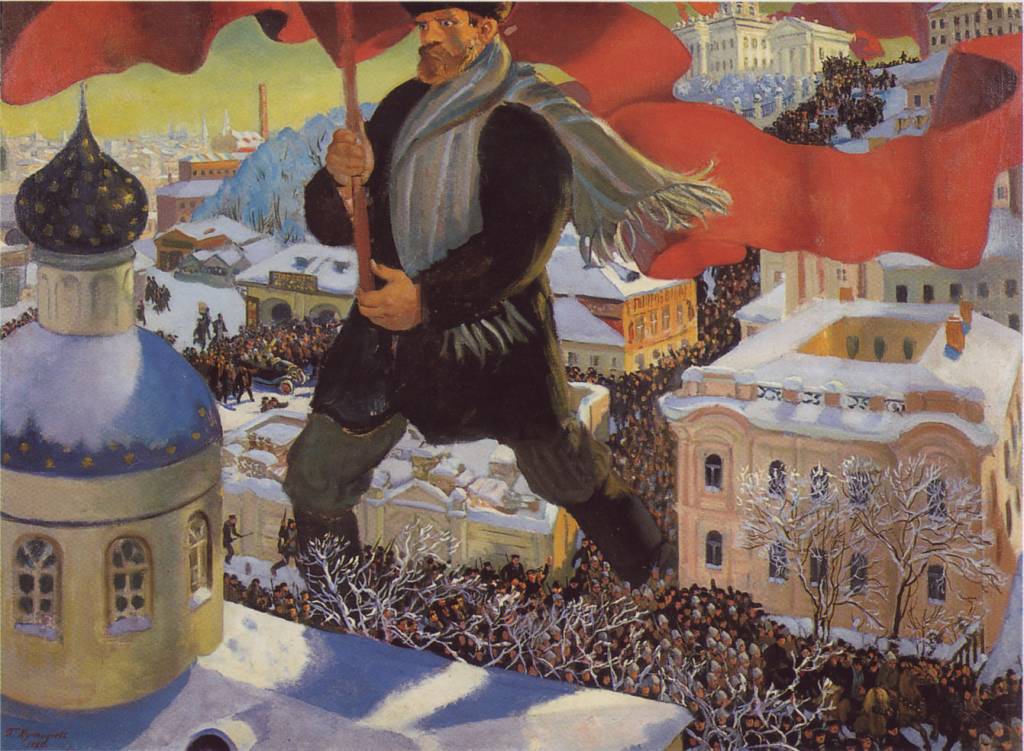 Bolshevik by Boris Kustodiev, a visual representat...
One of the very few leading Bolsheviks to come from a working-class background, he was first arrested and exiled for his revolutionary activities in 1899.
After the October 1917 coup, Kalinin was active in the Petrograd Communist Party. In 1919, he replaced Iakov Sverdlov and Chairman of the All-Russian Executive Committee of the Communist Party, and during the Civil War organized the "October Revolution Agitation Train," whose task was to recruit peasants and workers to the Reds. From 1925 until his death in 1946 (from natural causes), Kalinin was a member of the Politburo and occupied numerous party posts.
Yale owns 124 reels of the Kalinin Collection. Much of it donated by members of his family, the archive includes photographs; diary entries; transcripts of speeches; autographs of articles.