Mahatma Gandhi was born on 2 October, 1869 at Porbandar of
Kathiawar in Gujarat. His full name was Mohandas Karamchand Gandhi. His family was highly religious, traditional and followed Vaishnavism. At the age of 13 only, his marriage was solemnized with Katurba. In 1887, he went to England for higher education and returned to India in 1892 after becoming a Barrister. In 1893, he went to South Africa to plead for a case. In fact, he had gone there on a contractual assignment for a year but spent almost twenty-two years in that country. He felt annoyed at the policy of apartheid pursued by the British against the migrant Indians in South Africa and hence began a non-violent agitation against this policy from 1893 to 1914 in which he achieved great success. In January 1915, when he returned to India, he found the whole country involved in the War efforts of the British.
 English: Birth place of Mahatma Gandhi, Porbandar,...
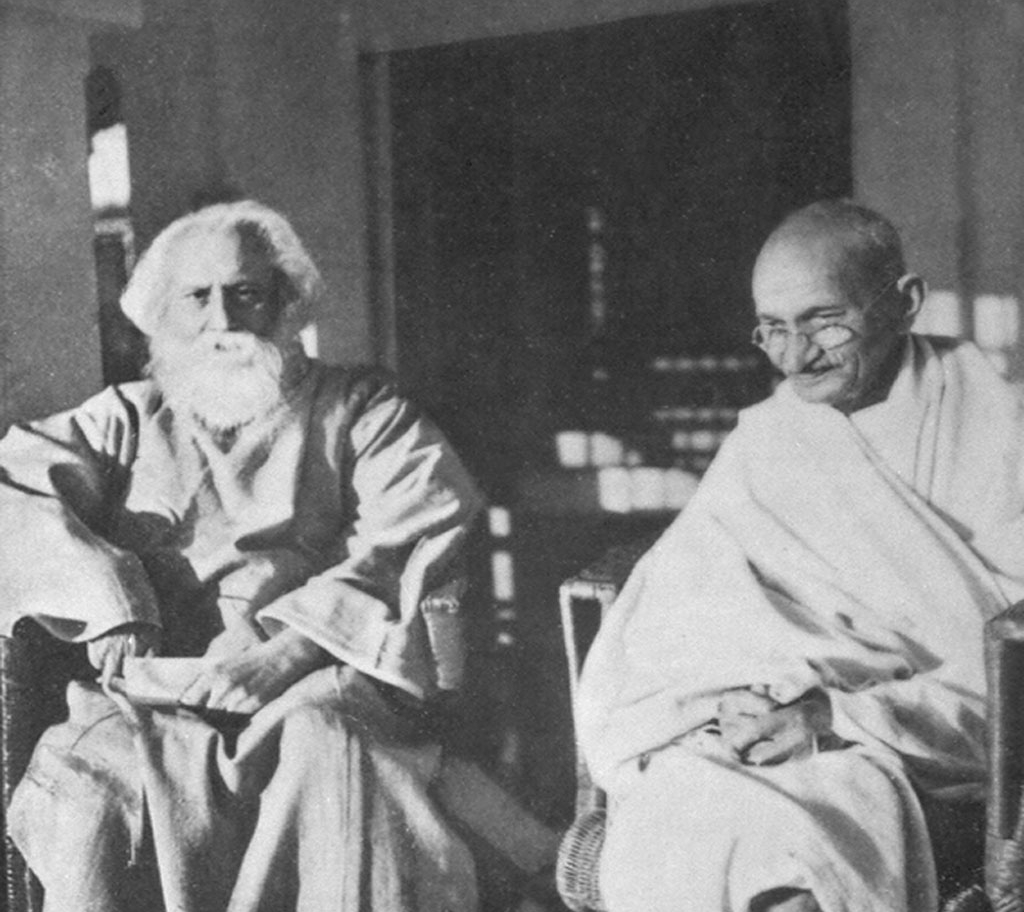 Rabindranath Tagore and Gandhi in 1940.
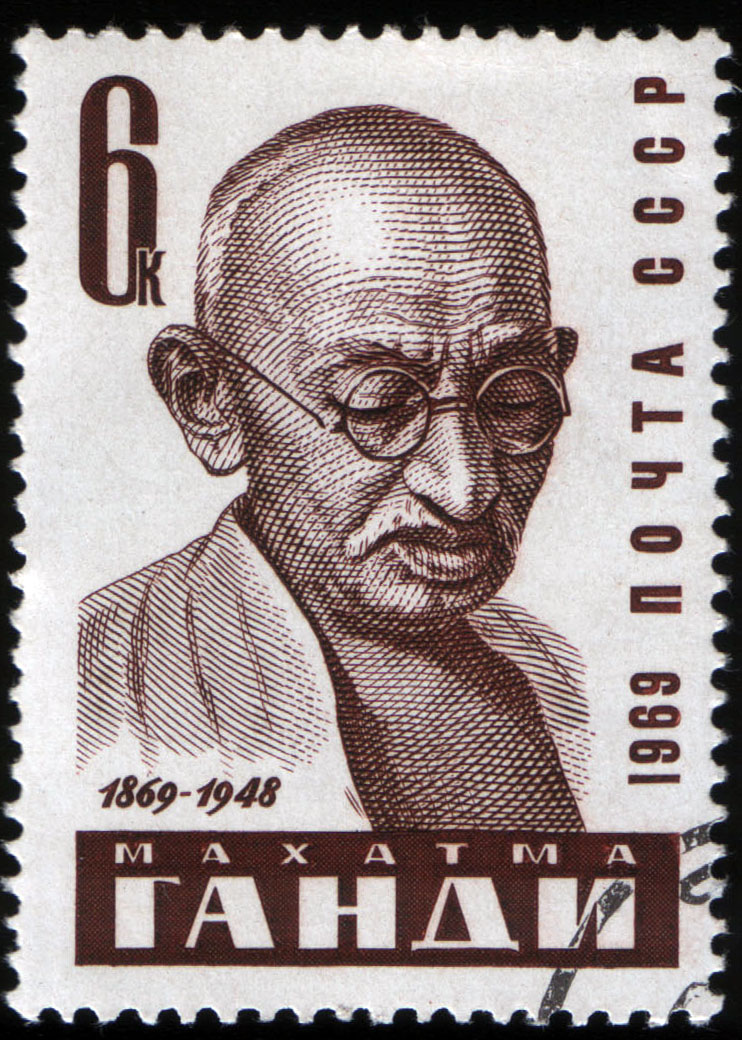 English: USSR stamp, Mahatma Gandhi, 1969, 6 k. Р...
Mahatma Gandhi entered into Indian politics as an unconditional associate of the British Government.
Mahatma Gandhi has laid great stress on Satyagraha in his thoughts. Satyagraha means pursuance of truth. It means striving for truth even by undergoing physical pain. Gandhi relied on the methods of non-violence to strive for the truth. Thus, it was agreeable to him to suffer physical hardship for the sake of truth. He used to accept satyagraha not simply as a means but as a principle by itself. He himself had written "Satyagraha is (such) a spiritual principle which is based on love for the mankind. There is no feeling of hatred in it towards the opponents." He used to regard satyagraha as the most potent force. In Hind Swaraj he wrote:- "Passive resistance (satyagraha) is an all-sided sword, it can be used anyhow; it blesses him who used it and...