"The Scarlet Letter" by Nathaniel Hawthorne: Why Pearl doesn't live up to the expectations of the Puritan Ethic.
The Scarlet Letter Essay
In Nathaniel Hawthorne?s The Scarlet Letter, Pearl Prynne, one of the main characters, does not live up to the expectations of the Puritan Ethic. The Puritan Ethic is based on being a hard laborer, worshiping God, and praying the rest of the time. Pearl, the ?devil-child,? does not do any of this. Instead, she runs around in the forest, playing with her sticks and laughing at everything, and having fun. By the expectations of the Puritan Ethic, she is considered evil and satanic. She is also the product of a sin, she dresses in a way Puritans would not, she is isolated in the wilderness, and her voice even sounds evil to the Puritans. It seems normal for us today, but during the Puritan times her evil ways caused her many problems.
Pearl is considered automatically evil because she was the product of a sin, and since her mother is sinful, so is she. In fact, both her parents are sinners because they did a non-puritan thing. The following quote gives an example of how it is inevitable for her being already sinful without even doing anything yet: ??poor little Pearl was a demon offspring?? (pg. 95) Her mother is now even described as a demon! This shows how Puritans saw Pearl as being ?devil-like? because she was the product of a sin. The people of the Puritan settlement tried to stay away from Pearl and keep their children away as well because they were thought she would bring them evil. This quote proves this point: ?An imp of evil, emblem and product of sin, she had no right among christened infants.? (pg. 90) The quote explains that because of her being the product of a sin, Pearl cannot even be around the other children of...
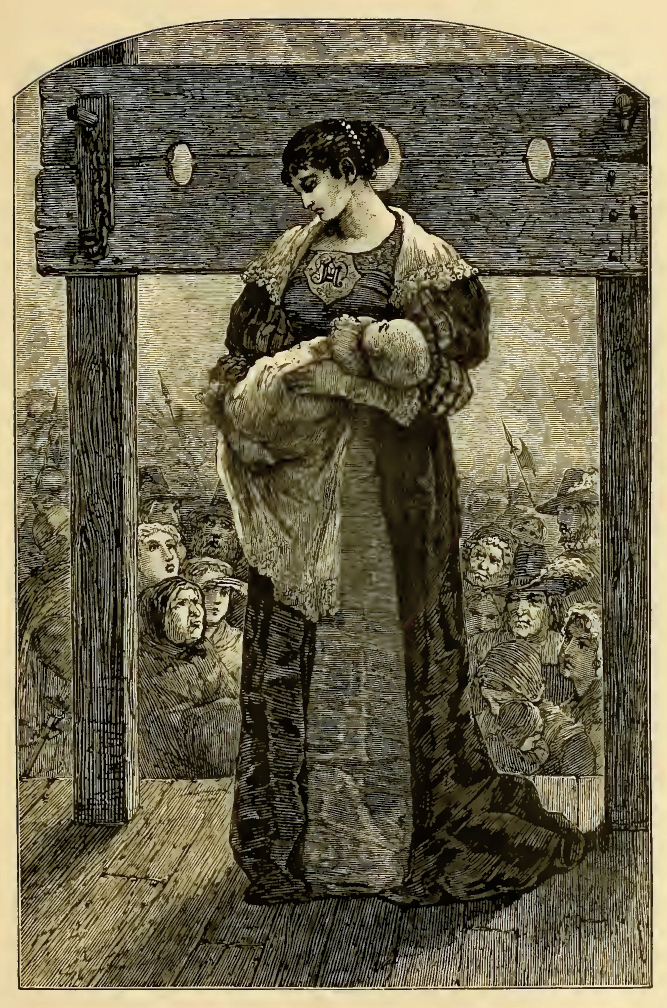
More "The Scarlet Letter" by Nathaniel Hawthorne
essays:
"The Scarlet Letter" by Nathanial Hawthorne: Pearl's intuition
... The Scarlet Letter, by Nathaniel Hawthorne, is an intricate story of lies, adultery, sin, revenge, and lust, just to name a few. Hester Prynne's and Arthur Dimmesdale's daughter, Pearl, is one of the key characters of the story. She ...
"Reading Journal: The Scarlet Letter" Analyze the major literary aspects of THE SCARLET LETTER.
... Accordingly, Hawthorne wrote The Scarlet Letter in order to expose the hypocrisy of judgment in general. He uses the Puritan society ... should have been considered a sin. Works cited:THE SCARLET LETTER by Nathaniel Hawthorne ...
Symbols Setting the Scene in "The Scarlet Letter" by Nathaniel Hawthorne
... 230 Hawthorne, Nathaniel, The Scarlet Letter. Bantam Books, New York, New York 1850 Levy, Leo B. "The Landscape Modes of The Scarlet Letter." Nineteenth-Century Fiction 23.4 (March 1969): 377-392. Whelan, Robert Emmet Jr. "Hester Prynne's Little Pearl ...
An Analysis of Symbolism in "The Scarlet Letter" by Hawthorne
... The Scarlet Letter by Nathaniel Hawthorne is generally considered to be the first American symbolic novel. A symbol is something which is used to represent something broader in meaning. The most obvious symbol in the novel is the actual scarlet 'A ...
Essay on "The Scarlet Letter" by Hawthorne
... other Puritans. The scarlet letter is indeed a blessing to Hester Prynne, more than the curse she believes it to be. The scarlet symbol of ignominy may have defiled ... Nathaniel Hawthorne's The Scarlet Letter, Hester Prynne's scarlet token liberates her more than it punishes her. First of ...
"The Scarlet Letter" by Nathaniel Hawthorne.
... that she goes through. The color of the scarlet letter is very important because the crimson color signifies the devil. Since Hawthorne selects the novel's setting during the time of Puritans, the ...
The Scarlet Letter By: Nathaniel Hawthorne-talks about the book and what happens throughout it-1043 words
... The Scarlet Letter by Nathaniel Hawthorn begins by dealing with Hester Prynne's crime and sentence. She shows herself to be a proud woman in how she embroiders ...
The Worst of Them All. An essay on "The Scarlet Letter" by Nathaniel Hawthorne
... The Scarlet Letter' by Nathaniel Hawthorne, many characters sin. However, Arthur Dimmesdale, the church priest, commits the worst sins. Hester Prynne commits ...