Self Actualization in "Great Expectations" by Charles Dickens
The ideal state of mind that a person can achieve is called self actualization or to become fully human. Charles Dickens' Great Expectations told the story of how a boy named Pip worked to achieved this. More specifically, Dickens wrote how Pip learning from his experiences was able to put external factors, like social class, aside, and discover his own potential. Only after this discovery did Pip gain true independence and was able to accept himself with all his faults, including his social class.
It was Pip's ideas of social class seen in his early life that restricts him from accepting himself. Pip as a child first learned of social class from Estella. Pip's first experience of feeling lower appeared in the first scene with Estella; where Estella had insulted him and Pip was deeply affected:
I had never thought of being ashamed of my hands before; but I began to consider them a very indifferent pair. Her contempt for me was so strong that it became infectious, and I caught it.(p.55).
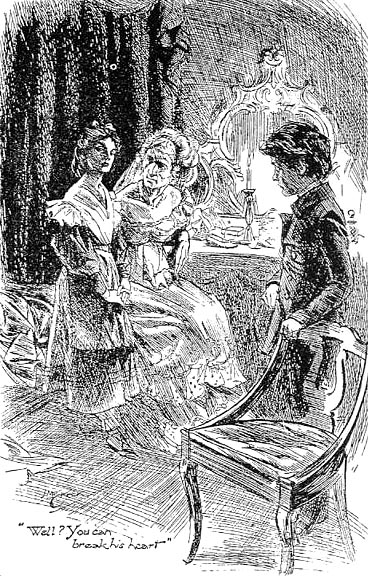
This passage was a good example of Pip being ashamed of his social class and because of this had not been able to like himself. Pip eventually developed a fixed idea of social class and could not be satisfied as he was. This lead to his great desire of becoming a gentleman:
Well, then, understand once and for all that I never shall or can be comfortable - or anything but miserable - there Biddy! - unless I can lead a very different sort of life from the life I lead now.(p.120)
This referred to Pip's inability to accept being who he was born as, and because he could not do this he could not be content with himself.
Dickens writes that it was through Pip's experiences that...
More Charles Dickens
essays:
"Great Expectations" by Charles Dickens.
... he accepted others for whom they are: not for what they look like. In Charles Dickens' novel Great Expectations, Pip experienced three basic stages of moral maturity: fear, self- satisfaction, and altruism. The first stage Pip went ...
Proof of why Money has had a detrimental factor on the lives of characters in Charles Dicken's Great Expectations.
... Throughout Great Expectations, the predominant cause of unhappiness and malicious behaviour conducted by Miss Havisham, Estella and Pip is ... true happiness and even if it could, it is not for sale. So, does money in fact play a part in happiness? In this novel's case, money is the detrimental factor ...
"Great Expectations" by Charles Dickens: how Pip is the portrayal of what 19th century society considered a gentleman, whereas Joe was whom Dickens believed to be the true gentleman.
... experiences, I believe Joe, Dickens' portrayal of what he thinks a gentleman is, truly captures the essence of what a gentleman is. 19th century society believed that a gentleman was determined by his wealth, job, and status. In Great Expectations, Pip ...
How far do the experiences of young Pip in Great Expectations by Charles Dickens reflect the life of minors in the 19th century?
... Charles Dickens' Great Expectations is narrated by its young hero, orphan Philip Pirrip, known as Pip, living with his older sister and her husband, blacksmith Joe Gargery, in the Kent marshes. Young Pip lived ...
Charles Dickens: "Great Expectations".
... his first experiences of child labour. Most of his time in the factory was spent sticking labels on bottles. Later in his life, he looked back on this time with bitterness and disgust. 'Great Expectations' and many of Dickens' other ...
Compare the ways in which Pip views Joe as a child as he grows up in "Great Expectations" by Charles Dickens.
... which Pip, as a child, views Joe as he grows up, in "Great Expectations" by Charles Dickens. "Great Expectations" was written in 1861 by Charles Dickens. However ... and Charles lived in great fear of poverty. By using his own history and experience Charles Dickens tried ...
Character Analysis of Pip in the Novel: "Great Expectations" by Charles Dickens.
... important factors in this story. Growing from a young boy into adulthood, Pip develops into an adult who is more understanding of others and develops his own identity. In the beginning of "Great Expectations", Pip is ...
The effects of gear In Charles Dickens' novel "Great Expectations"
... In Charles Dickens' novel Great Expectations, the protagonist pip, a feeble child has been made to feel insecure about himself. His sister, who "brought him up by hand" , mentally and physically abuses pip to ...