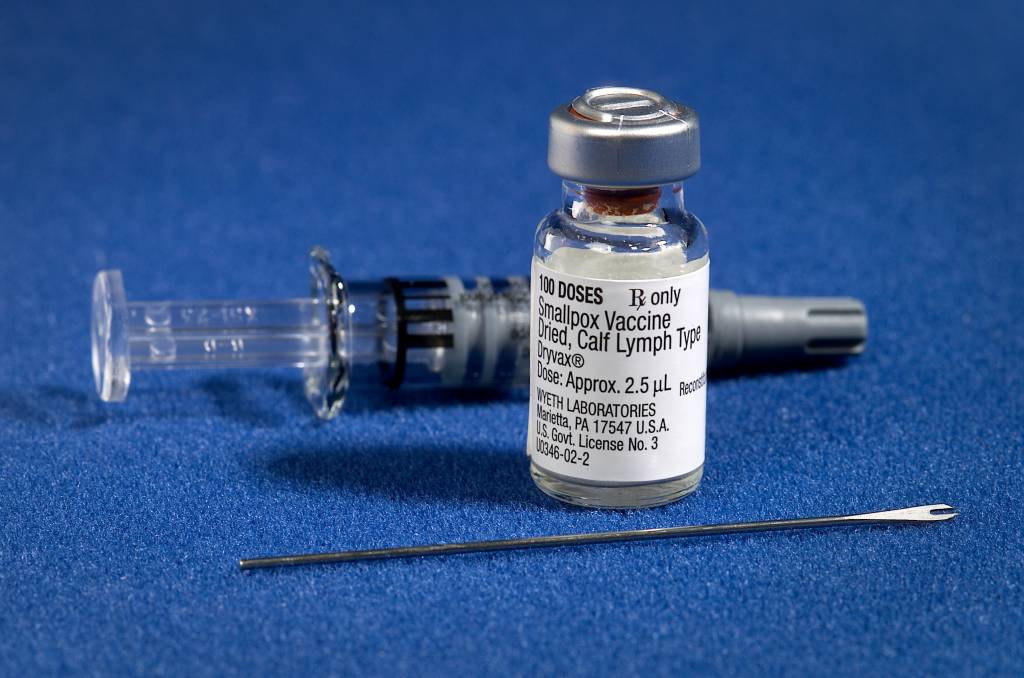
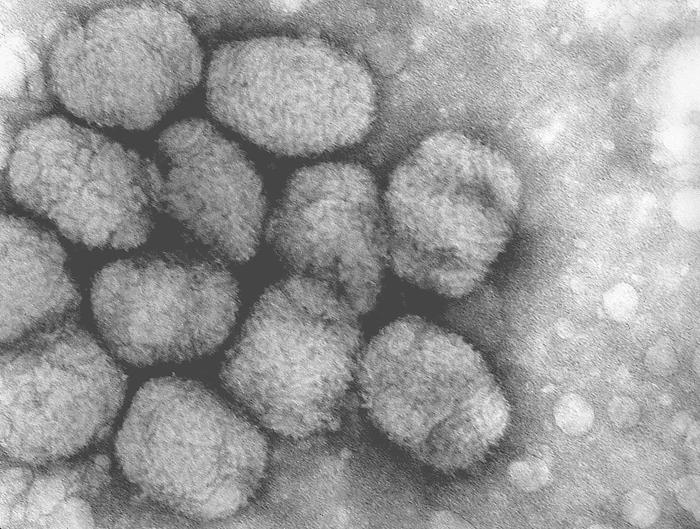
Smallpox is a serious, contagious, and sometimes fatal infectious disease.
The Disease
Smallpox is a serious, contagious, and sometimes fatal infectious disease. There is no specific treatment for smallpox disease, and the only prevention is vaccination. The name smallpox is derived from the Latin word for "spotted" and refers to the raised bumps that appear on the face and body of an infected person.
There are two clinical forms of smallpox. Variola major is the severe and most common form of smallpox, with a more extensive rash and higher fever. There are four types of variola major smallpox: ordinary (the most frequent type, accounting for 90% or more of cases); modified (mild and occurring in previously vaccinated persons); flat; and hemorrhagic (both rare and very severe). Historically, variola major has an overall fatality rate of about 30%; however, flat and hemorrhagic smallpox usually are fatal. Variola minor is a less common presentation of smallpox, and a much less severe disease, with death rates historically of 1% or less.

Smallpox outbreaks have occurred from time to time for thousands of years, but the disease is now eradicated after a successful worldwide vaccination program. The last case of smallpox in the United States was in 1949. The last naturally occurring case in the world was in Somalia in 1977. After the disease was eliminated from the world, routine vaccination against smallpox among the general public was stopped because it was no longer necessary for prevention.
Where Smallpox Comes From
Smallpox is caused by the variola virus that emerged in human populations thousands of years ago. Except for laboratory stockpiles, the variola virus has been eliminated. However, in the aftermath of the events of September and October, 2001, there is heightened concern that the variola virus might be used as an agent of bioterrorism. For this reason, the U.S. government is taking precautions...
More Diseases
essays:
Smallpox vaccination for critical public service workers
... to vaccinate all necessary personnel to prevent infection. Twelve to 14 days after being infected, the person becomes feverish and has severe, aching pains. In the next 2 to 3 days, a papular rash develops over the face and spreads ...
An essay on Smallpox.
... an infectious disease. Smallpox is an acute contagious disease caused by Variola virus, it is a member of the orthopoxvirus family. It was one of the world's most feared diseases until it was eradicated by a collaborative global vaccination programme ...
Smallpox
... serious and life threatening than Variola minor. Variola major claimed 30% of its victims, while variola minor only claimed 1%. Smallpox was once worldwide in scope and before vaccination was practiced, everyone eventually contracted the disease. Some ...
Blood-Borne and Infectious Diseases: Hepatitis C
... an infectious disease. To prevent exposure to hepatitis C, individuals should be aware and follow the guidelines of 'standard precautions'. Standard precautions are the practice where all blood and body fluids ...
The Ebola Virus
... couple major agencies that handle any outbreaks or treatement they include: The CDC, Center for Disease Control and Prevention located in Atlanta, WHO, World Health Organization, and USAMRIID, United States Army Medical Research Institute of Infectious Disease. No ...
Describe one named infectious disease in terms of its: 1) Cause 2) Transmission 3) Host Response 4) Major Symptoms 5) Treatment 6) Prevention 7) Control
... however. Prevention: Protective clothing, insect repellent, mosquito nets. Control: Aims to keep incidence of disease to a minimum in population. Drugs to destroy vector, and parasite. Destroying vector's habitat. Vaccines against ...
Adrenoleukodystrophy and Encephalitis Write a 3 page paper on the two diseases featured in the movies in Lorenzo's Oil and The Awakenings. Works Cited included.
... high fever, double vision, delayed physical and mental response, and lethargy (Encephalitis Lethargica). Lethargy is a condition of functional exhaustion (Tortora). In acute cases, patients can go into a coma. Patients may also experience irregular eye movements, upper body weakness ...
Huntington's Chorea
... s Disease 3). Symptoms of Huntington's chorea are loss of cognitive ability, thinking, speaking, etc., changes in personality, jerking movements of the face and body in general and unsteady ...