Social criticism in The Great Gatsby and Great Expectations
Authors often use their works to convey criticisms of society. Such works of literature do not directly criticize specific real people or events. They do however present a sense of the writer's concern with issues of social injustice and misguided values. Two strong examples of social criticism through literature are Great Expectations by Charles Dickens and The Great Gatsby by F. Scott Fitzgerald. In both novels the writers project their social criticisms to the reader through the use of characterization and setting. Great Expectations was written and set in mid-Victorian England, having been first published as a serial in "All The Year Round" a weekly English periodical. Dickens used this form of publication to incrementally dose his readers with his criticisms of Victorian English Society. In this work the writer uses setting to influence character; thereby showing how social problems arise from people conform too the political, social and economic elements of society. The Great Gatsby was written and set in "jazz-era" 1920's America. With this novel Fitzgerald criticizes a different society than that of Great Expectations that has different problems. However the author still uses the relationship between setting and character to bring to life a critical portrayal of American 1920's society.
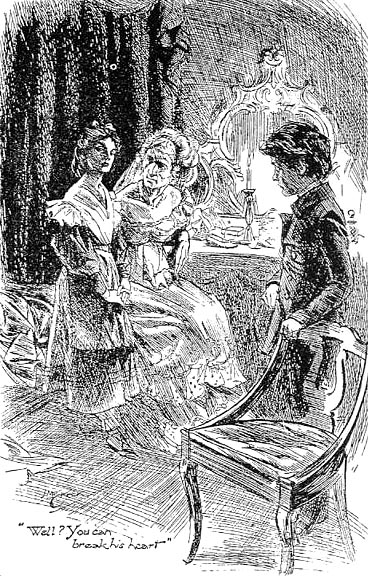
With Great Expectations Dickens strongly criticizes three social problems that afflict Victorian England: the treatment of children, the injustice of the social class structure and the inhumanity of government and Law. In the authors time children were objectified as a virtually cost free commodity of labor to support the industrial revolution. Dickens expresses criticism of the abuse of children in Britain through characterization in Great Expectations. The most poignant example of this is the storys protagonist Phillip Pirrip, referred to throughout the novel as Pip. Pip portrays the abuse of children through example. During childhood he receives...
More "The Great Gatsby" by F. Scott Fitzgerald
essays:
How and why does F. Scott Fitzgerald use Nick Carraway as his narrator of "The Great Gatsby"?
... of Gatsby, and uses an outside perspective, that of Nick Carraway, to analyse and foresee what is to come for himself. "The Great Gatsby" - F. Scott Fitzgerald (Penguin ...
Values shown in the book The Great Gatsby. The Author F. Scott Fitzgerald shows what values he excepts and rejects
... especially writers. It is clear in both My Antonia and The Great Gatsby that Willa Cather and F. Scott Fitzgerald have very clear feelings about ... experiences how the young wealthy people spend their lives by adultery, illegal operations, and partying. F. Scott Fitzgerald based the Gatsby and Nick on ...
"The Great Gatsby" by F. Scott Fitzgerald
... Age by depicting the immorality through symbols. In "The Great Gatsby", F. Scott Fitzgerald shows his disapproval of the times by portraying ...
F. Scott Fitzgerald's "The Great Gatsby" Main Characters' Moral Reassessment
... F. Scott Fitzgerald's The Great Gatsby exemplifies the didactic ending that novelist Fay Weldon describes; an ... for people to achieve their goals, lead to Gatsby's obsession of maintaining his high-class reputation, the American Dream. Up until the last chapters of the novel readers see Gatsby how ...
Social Relationships in "The Great Gatsby"
... Whereas, complexities relate to complicated and intricate issues. The different social relationships discussed in F.Scott Fitzgerald's novel, "The Great Gatsby", are business colleagues, lovers and married partners. The characters involved ...
Compare how settings and societies are essential to the mood in 'The Great Gatsby' by F Scott Fitzgerald and 'The Importance of Being Earnest' by Oscar Wilde
... and F Scott Fitzgerald's 'The Great Gatsby' are set in different historical and cultural contexts. However, there are common themes and moods that both writers create within these different settings to help convey their social comments ...
Symbolism in "The Great Gatsby" by F Scott Fitzgerald and "The Glass Menagerie" by Tennessee Williams
... employed by authors or playwrights to aid in the development of characters or to display themes in novels and plays. F. Scott Fitzgerald uses symbolism heavily in his text "The Great Gatsby", as ...
Themes and Symbolisms in 'The Great Gatsby" by F. Scott Fitzgerald
... The Great Gatsby" is a story about a frustrated love between a man and a woman; however, when we look at the novel in ... in social statuses get in between him and Daisy ever again. Gatsby has immersed himself into a sea of fantasies, some created by him, and some by those ...