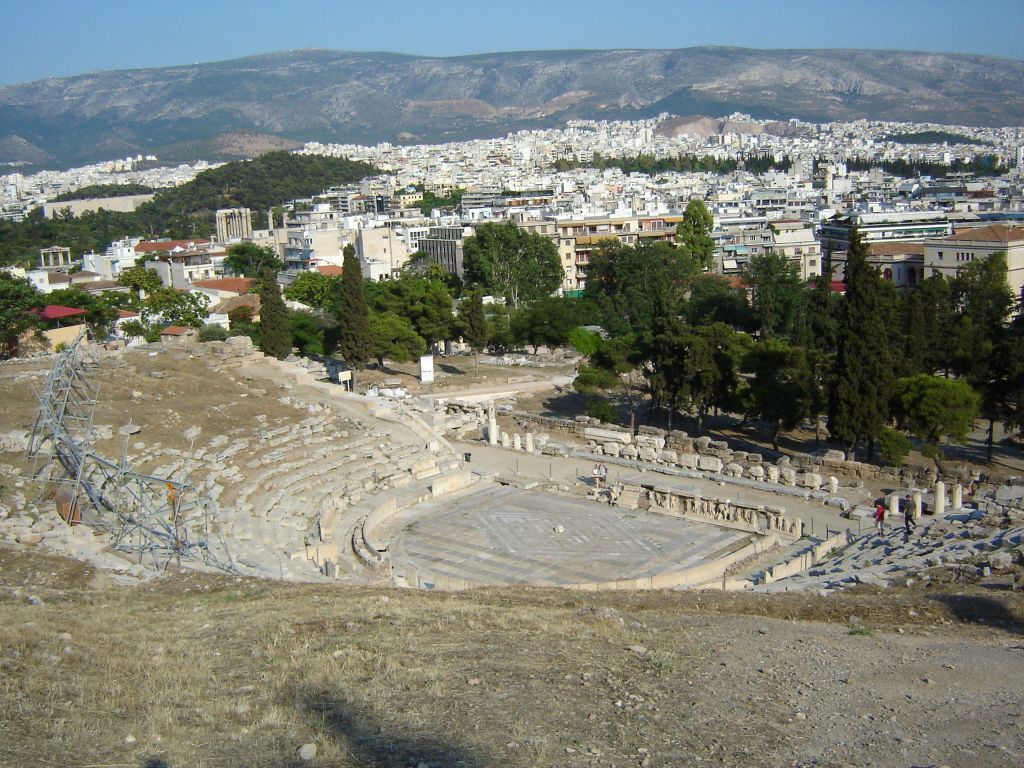
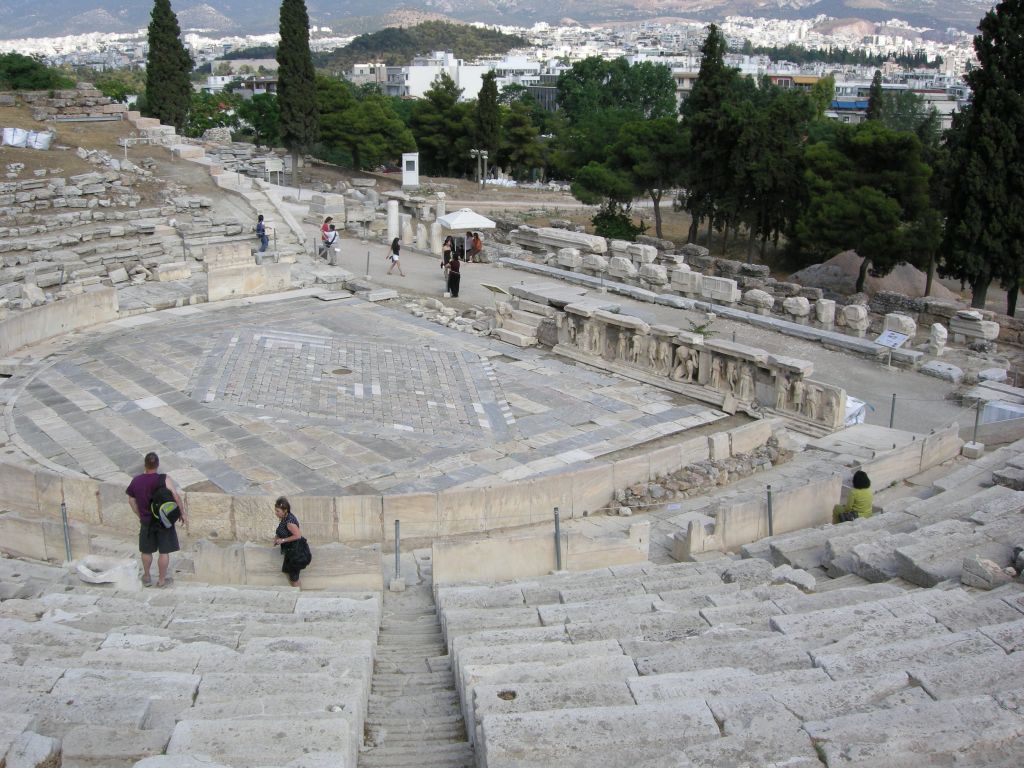
Sophocles and The Greek Theatre.
When ancient Greek theatre is referenced to, it normally means Greek theatre in Athens during the fifth century. The ancient Greek theatre actually consisted of loud music, bright colors, and extensive dancing. Their plays showed violence and daily life, social and ethical plays, war, murder, lust and betrayal. Plays were performed in the daytime. The annual drama competitions in Athens were spread over several, entire days. Actors probably wore little or no makeup. Instead, they carried masks with exaggerated facial expressions. They also wore cothornos, or buskins, which were leather boots laced up to the knees. There was little or no scenery. Initially, most of the action took place in the orchestra. Later, as the importance shifted from the chorus to the characters, the action moved to the stage.An ancient Greek play consisted of three major parts. The play began with a prologue, a simple speech. Then, there was the entrance of the chorus. Finally, there were major episodes, scenes or acts, of the play. There were two major types of Greek plays. There was tragedy, the other one was comedy.
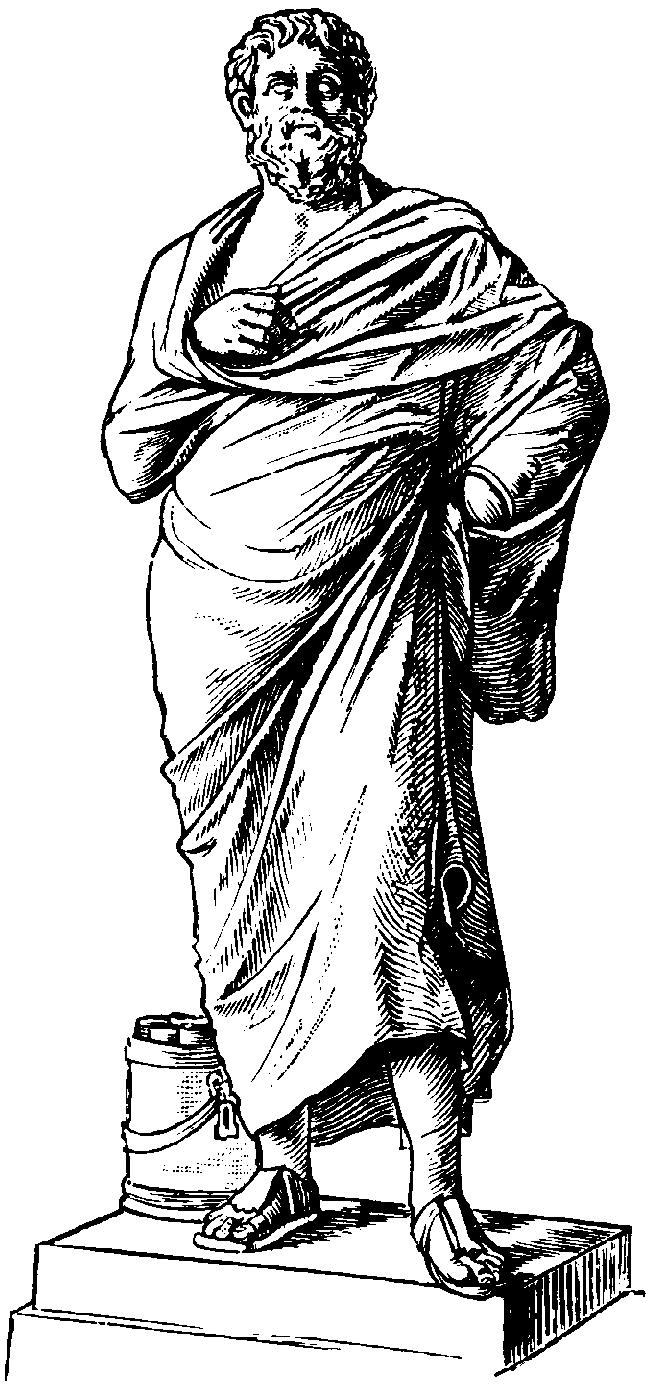
Sophocles was born in 495 B.C. near Athens. He was the son of a wealthy merchant, and he studied all of the arts. By the age of sixteen, he was already known for his beauty and grace and was chosen to lead a choir of boys at a celebration of the victory of Salamis. Twelve years later, his studies complete, he was ready to compete in the City Dionysia--a festival held every year at the Theatre of Dionysus in which new plays were presented. In his first competition, Sophocles took first prize--defeating none other than Aeschylus himself. More than 120 plays were to follow. He would go on to win eighteen first prizes, and he would never fail to...
More Drama
essays:
Beauty and the beast
... sense of shame. His facial expressions were not very visible, due to the lighting effects, and also the fact that he was wearing a mask. This added to the ... , gets on her knees, and sings a sad song. Her stance is very important, as is shows her bowing down to life, and ready for what life is going ...
Ancient Greek Theatre
... the Athens aerea gave some clues for the existance of rectangular orchestras in some ancient greek theaters, but the circular shape was the dominant one and also ... never takes place in front of the spectators). The indoor theaters were called Odeia. They were reserved for musical performances and ...
Ancient Greek Theatre.
... drama competitions in Athens took most of the day, and were spread out over several days. Actors probably wore little or no makeup. Instead they carried masks with exagerrated facial expressions. They also wore cothornos, or buskins, which were leather boots ...
Compare and contrast Brecht and Stanislavski's notions of acting and the role of the actor in the theatre
... enter and leave during a performance at their will. Brechts Epic Theatre used varied means of conveying the verfremdungseffekt. He often had characters speaking in the third person or reading out stage directions. Sometimes he even used masks or makeup on ...
With reference to Bertolt Brecht and John Osborne, discuss ways in which political viewpoints have been communicated to a theatre audience within the last century.
... wing theatre, critical of the capitalist system and expressing in its work the need for radical change. However, most theatre is ... abide by societal mores when the short end of capitalist competition leaves them without food or shelter. The play criticised the ...
The Conventions Of classic Greek Tragedy mention the role of thespis, Dionysus The Chorus and the Dithyramb
... play, and help the chorus tell the story, by speaking with the chorus leader. We know that Thespis won the prize in the very first drama competition, which was held in Athens in ...
Compare and contrast Brecht and Stanislavski notions of acting and the role of the actor in the theatre
... enter and leave during a performance at their will. Brechts Epic Theatre used varied means of conveying the verfremdungseffekt. He often had characters speaking in the third person or reading out stage directions. Sometimes he even used masks or makeup on ...
Oedipus the King, by Sophocles
... the world. From this Greek tragedy, I learned more about their manners, customs and ideals. I've grown to appreciate their love of beauty, their joy and laughter, as well as the sorrows they experienced in life. I also realized how ...