Sophocles: "Antigone"- The differences between Creon and Antigone.
Throughout the play, the difference between Creon and Antigone is vividly shown. By the end of the play, Antigone, it is evident that a total of five characters have lost their lives. This is due to the characters' failure to choose where their loyalty and obligation should stand, thus creating conflict. The main character of the play, Antigone, is forced to choose a decision between abiding by the law, and showing obligation to her family. King Creon is also forced to make a decision between his moral obligation and his family obligation, but his actions create a series of tragic happenings.
Moral obligation is an obligation arising out of considerations of right and wrong. With this in mind, one could say that Creon, Antigone's uncle as well as the king of Thebes, chooses to act with moral obligation. His decision to forbid the burial of his nephew Polyneices was to prove that he would not allow a traitor to be honored by being given a proper burial. His niece, Antigone, refuses to tolerate his order, and buries her brother, Creon's nephew, anyway, so she is sentenced to death. Not even his own son was unable to sway his decision. Creon was a man of the law, and since he was king, he was not about to bend his rules in fear that he may lose control of his people. His actions show a neglect of his family and a failure to drift from the responsibility that his job impresses upon him.
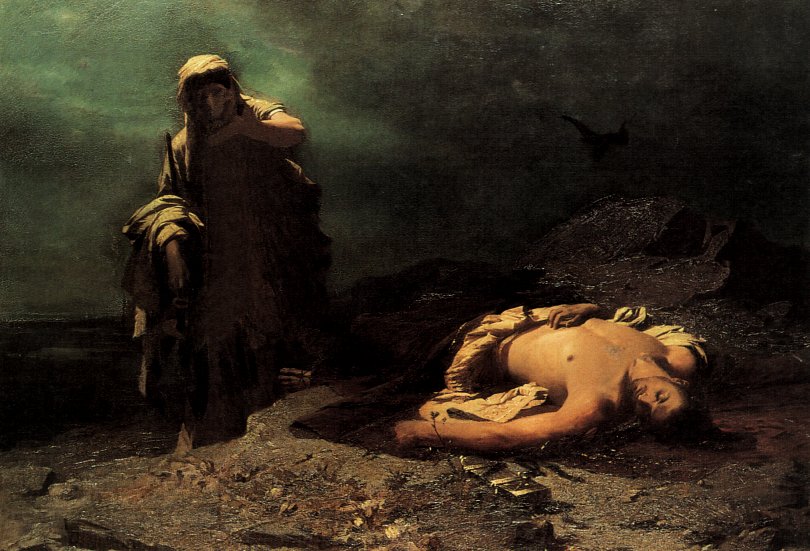
On the contrary, Antigone demonstrates family obligation. Family obligation is an obligation arising out of consideration of ones family. Antigone shows consideration for her family with whatever she does. When Antigone first hears of the decree Creon has imposed, stating that no one is to bury the body of...
More Greek Language & Literature
essays:
Oedipus and Creon: Leaders of Thebes
... proper burial. Despite warnings from the town and Tiresias, Creon carried out the sentencing of his niece by sealing her in a cave. His stubborn character led to defiance of the Gods, which led to his downfall as King of Thebes ...
Character Analysis of Creon Antigone, by Sophocles
... though Antigone is the name of this play, Creon, the ruling king of Thebes with a no turning back attitude, proves to be the main character. Creon rules ... better of the city of Thebes. His power completely forces him to believe that no one is above him. That is where the conflict began for Antigone and ...
Major characters in a novel or play usually undergo a change of some sort. In the novel or play you have studied, hot is the change in the major character linked to a key theme or themes?
... duration of the play. Like Antigone's character, Creon's character also shows many themes and ideas tied to his character. A major theme tied to his character is loyalty. Creon, who is the king of Thebes, is ... a proper burial like her other brother, Eteocles, but Creon would ...
Essay on Antigone's role on the play
... his family and everything that was dear for him so he would be seen as the great King of Thebes. These conflicting characteristics and themes that are portrayed by Creon and Antigone make ...
Antigone
... another, Creon, king of Thebes, forbade the rebel Polynices' burial. Antigone disobeyed him, performed the rites, and was condemned to death for what she had done. Now the question arises, 'Did Antigone take proper action ... ashamed of my loyalty to my brother?', Antigone states. Creon didn ...
'Creon and Antigone are honourable people, yet both are fatally proud, and that is the source of the tragedy.'
... the burial of her brother, he too, falls into a place where death is on his mind. The difference between Antigone and Creon is that Antigone is loyal, and Creon is disloyal. Although, he is King of Thebes and ...
The Law of Anitgone
... be king of Thebes. In the end both princes died. Another major conflict is between Creon and Polyneicês, and his assertion to the general population. Creon, the ...
The concept of Parrhesia in Antigone, by Sophocles.
... just. Antigone takes a risk by defying Creon, the king of Thebes. She buries her brother whom Creon ruled would be denied a proper burial and ... that Creon has a guilty conscience, he questions Creon's honesty in his loyalty to Thebes. At this, Creon is ...