Every positive and negative act performed by humans and animals is accomplished through motivation and behavior. Being hungry and experiencing pains in the stomach motivates us to eat. Being angry motivates us to yell, and our infant crying motivates us to nurture. According to numerous theories, motivation may stem from a desire to reduce physical pain and increase happiness or may simply be a result or specific needs and wants.
Motivation can be broadly defined as "the psychological feature that arouses an organism to action toward a desired goal; the reason for the action; that which gives purpose and direction to behavior" <!--filtered-->(WordNet, 2008, ö 1)<!--filtered-->. Motivation can also be described as the energy that compels a person to act in a specific way to achieve a particular outcome or result. Motivation can be either intrinsic or extrinsic and can involve complicated systems of rewards (something given or received in recompense for worthy behavior), incentives (the anticipated reward or aversive event available in the environment), and motives (a person's internal disposition to be concerned with and approach positive incentives and avoid negative incentives) <!--filtered-->(Deckers, 2005)<!--filtered-->.
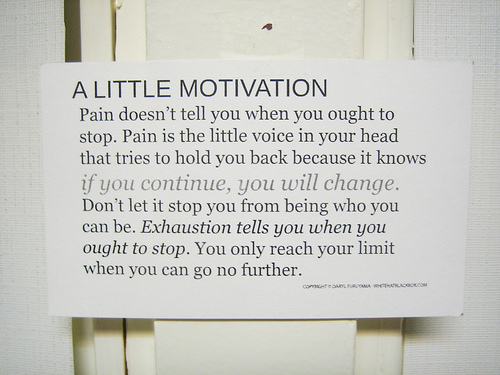 motivation-001
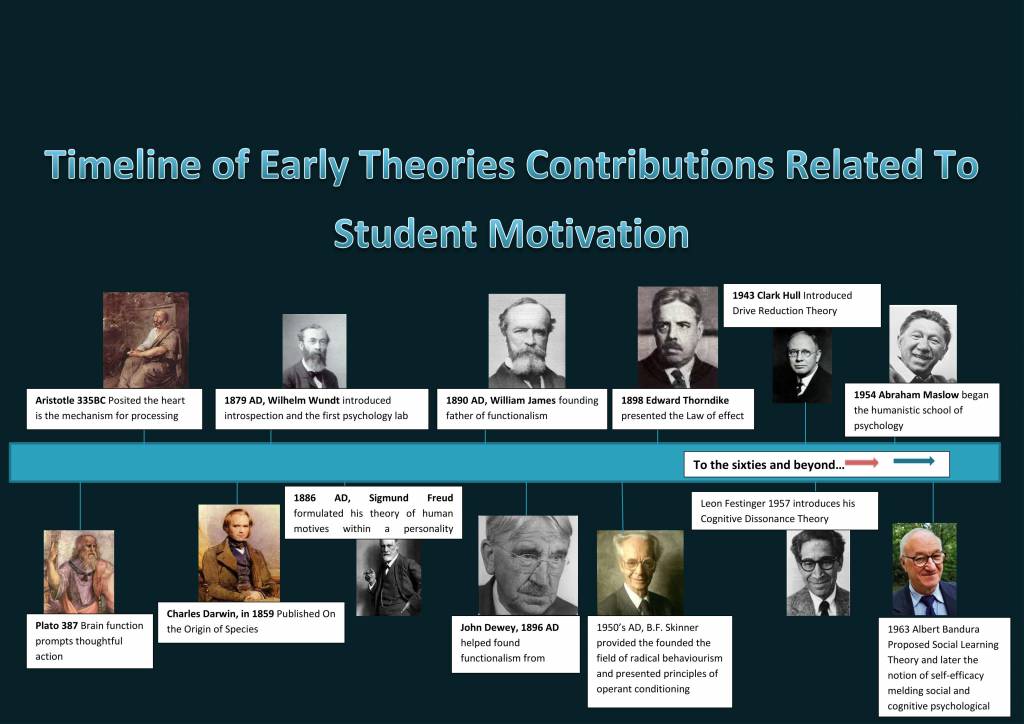 English: Shows early psychological student motivat...
 The Hungry Hustlerz: Starvation Is Motivation
Intrinsic motivation refers to the type of motivation that stems from within an individual (biologically or emotionally) rather than from any external source. Malone and Lepper (1987) defined intrinsic motivation more simply as "what people will do without external inducement." Intrinsically motivated people will engage in activities for no reward other than the pleasure gained from the act itself <!--filtered-->(Purdue, 2008)<!--filtered-->. Physiological and neurological counterparts such as desires, wants, and urges are a major source of intrinsic motivation. According to Deckers (2005, pg. 10) "These mental events may be interpretable or reducible to parallel events that are happening in the brain."
Extrinsic motivation is a type of motivation stemming from environmental...