The space tourism industry is becoming more of an affordable reality for potential travelers. The introduction of the Ansari X Prize promised $10 million dollars to the first private organization who can successfully demonstrate a commercial spacecraft (David, 2004). The Scaled Composites Corporation led by renowned aviator Bert Rutan claimed this prize in October of 2004 through the use of their uniquely designed spacecraft SpaceShipOne (Valdes, 2004). Scaled Composites has now teamed with the Virgin Group and is now developing an even more advanced spacecraft known as SpaceShipTwo (Spaceship Two, 2009). It is hoped that this spacecraft will be the first to offer suborbital spaceflights to paying citizens (Spaceship Two, 2009). SpaceShipTwo will operate out of the world's first commercial spaceport, Spaceport America (David, 2007). This paper will review the Ansari X Prize, SpaceShipOne, SpaceShipTwo and discuss the construction of Spaceport America. The impact of these topics to the growing space tourism industry will be discussed throughout the document.
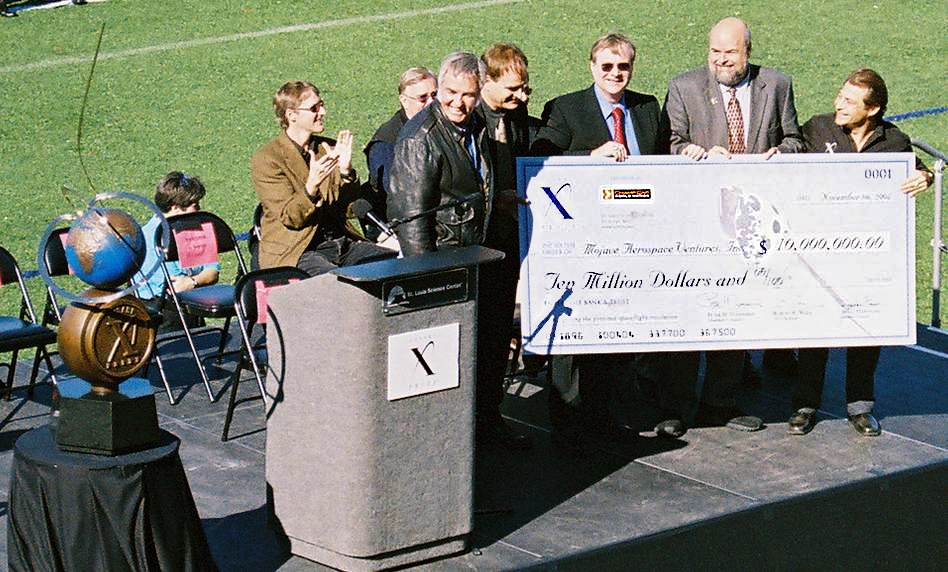 The first, titled the Ansari X Prize, was presente...
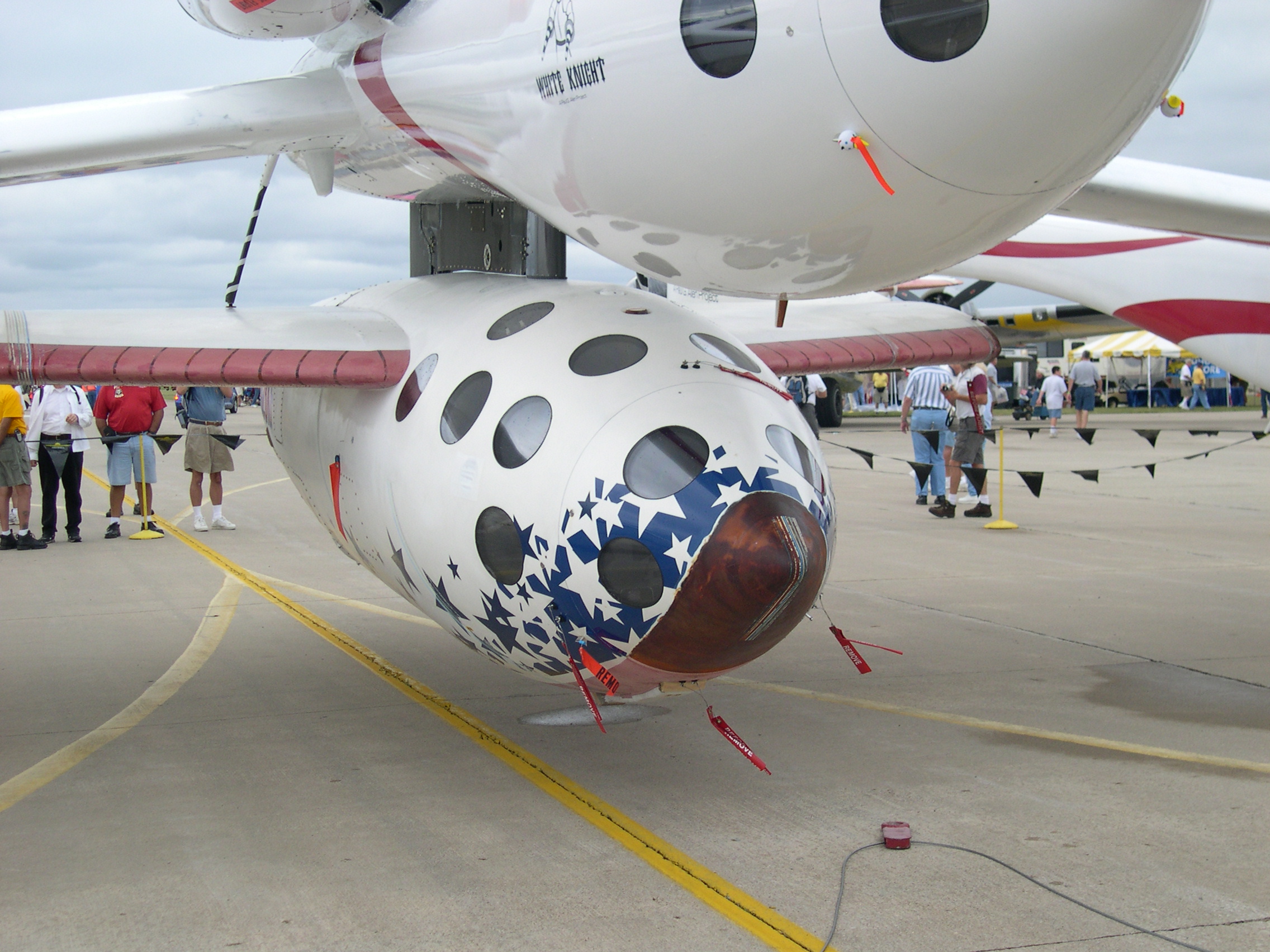 SpaceShipOne hanging under White Knight
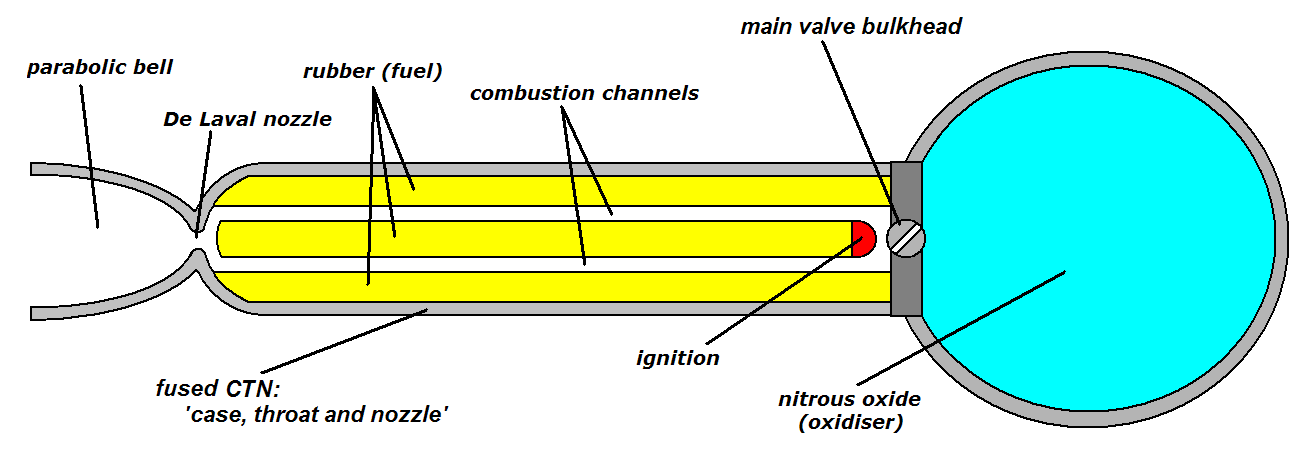 Rocket engine of Scaled Composites SpaceShipOne
Ansari X PrizeThe X Prize Foundation awards prizes to individuals or teams that are able to achieve specific goals set by the organization. The prizes awarded are at least $10 million dollars. They are given based on an accomplishment that has the potential to benefit humanity. They are typically very popular and well known throughout the science industry. The X Prize Foundation hopes to inspire creativity and entrepreneurship through the issue of these prizes (Overview, 2009).
One of the most famous X Prizes to date was the Ansari X Prize. Over 20 teams participated in the Ansari X Prize. They all hoped to be awarded the $10 million dollar prize. To win the prize, the successful team had to demonstrate the capability of the first private spacecraft. The spacecraft had to be able to carry three people 100 kilometers above...