Stalin's harsh rule during the Cold War led to increased criticism and suspicion at local and international levels and raised concern for containment officials in the United States. His communist world of censorship in Eastern Europe created many conflicts with western democracy and made many fear of his future aggressive attempts to gain more power. Stalin himself was an authoritative mastermind that teetered on the brink of insanity, and his actions through the Cold War only seemed to attest to that. One man, one mind, a whole world of difference.
After years of being in power of a "weak, newly revolutionized Bolshevik country", Joseph Stalin was able to make a name for Russia again. Translated meaning "man of steel", Stalin lived up to his name with a fierce and unmerciful rule. His forced rapid industrialization earlier in the century made Russia an overnight world power and gave Stalin a chance to put his plans into action.
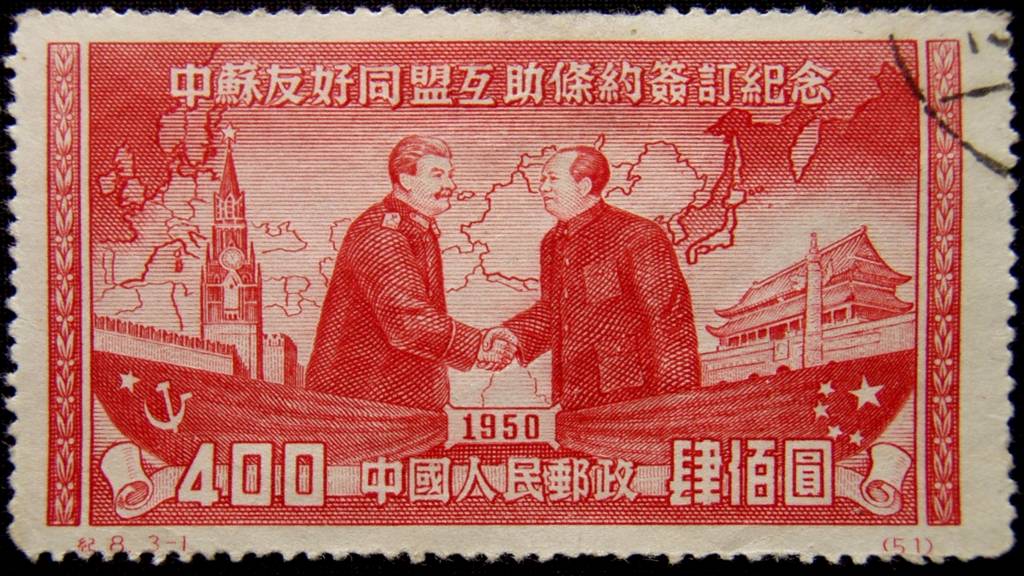 Chinese Stamp, 1950. Joseph Stalin and Mao Zedong ...
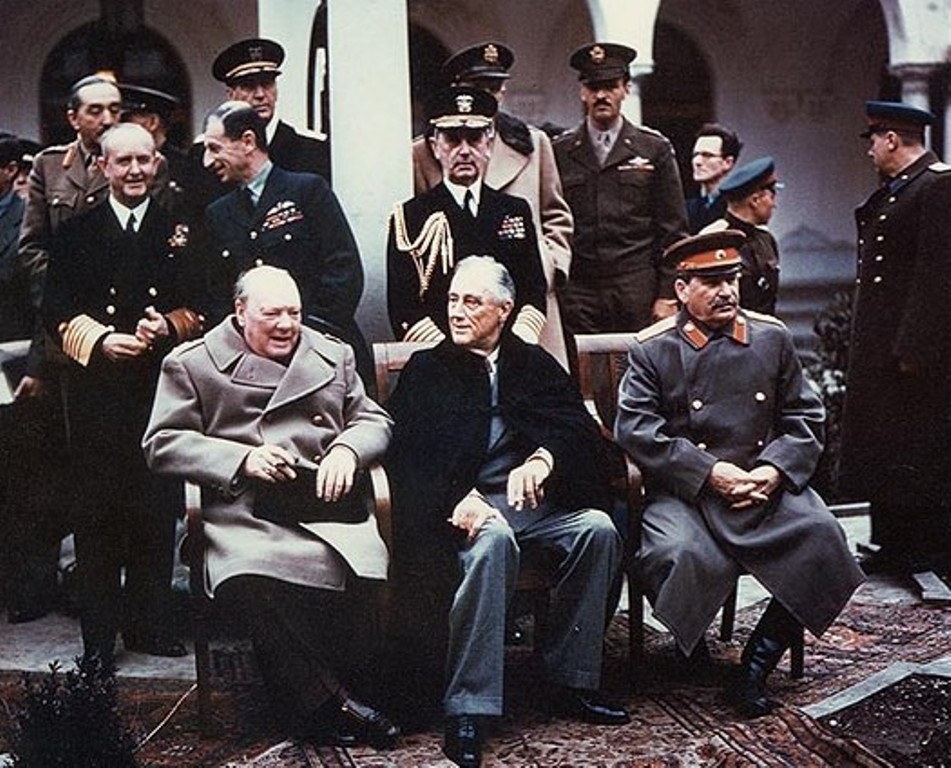 Yalta summit in February 1945 with (from left to r...
 February 4–11: Yalta Conference
After a thorough victory in World War II, with the help from the Allies, Stalin used his new found trust and power to turn Russia and it's new Eastern European "satellite" territories into a communist union, otherwise known as the Union of Soviet Socialist Republics. Stalin argued that these satellite territories were absolutely necessary for their border protection in the West, acting as a kind of buffer zone. Stalin was resolute in having communist allied countries on Russia's western border, and, these "spheres of influence" provided a consolidated base for the leading communist country. This openly revealed Stalin's ulterior motives to guarantee the security of the Socialist Union. He could care less what happened to those "puppet states" in a real-time crisis and treated them as he saw fit. This is just one of the reasons why Stalin raised suspicion worldwide. (...
A bit sketchy at first
the USSR was founded in 1922, before the end of WWII. Also, the Allies didn't trust him because at the Potsdam conference, Stalin refused to hold the free elections in the USSR that he had agreed to at the Yalta conference. Otherwise it was pretty good.
0 out of 0 people found this comment useful.