20Th Century State-Business Relations:
Love or Hatred?
The Ottoman Empire established a strong tradition of government direction of the economy. Ottoman economic doctrine ascribed to the state both the right and the duty to control the economy for the common good. The state controlled a large proportion of the land and suppressed power centers, blocking the development of a landed aristocracy. One's position in the imperial hierarchy was the primary determinant of income. Because the sultan confiscated his functionaries' wealth when they died, status could be passed on only by means of education. For example, candidates for positions in the bureaucracy were required to have command of the Ottoman language. Peasants and artisans also claimed and received protection from the state, often at the expense of economic modernization. The bureaucracy had little interest in economic growth, which might lead to the rise of a new class that would challenge its dominance.
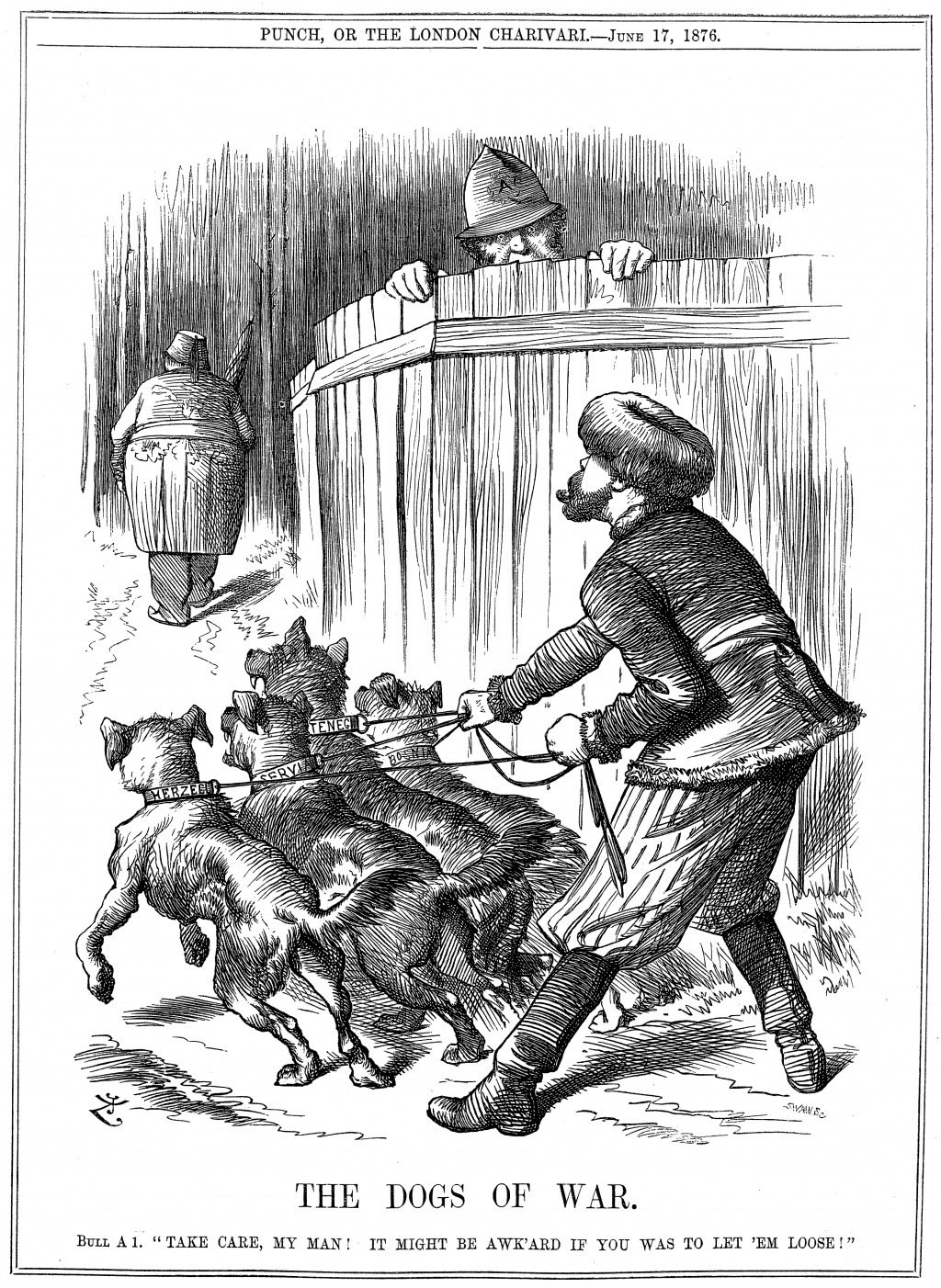 "The Dogs of War" - a Punch cartoon from June 17, ...
 Turkeys in Folsom
 English: the original image is dated before 20th c...
To ensure control of certain urban-based production and service functions, they were reserved for minority groups.
Republican Turkey inherited attitudes and memories from the Ottomans that continue to play a key role in the country's political economy in the late twentieth century. Republican leaders believe that the state has a duty to intervene in the economy, not only to strengthen the nation against foreign intervention but ultimately to further the well-being of the people. The Turkish development experience during the post-War period has been characterized
by three broad policy phases: (i) agriculture led growth in the context of an open and outwardoriented development strategy during the 1946-1960 period, (ii) import-substitution and industrial development based on a protected domestic market during the 1961-1977 period and (iii) the post-1980 neo-liberal era based on a strategy of economic liberalization and outward oriented economic development.
Three key elements are crucial to an adequate...