Stem cell research is the future of medicine. Stem cells hold the cures to many diseases, such as diabetes, paralysis and maybe even cancer. However, stem cells are a major issue in the United States at this current time. There are many people for and against the research of these valuable cells, in which scientists have only just begun to explore. One can see through studying these amazing cells that they hold much importance and to fully understand them a person must step into the science lab and observe their greatness. The main question is what are stem cells and what future do they hold for patients suffering incurable diseases and injuries?
"In 1988, the Stanford professor of pathology and cancer biology, Irving Weissman, reported having isolated blood-forming stem cells from mice" (Embryonic). This was the beginning of stem cell research. This was the period where scientists knew they had the ability to research stem cells and know that they were not hunting for something that wasn't there.
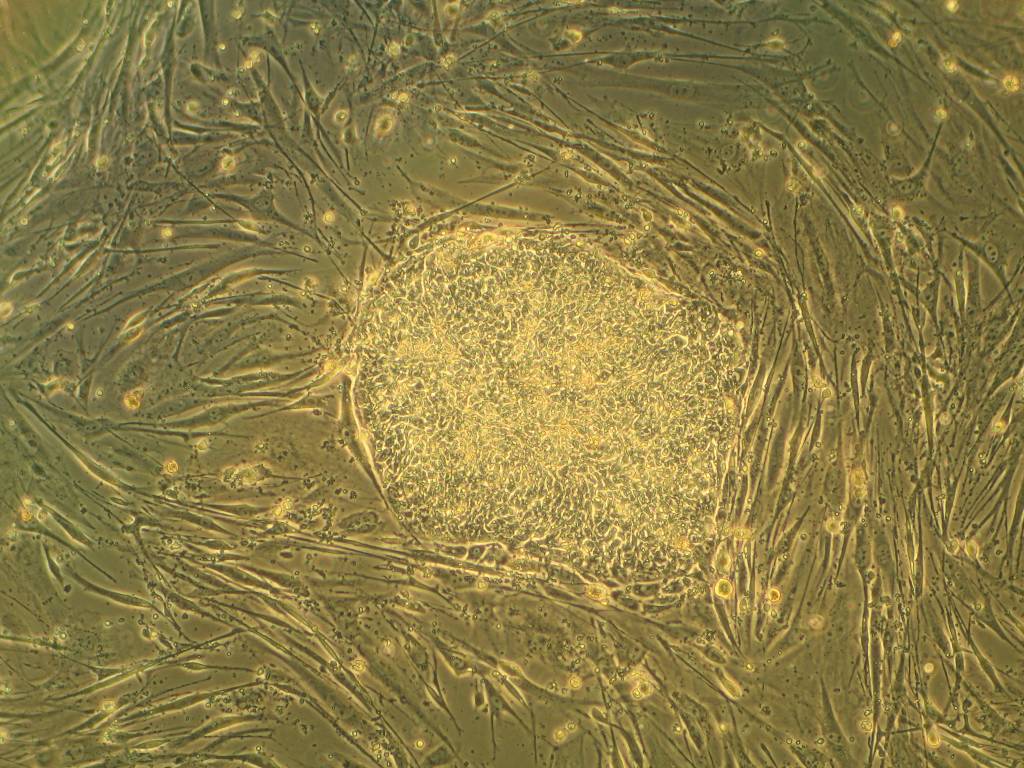 A colony of embryonic stem cells, from the H9 cell...
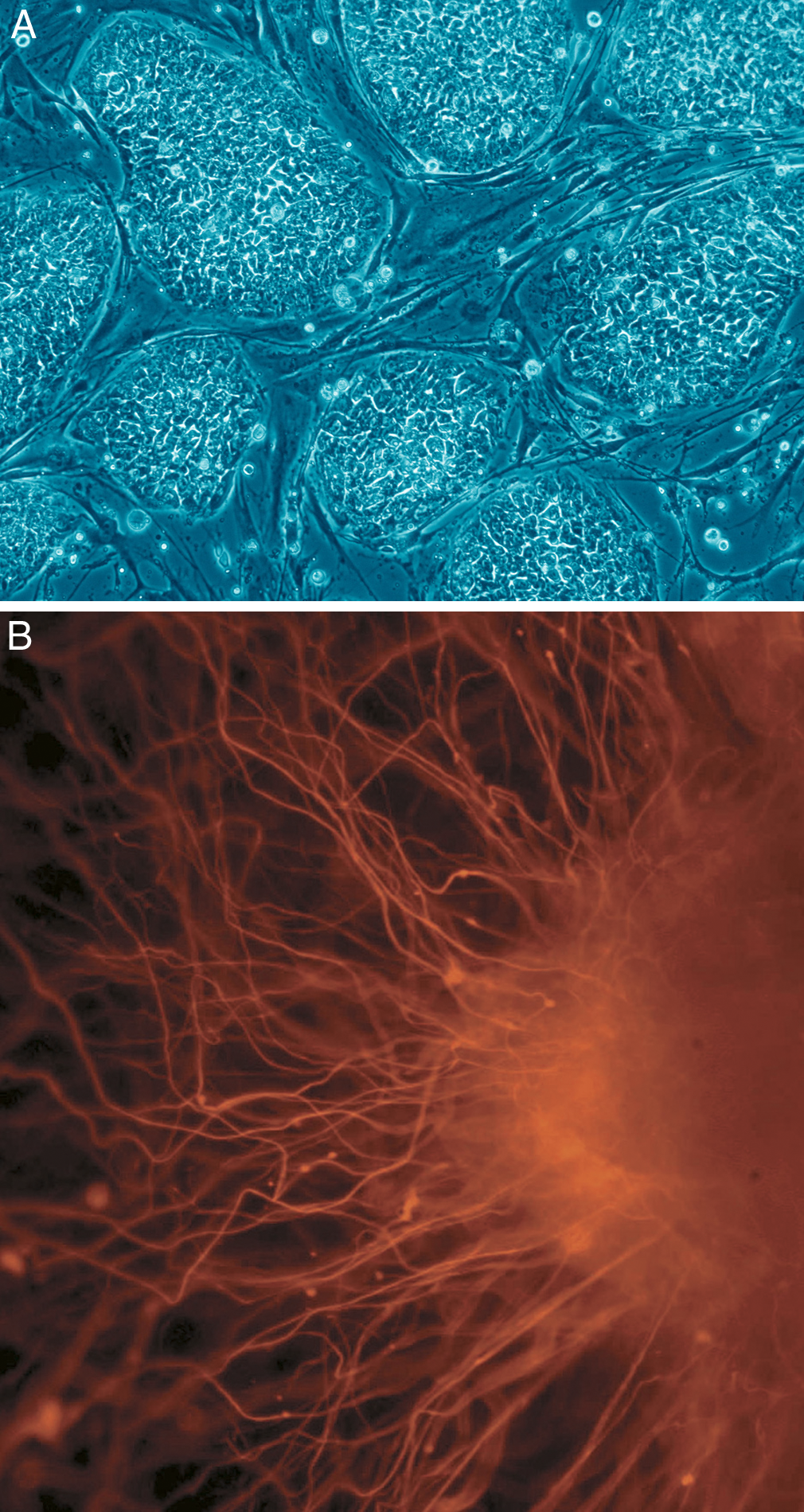 English: Embryonic Stem Cells. (A) shows hESCs. (B...
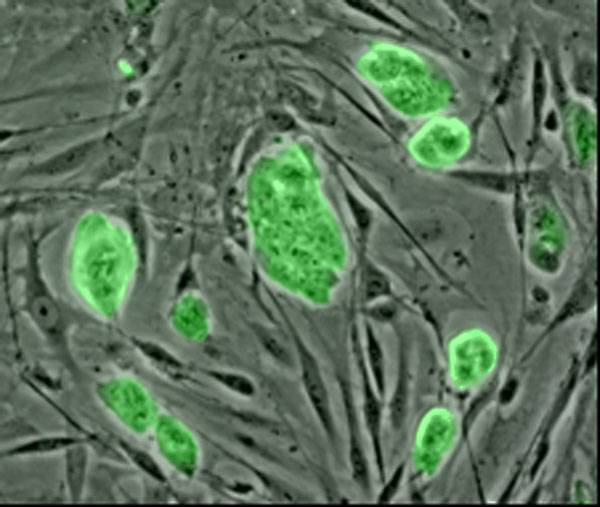 Mouse embryonic stem cells. More lab photos
After Weissman's accomplishments in 1988, "four years later in 1992 he isolated stem cells from humans" (Embryonic). These amazing achievements were extremely rewarded with the hopes that stem cells would help cure or treat patients with such diseases as Alzheimer's, Parkinson's disease, Multiple Sclerosis, patients who have been paralyzed, and maybe even victims of cancers.
To understand what stem cells are you must know what they do. As defined by the Webster Dictionary, "a stem cell is an unspecialized cell that gives rise to differentiated cells". "A differentiated cell is a cell that is specialized for a certain aspect of the body, such as heart cells or liver cells" (Stem Cell Basics).
Stem cells have two important characteristics that distinguish them from other types of cells. First, they are unspecialized...