Operation Desert Storm / Desert Shield
In 1979 Saddam Hussein took control of Iraq, and immediately set the tone for his rule by killing 21 of his cabinet members. He wanted to make his country whole once again so on August 2, 1990 he invaded Kuwait and in less than 4 hours he had taken Kuwait and controlled 24% of the world's oil supplies. It seemed as if his next target was Saudi Arabia. Within days, the United States, along with the United Nations, demanded Iraq's immediate withdrawal. U.S. and other UN member nations began deploying troops in Saudi Arabia within the week, and the world-wide coalition began to form under UN authority.
There are three basic causes to the Iraqi invasion of Kuwait in 1990. First, Iraq had long considered Kuwait to be a part of Iraq. This claim led to several confrontations over the years, and continued hostility.
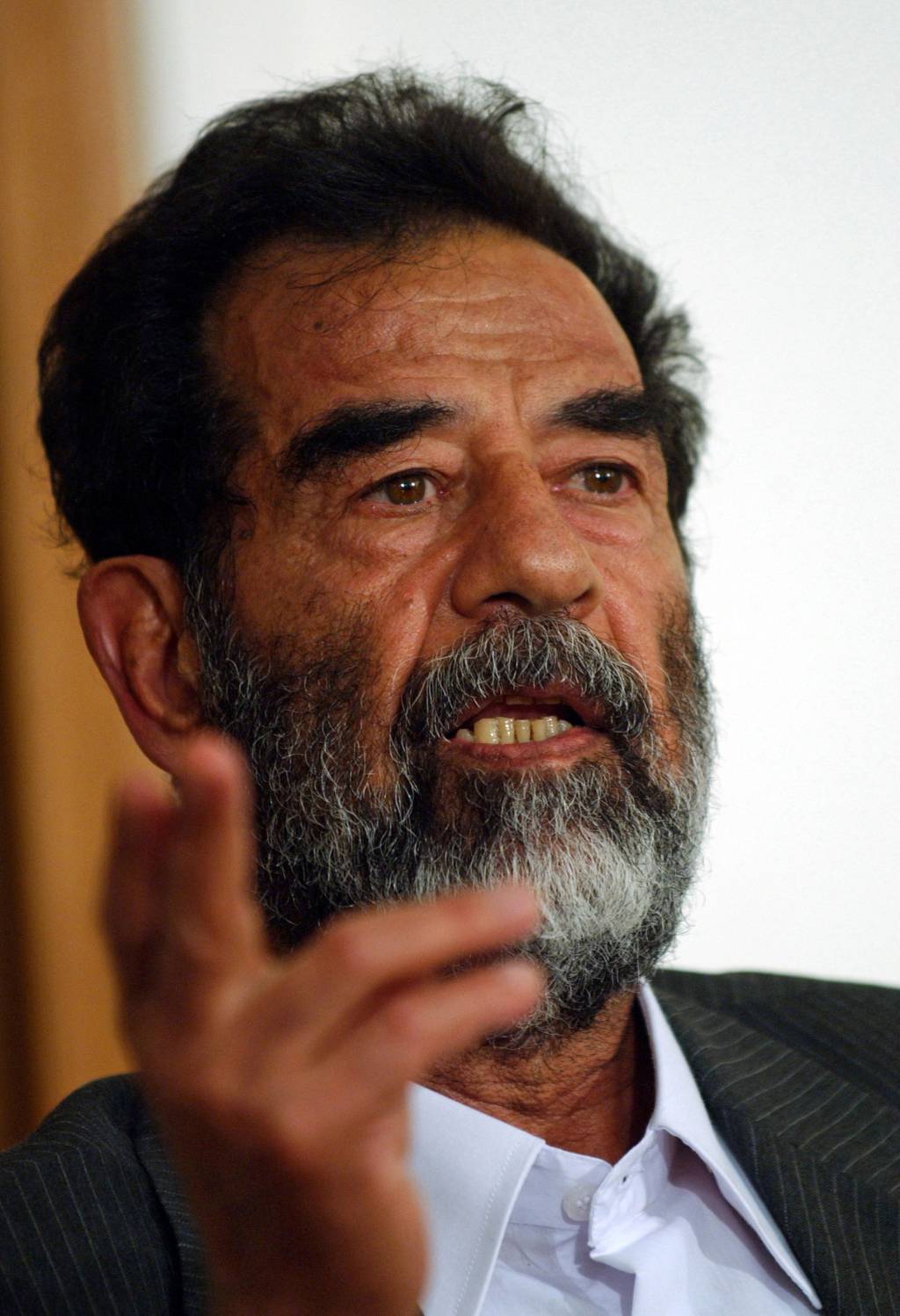 English: Former President of Iraq, Saddam Hussein,...
 April Glaspie shakes hands with Saddam Hussein
 Republic of Iraq Former President Saddam Hussein, ...
Also, it can be argued that with Saddam Hussein's attempted invasion of Iran defeated, he sought easier conquests against his weak southern neighbors.
Second, rich deposits of oil straddled the ill-defined border and Iraq constantly claimed that Kuwaiti oil rigs were illegally tapping into Iraqi oil fields. Middle Eastern deserts make border delineation difficult and this has caused many conflicts in the region.
The war began with an Iraqi invasion of Iran and degenerated into a bloody form of trench warfare as the Iranians slowly drove Saddam Hussein's armies back into Iraq. Kuwait and many other Arab nations supported Iraq against the Islamic Revolutionary government of Iran, fearful that Saddam's defeat could herald a wave of Iranian-inspired revolution throughout the Arab world. Following the end of the war, relations between Iraq and Kuwait deteriorated; with a lack of gratitude from the Baghdad government for help in the war and the...