Symbols of a Great Author
American novelist and short story writer, Nathaniel Hawthorne has captured the hearts and imagination of America. Through his vivid writing style and mystifying themes, he has become one of America's most famous short story authors. Though he uses various literary techniques, Hawthorne seems to enjoy using symbolism in many of his writings. It is prevalent in many of his short stories, including "Young Goodman Brown."
Hawthorne was born on July 4, 1804 in Salem, Massachusetts, "the descendent of a long line of Puritan ancestors, including John Hawthorne, a minor official presiding magistrate in the Salem witch trials."(Terence) His father, Nathaniel Hawthorne Sr., was born in 1775 in Salem. "Among his ancestors were Major William Hawthorne (c. 1606/7-1681), known for his persecution of Quakers, and John Hawthorne (1641-1717), the son of Major William and Anna Hawthorne who were stern interrogators of the accused witches."(Reuben) After his father was lost at sea when he was only four, his mother became overprotective and pushed him toward more isolated pursuits. The two of them would rely upon each other for emotional comfort. Tales of his family, and legends from a dark past haunted Hawthorne throughout his life. Hawthorne's childhood left him overly shy and molded his life as a writer and writing style. Perhaps one would think this was how he formed some of his inspiration for many of his stories.
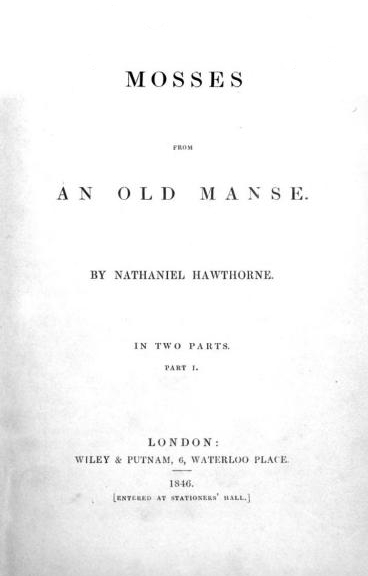
Hawthorne turned to writing after his graduation from Bowdoin College. "His first novel, Fanshawe, was unsuccessful and Hawthorne himself disavowed it as amateurish."(Reuben) But that didn't discourage Hawthorne from continuing writing. He later wrote several successful short stories, including "The Minister's Black Veil," "The Birthmark" and "Young Goodman Brown." However, insufficient earnings as a writer forced Hawthorne to start a "career as a Boston Custom House measurer in 1839. However, after three years...
More Authors
essays:
This essay explores Nathaniel Hawthorne's usage of symbolism and foreshadowing in his short story "Young Goodman Brown".
... Young Goodman Brown is written as a journey of internal conflict, where Brown is oblivious to his role and sins. This work contains wicked and evil components, and Nathaniel Hawthorne leaves Brown hopeless ...
Historical biographical analysis of "Young Goodman Brown"
... a writer as we will see with "Young Goodman Brown."(Moss 421) Nathaniel Hawthorne himself was born in Salem Massachusetts, in 1804. When he was four years old Nathaniel's father, Captain Nathaniel Hathorne ...
Is evil part of Human Nature? Discuss with regards to "The Minister's Black Veil" and "Young Goodman Brown" by Hawthorne
... nature of sin itself, through the main characters of Hawthorne's stories, and through the people and society surrounding the main characters. In Young Goodman Brown's ...
"The Life and Times of Nathaniel Hawthorne"
... 1850). Nathaniel Hawthorne's "Young Goodman Brown" has a creative underlying mood of good verses evil that is throughout this short story. Hawthorne makes use of colors as an indirect literary way ...
Arthur Miller's Version of the American Dream, Death of a Salesman
... one must work hard but also take chances. Willys father abandoned his sons when they were still very young, and moved to Alaska. Later on, Willys brother, Ben ... all of Willys attempts to live out the American Dream, of starting ...
"Echoes of the Great Song" by David Gemmell.
... find their way into this story. Echoes of the Great Song by David Gemmell is a fantasy tale filled with excitement and at the same time philosophical ... yet his position among his people is more important than his life. The short fight this nomad leader engages in is indeed an honorable and noble act. ...
1965 View on the censorship of Huckleberry Finn, in the eyes of a member of the Ku Klux Klan.
... minds of good American children. If this kind of speech of equality ... people of this great country. One hundred years ago a tyrant of this country gave up the wishes of our great founding fathers, and ...
Emily Dickinson.
... s Massachusetts was quite puritanical and because of this Edward Dickinson raised his children in the strict, Christian tradition. As Emily got older she began to challenge her father?s ...