Systems Approach in a Technology Project
Before setting about in defining a systems approach to a technology project, it would be essential to define a Systems Development Life Cycle. An SDLC can be defined as:
Any logical process used by a systems analyst to develop an information system, including requirements, validation, training, and user ownership.
An SDLC should result in a high quality system that meets or exceeds customer expectations, within time and cost estimates, works effectively and efficiently in the current and planned Information Technology infrastructure, and is cheap to maintain and cost-effective to enhance (SearchVB, 2003).
This waterfall archetype is the oldest and most widely used approach to system development; and was developed by Winston W. Royce in 1970. This systems approach was designed to progress successively as follows:
Project planning, feasibility study: Establishes a high-level view of the intended project and determines its goals. Asks the question: Is the project technically, operationally, financially and legally feasible? The feasibility study is used to determine if the project should get the go-ahead.
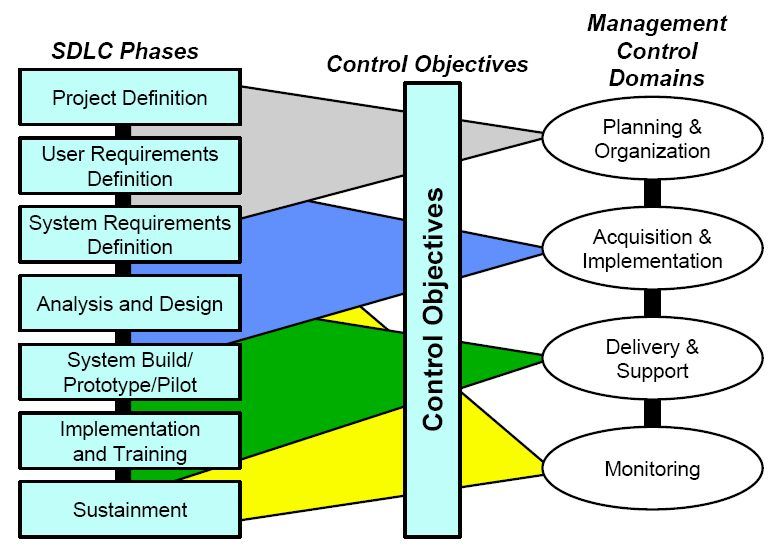 English: SDLC Phases Related to Management Control...
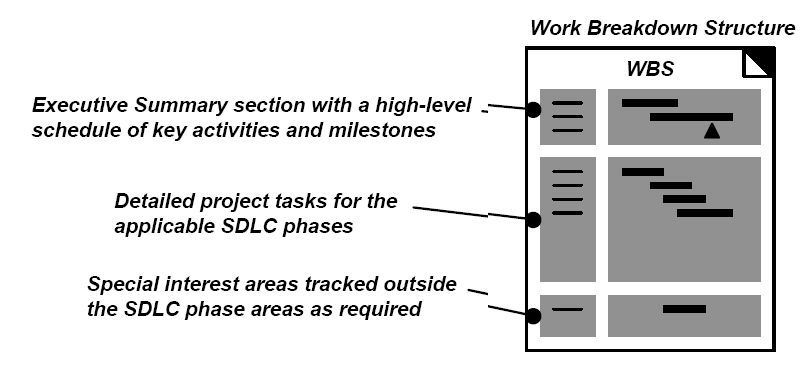 English: SDLC Work Breakdown Structure
 English: Systems Development Life Cycle - Maintena...
Systems analysis, requirements definition: Refines project goals into defined functions and operation of the intended application. Analyzes end-user information needs. Gather the requirements for the system. This stage includes a detailed study of the business needs of the organization.
Systems design: Describes desired features and operations in detail, including screen layouts, business rules, process diagrams, pseudo code and other documentation. This focuses on high level design (what programs are we going to need and how are they going to interact), low level design (how the individual programs are going to work), interface design (what are the interfaces going to look like) and data design (what data are we going to need).
Implementation: The designs are translated into code. Computer programs may be written using a conventional...
SDLC
Your essay covered all phases of SDLC and you also provided some good references.
3 out of 3 people found this comment useful.