Tackling a paradox: Do we or don't we arrive at the destination?
Suppose I'm to walk on a straight road from A to B: I wear a pedometer, (as well as my sneakers) and set off. The distance (AB) is 100 meter. I come to a place where my pedometer shows 50. "Half of the way", I think and keep going, roughly estimating the remained distance: I'm going to walk half of the remained 50, then half of the remained 25, then half of the remained 12.5, then half of the remained 6.25, then half of the remained 3.125, then... Will I really arrive at B? Mathematically speaking, NO! I may get so so close to B, but never arrive at B itself. Then, why I really do arrive at B?
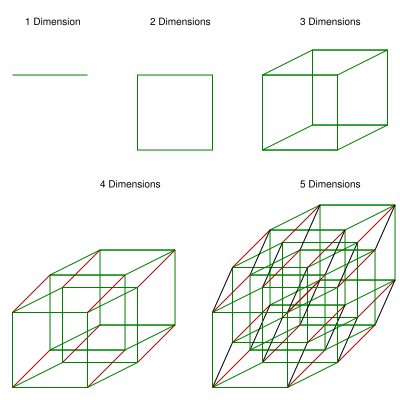
It's perhaps not that easy to answer. However, I just try to afford some rough conjecture: Focusing on the different nature of Bs (arriving points) may shed some light upon the dilemma: Realistically speaking, B is a place, not a single point. It's a tree, or stone, or a cottage at the end of the road, where is 100 meter away from the starting station, A. Why we arrive at B? Well, because we take B as some visible, concrete spatial thing. B occupies some space; it has a three-dimensional nature NOT comparable to the mathematical B which is just a point, consisting of no dimension. I can claim that I actually never arrive at point B (some invisible theoretical thing) at the end of my journey, but I do arrive at that B (a stone, or a tree, or even an extremely narrow upright beam) which is placed right 100 meter away from the starting point A. Before launching into any further inferences, let's discuss the very nature of point itself: Mathematically speaking, what is a point? Is it some...
More Mathematics
essays:
What I do and don't understand in 8th. It's a small essay about whole numbers and integers.
I understand many topics in math such as Integers. Integers are made up of Natural Numbers (counting Numbers 1, 2, 3...)Whole numbers (0, 1, 2, 3...)Integers consist of negative and whole numbers (...-1,-2,-3, 0,1,2,3...). Key words to know when dealing with integers are absolute Value (the ...
The Essence of Problem-Solving in Algebra
... mathematical intuition are necessary not only for obtaining unambiguous answers to the questions of transfinite set theory, but also for the solution of the problems of finitary number theory (of the type of Goldbachás conjecture ...
Fibonacci Numbers in Flowers
... deeper physical process. That is why the spirals are imperfect. The plant is responding to physical constraints, not to a mathematical rule." (http://www.world-mysteries.com/sci_17.htm#top). If a flower is examined closely enough you can see the ...
Assignment regarding the fibonacci sequence and the golden ratio - maths assignemnt
... to look at it, of course we know all the mathematical reasons why it is special, but not enough about it considering the affect and amazing relationships between it and some ... see if it works the same way. The number in light blue is the first number in Pascal's triangle to ...
Does Purchasing Power Parity hold?
... in the inference techniques. An ordinary element, though, is that the data extends from side to side 1997. The preliminary point of the paper is to text how the proof alongside unit roots in real exchange rates, and thus confirmation of ...
Bucking the Trend: Faulkner and McCullers Create the Mammy Outside the Box.
... in Roskus, Versh, T.P. and Frony that implies at some point a degree of sexuality exists in Dilsey. Yet the fact ... believe that McCullers work, though focused on Frankie, actually was speaking for individuality and freedom for all women. Berenice's tales ...
This is the importance of math in education. thoughts and views on why one would choose to study this subject.
... best subject in school to take is mathematics. It has so much to offer and so many different courses to take. As I take math through my education I have received successes, but some frustrations. I have memories of my old ...
MATHEMATICS -ARA
... points. This unpublished work stimulated the Dutch scientist Christiaan Huygens to publish a small tract on probabilities in dice games, which was reprinted by the Swiss mathematician Jakob Bernoulli in his Art of Conjecturing ...