"The Tell Tale Heart" by Edgar Allen Poe
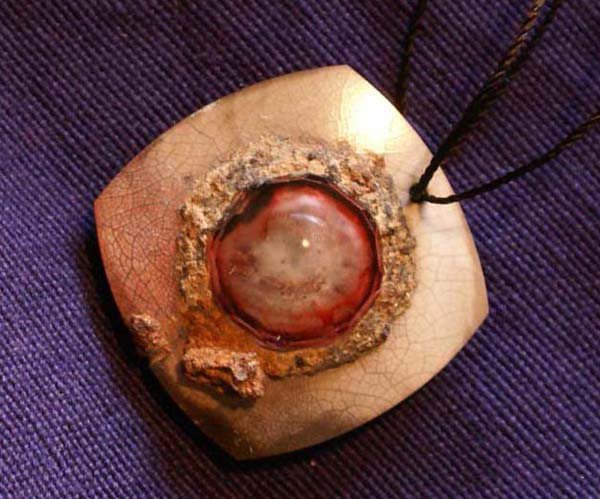
The "Evil Eye"
In the story "The Tell Tale Heart" by Edgar Allen Poe, the main character who is also the narrator is faced with the fear of the old man's eye. Because of this fear the narrator takes severe actions in order to end his fear, but on the other hand this fear leads to his demise.
In the beginning of the "Tell Tale Heart" the narrator is trying to convince us that he isn't mad, but by asking us why we say he is mad and saying " I heard all things in heaven and earth. I heard many things in hell." gives me an impression that he is mad. The narrator says that the old man had never "wronged" or "insulted" him, that it wasn't the old man who bothered him, but it was his eye. The fact the narrator is repulsed by the "evil eye" of the old man is reason enough to doubt his character. The narrator is struggling with the thought that the evil eye is watching him, therefore, he comes up with the plan of killing the old man to get rid of the "evil eye". The story proceeds with the actions of the narrator; he describes his clever ways in which he plans to kill the old man. The narrator stalks the old man a week before he kills him, and tells us precisely how he opens the door "oh so gently." He also tells us how it took him an hour to place his hand all the way in the door. When the narrator finds the old man sleeping each night with that "evil eye"closed, I think the narrator finds peace in knowing that the evil eye isn't watching him. It isn't until the old man awakens each day, that the...
Reviews of: ""The Tell Tale Heart" by Edgar Allen Poe"
:
More Edgar Allan Poe
essays:
Edgar Allen Poe, the writer of terrorsome short stories
... These stories-which include 'The Pit and the Pendulum,' 'The Black Cat,' 'The Tell-Tale Heart,' 'The Cask of Amontillado,' and others-are often told by a first-person narrator, and through this voice Poe probes ...
Three short stories essay: "The Black Cat" and "The Tell Tale Heart" by Edgar Allen Poe and "Call It Madness" by Guy Du Maupassant
... short stories "The Black Cat" and "The Tell Tale Heart" written by Edgar Allen Poe and "Call It Madness" is written by Guy Du Maupassant "The black cat" is written by Edgar Allan Poe and is ...
"The Tell-Tale Heart," by Edger Allen Poe, and "The Open Boat," by Stephen Crane
... The Tell-Tale Heart" by Edgar Allen Poe, in my opinion, is very imaginary. However, in spite of the imagination, Poe kept my interest throughout the whole story. My ... the heaven and in the earth. I heard many things in hell. How ...
The Tell Tale Heart by Edgar Allan Poe
... detective story. The Tell Tale Heart is a short story by Edgar Allan Poe, the narrator remains nameless and sexless in the story. H ... his eye and h/she believes that the eye is evil. H/she confesses that the one and only reason for killing the old man is his eye: "Whenever ...
The Tell-Tale Heart, by Edgar Allan Poe: 3 of the Modern Age literary elements used: Detailed exposition, Interest in the inner-mind(psychoanalysis), and Suspense
... The Tell-Tale Heart was written by Edgar Allan Poe in 1843 and is considered one of the finest stories of psychological horror. A man becomes obsessed with a vulture-like eye and tells very ...
Writing Styles In The Tell Tale Heart by Edgary Allen Poe
... story and real life. The connection draws the reader in deeper to explore. Poe had a wide range of punctuation that affected the rhythm in "Tell Tale Heart". "I then replaced the boards so cleverly so cunningly, that no human eye ...
"The Fall of the House of Usher" by Edgar Allen Poe: Imagery and Parallelism
... story "The Fall of the House of Usher", Edgar Allen Poe presents his reader with an intricately suspenseful plot filled with a foreboding sense of destruction. Poe uses several literary devices, among the most prevalent, however are his morbid imagery and ...
Planned Vengance "The Cask of Amontillado" by,Edgar Allen Poe
... evidence, and sometimes, like in a story I have read, because there is no body to be found. In the short story," The Cask of Amontillado" by Edgar Allen Poe, The ... to him who has done the wrong" (77). In this passage Montresor is telling the audience that he plans to get revenge on Fortunado, but with ...
Very good
I think you description of the whole scene and the character's madness was very detailed and you backed up your points very well.
However all i sense that it was just facts that you told us rather then your opinion on the story itself. Since you described every scene so well i think your commentary of the story kind of gets lost in all the description.
3 out of 3 people found this comment useful.