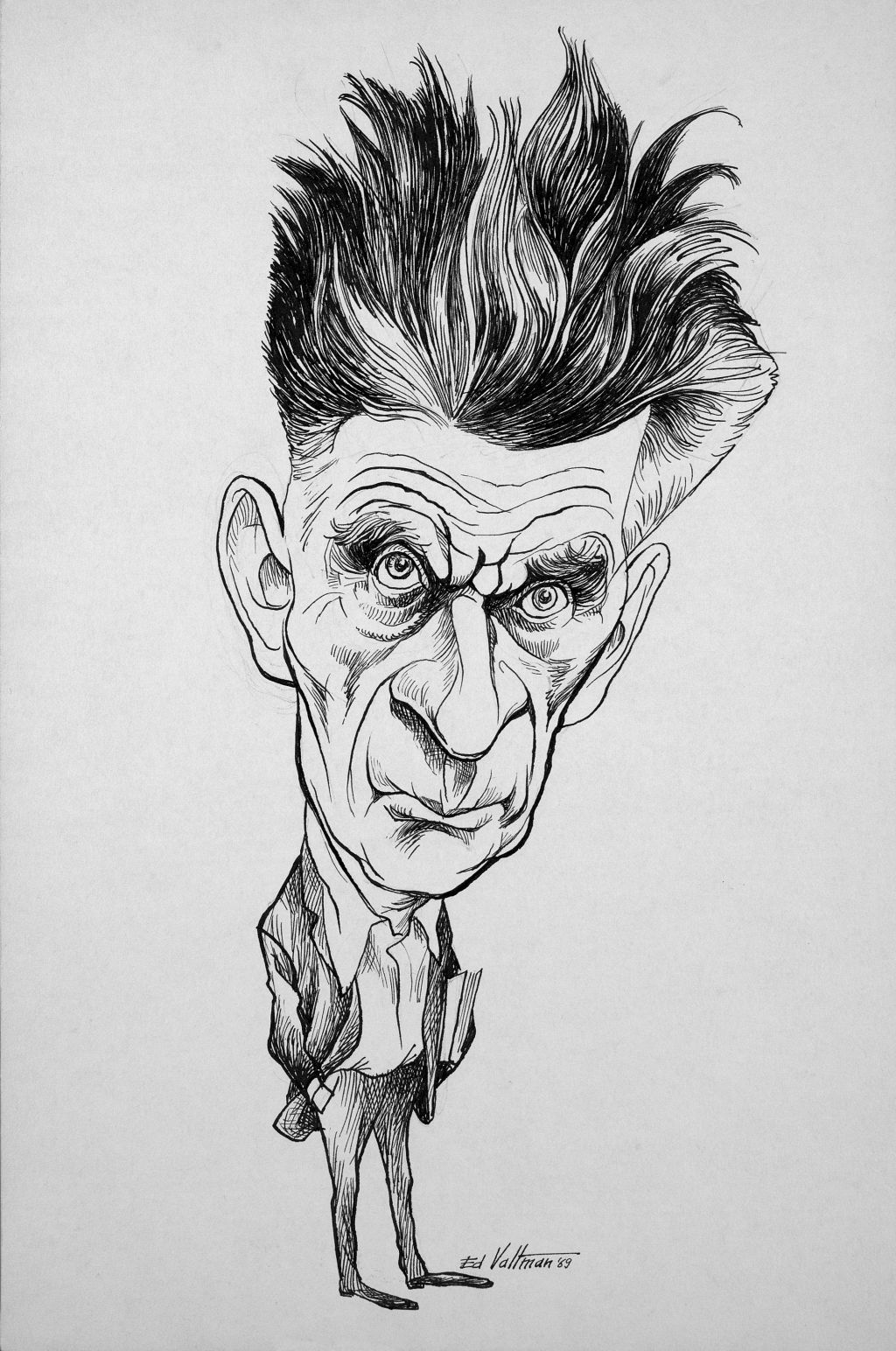
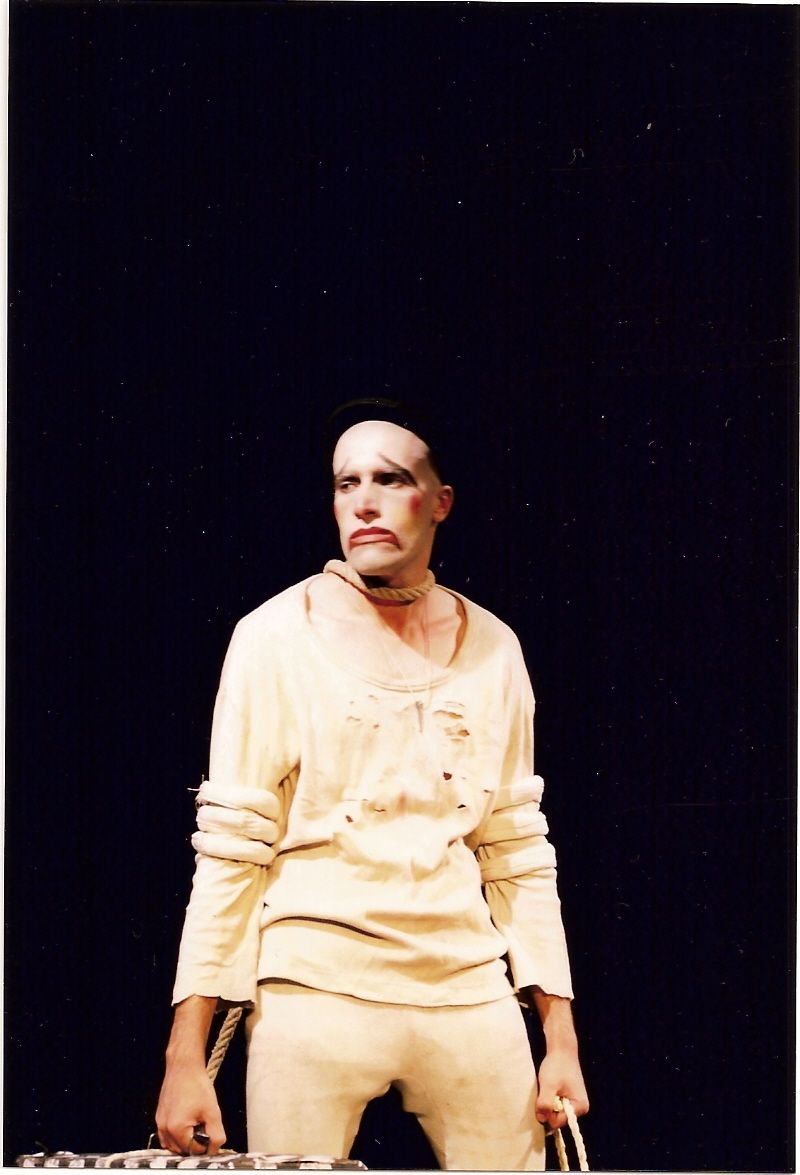
Theatre of the Absurd: The meaningless of human existence - How does Theatre of the Absurd use dramatic forms and stylistic features to comment on the meaningless of human existence?
The term 'Theatre of the Absurd' is used to categorise plays which do not follow conventional play structures. The main aim of these plays is to transfer the writer's vision of the world onto the stage, and generally comment on the human condition. Plays such as Waiting for Godot (Samuel Beckett), The Dumb Waiter (Harold Pinter), and The Bald Prima Donna (Eugene Ionesco) all comment on different types of the human condition but ultimately reflect the meaningless of human existence. They provoke thought about the pointlessness of life, the powerlessness of people over the course of their lives, and the ludicrous values and rules of 'civilised' society.
In absurdist plays, symbols play an integral part of communicating the writer's vision to the audience. In 'Waiting for Godot' the mysterious stranger Godot, who is never seen yet whom the play revolves around, can be seen to symbolise God - "And if he comes? We'll be saved". His promises of coming to Vladimir and Estragon continue to be unfulfilled as they patiently wait day after day for his arrival. Similarly the dumbwaiter in 'The Dumb Waiter' can be seen as symbol of power. It demands a variety of dishes from Ben and Gus, complicating their perfectly planned lives and ultimately ordering them to kill the next person to walk through their door. 'The door opens, Ben turns, his revolver levelled. Gus stumbles in, they stare at each other. Curtain.' - the final stage directions of 'The Dumb Waiter'.
The barren wasteland in which 'Waiting for Godot' takes place can be seen as a metaphor for the emptiness of the character's, and indeed all people's, lives. Metaphors, like symbols, play a main role in communicating the writer's vision, and occur in most absurdist plays. In 'The Bald Prima Donna', the Martins' transformation into...
More Drama
essays:
Analysis of Samuel Beckett's Waiting for Godot
... of Samuel Beckett's Waiting for Godot Waiting for Godot is an absurd play by Samuel Beckett. It tells about two tramps (Estragon and Vladimir) who are waiting by a tree for the arrival of Mr. Godot ...
Samuel Beckett and the Theatre of the Absurd
... beginning nor an end.'' This is how in his book of the same title Martin Ellsin described the Theatre of the Absurd. Waiting for Godot ...
"The Dumb Waiter" as an Example of the Combination of the Absurdist and Naturalistic Traditions of Theatre.
... Theatre of the Absurd has renounced arguing about the absurdity of the human condition; it merely presents it in being - that is, in terms of concrete stage images' (Harrington, 2004). In many ways it can be argued that the Dumb Waiter ...
The Theatre of the Absurd - Waiting for Godot analysis.
... action of the Theatre of the Absurd as realised in performance"Nothing to be done," is one of the many phrases that is repeated again and again throughout Samuel Beckett's Waiting For Godot. Godot is an existentialist play that ...
"Waiting for Godot" by Samuel Beckett.
... play as a whole may be, in essence, a mockery of our, as humans, innate belief that if we wait for long enough, something good will result, instead of looking for that "good" ourselves. Works Cited: Beckett, S: Waiting for Godot ...
Dario Fo uses laughter as a political weapon to educate his audience. Discuss this statement in reference to 'The Accidental Death of an Anarchist".
... important. The Maniac's lines at the end of the play- "Whichever way it goes, you see, you've got to decide"-emphasizes the point Fo makes about the fact that there are always different outcomes possible for any ...
How does the concept of text evolve from the 18th century onwards? Show how the role of the actor is integrated into the idea of text. Underline any contrasting views on the subject.
... held by Antonin Artaud who viewed drama as an instrument of revolution, a tool for the re-ordering of human existence. Artaud's vision was of a theatre that would change man not socially but psychologically, by setting ...
Eugene Ionesco et le Theatre de l'Absurde
... essentiellement, absurde et depourvue de but. Les dramaturges, y compris Samuel Beckett, Jean Genet, Arthur Adamov, Harold Pinter et Eugene Ionesco, partageaient les memes avis pessimistes que l'humanite s'efforce ...