In "The Open Boat" Stephen Crane uses the sea and four men adrift in a dinghy as a framework for communicating his ideas about life. The story, in my opinion, is a metaphor for life. The four men are helpless against the indifferent, yet overwhelming forces of nature. In "The Open Boat," Stephen Crane not only comments on the role of nature and God in the life of man, but the importance of community and brotherhood, and the nature of an individual's journey to knowledge.
"The Open Boat" was written following Stephen Crane's real life experience when a ship he was aboard, The Commodore, sunk on January 22, 1897 off the coast of Florida on its way to Cuba. He and three others, the captain, oiler and cook, as in his fictional account, were able to make their way back to shore after a harrowing thirty hour journey.
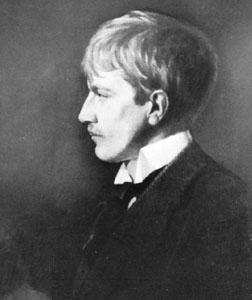 American author Stephen Crane; detail of a paintin...
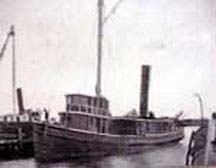 English: Photograph of the SS Commodore, which san...
 Crane on the Travelodge site Carrs Lane
Billy Higgins, reflected in the story as the oiler, died close to shore (Schaefer 296). Some commentators have proposed that because the story so closely mirrors his real life experience, it crosses from fiction to nonfiction. Stefanie Bates Eye states that "'The Open Boat' is not more fictional or invented than Stephen Crane's 'Own Story' and that both narratives follow the historical sequence of events surrounding the Commodore disaster as verified in contemporary newspaper reports, the ship's log and other shipping records, and accounts by witnesses" (75). Bates presents various opinions about the ongoing debate regarding the status of "The Open Boat" as a fiction or literary nonfiction and comes to the following conclusion: "It is our responsibility to accept the integrity of his vision as consistent with nonfictional truth-telling and consider "The Open Boat" as an early-perhaps one of the first-examples of literary nonfiction" (77).
However, others feel...