Topic: Philosophy of Religion
Thesis: Is there a God or is He(?) an illusion?
Bibliography:
Benedict Spinoza - rationalist
Freidrick Schleiermacher - religion
Sigmund Freud - atheist
An illusion is one's own interpretation and perception of someone or
something. It can be a strong belief or a wish. They are not necessarily
false or errors.
The strength of the illusion lies in the strength of wish fulfillment.
For example - People, at first, interpret phenomena's according to their
experience and knowledge of their every day life. They project their own
character into the circumstance presented and regard it as somehow 'ensouled'.
Such indefinite notions are transformed into a distinct conception of a
higher order than human beings, and yet somehow resembling them.
As it may seem, humans have a metaphysical (speculative) need for a Supreme
Being. God, as we call him. He is the eternal and infinite Spirit, Creator
of the Universe, and the ultimate power.
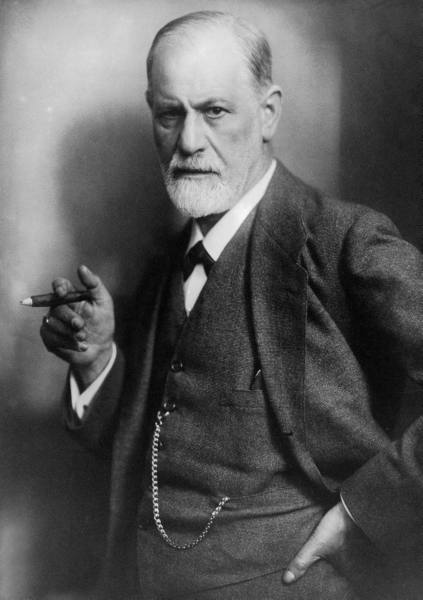 Sigmund Freud, founder of psychoanalysis, smoking ...
 7 Lucky Gods of japan
 Gods and sodas
We present him with human
characteristics in all concepts of God, which has led me to believe that
it is not God who created man in His image, but man who creates God in his.
Religion is one such need based on myth and spiritualism. People are taught
about their religion at a young age, and when they grow up they attempt to
account for things using the notion of their religion as the basis for their
speculations.
On the other hand, there is no truth so certain as the existence of God.
He is the groundwork of all our hopes, and our foundation of morality and
society. Nothing exists without a cause. Although we can't demonstrate
a soul-substance and the immortality of a soul, or demonstrate anything
concerning the nature of God, there is still a dependency on him, so that
we cannot ascribe a personality to God, in the case that it would make him
finite.
God is the universe conceived as an eternal and necessary unity.
Sweeping statements
This essay doesn't really adress the question asked: "is there a god..." The question, too, is a very bad essay question. It is much too general and large for a short essay.
Further more, the essay makes sweeping statements:
"there is no truth so certain as the existence of God. He is the groundwork of all our hopes, and our foundation of morality and society."
For many people the above may be true, but for many others it simply does fit with how they see the world. I think these statements need to be qualified, for whom is god the ground work of all hopes?
3 out of 4 people found this comment useful.