Thomas Gradgrind Junior
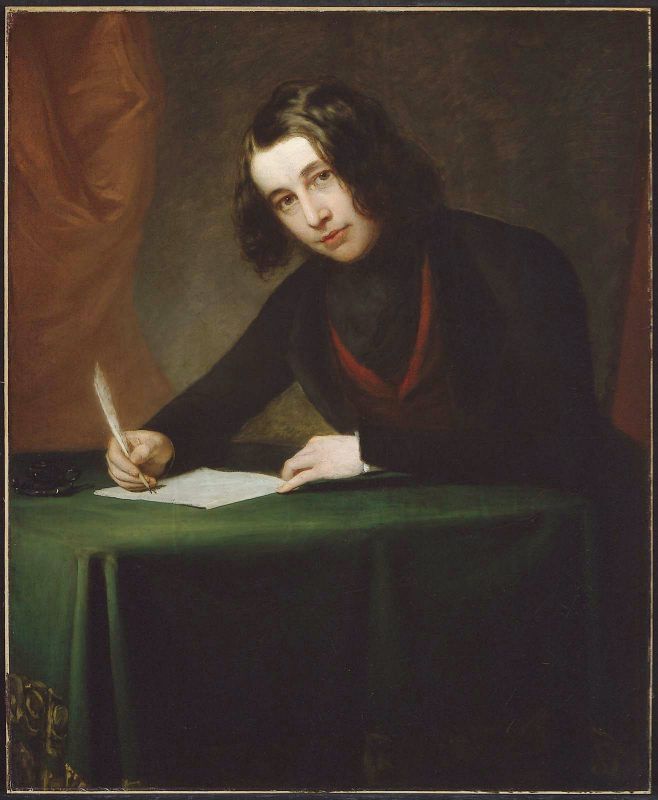
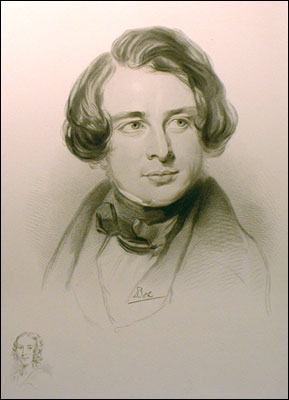
This character is one of the negative ones in this book. He is cruel and selfish. I think that by "painting" Tom, the author, Charles Dickens, shows the impact of factual childhood, the result of this type of raising children. I hope you understood me.
When I started reading this book I thought that it was uninteresting. Then I recalled that this happens every time. Every book I read seems to be uninteresting at the beginning. However, this time I was right. It was pretty boring. I could not get the jest of it and didn't really get the idea. The only thing, the only character I can write about, talk about and debate about is Tom. Yesterday when I had the presentation I was talking nonsense, but know I will "re-establish" my idea and thoughts in this essay.
In my first response journal I discussed two facets of Tom Gradgrinds personality. I based that discussion on the relationship between Tom and his sister Louisa. One facet was that Tom loves his sister and the other was that maybe he loves, but still he is selfish and uses her. Then I read next chapters and my mind changed. Is stopped on one idea and one position. This was that Tom is a selfish, cruel person who uses everyone, even his own sister and cares only about himself. Well as I noticed the only cruel act Tom did, was when he asked Old Stephen Blackpool to wonder around the bank for three days. As we all can understand this favor was just a maneuver, a trick that was made to distract people's attention and with this to help Thomas robed the bank. I mean that at first everyone thought that the criminal was Stephen; however "the lie has short legs"ļ.
Mainly...
More Charles Dickens
essays:
David Copperfield coureswork-How did Charles Dickens portray how children where treated in the 19th century?
... young children, prostitution, vice and squalor, the epidemics of typhus, cholera and smallpox. Dickens writing showed the parallel from his childhood to David's childhood. Charles had no biological father and neither did David. Charles dickens felt ...
Literay Critisim
... greatest books that have strengthened and shaped Western civilization are drifting out of modern life and thought. But it doesn't have to be this way. Someone must responsibly keep the literary lights such as Charles Dickens burning ...
Oliver Twist- Charles Dickens. How does Charles Dickens expose Victorian society's awful treatment of children of the poor?
... by uncaring people. Charles Dickens knew how employers treated children as he worked in a blacking factory wrapping shoe-black bottles. He had to work at such an ... start of the book, and Dickens shows right away how since Oliver started out life in a workhouse he was set in life as a poor person: "It ...
AP Book Report: "A Tale of Two Cities", by Charles Dickens.
... difficult book to understand and interpret into our own words. The author Charles Dickens uses many quotes within the text to tell the story in an almost all verbal way. In such a way one can imagine the characters talking back ...
Book Report: "A Tale of Two Cities" by Charles Dickens
... by Charles Dickens and it takes place in France and England beginning in 1775. It's told in third person until the end when Sydney Carton overtakes the narrator and talks in first person for ...
charles dickens
... his first story in 1833 in the Monthly Magazine. People reading his stories knew him as "Boz." Later in 1836 a book was made called Sketches by Boz. Charles Dickens's publisher, William Hall encouraged him to write more ...
Pretty decent biography of charles dickens
... his books. Charles Dickens accomplished much through his writing, and ... his wife in 1858, after the marriage had produced ten children. He suffered a fatal stroke on June 9, 1870, and ...
A Charles Dickens Biography
... Charles Dickens', author of "A Christmas Carol", career as a fictional writer started ... Carol. Dickens often used his own personal experiences of work and life in the factory and out. Dickens spent much time traveling and expressing his views on things. He gave talks and readings, wrote ...