1509: Henry VIII becomes England's king.
1517: The Protestant Reformation begins1521: Henry VIII receives the title "Defender of the Faith" from Pope Leo X for his opposition to Luther1533: Henry VIII marries Anne Boleyn and is excommunicated by Pope Clement VII1534: Act of Supremacy: Henry VIII declared supreme head of the Church of England1535: Sir Thomas Moore is beheaded in Tower of London for failing to take the Oath of Supremacy1536: Anne Boleyn is beheaded; Henry VIII marries Jane Seymour; dissolution of monasteries in England begins under the direction of Thomas Cromwell, completed in 1539.
1537: Jane Seymour dies after the birth of future Edward VI1540: Henry VIII marries Anne of Cleves following negotiations by Thomas Cromwell; Henry divorces Anne of Cleves and marries Catherine Howard; Thomas Cromwell executed on charge of treason1542: Catherine Howard is executed1543: Henry VIII marries Catherine Parr; alliance between Henry and Charles V (Holy Roman Emperor) against Scotland and France1544: Henry VIII and Charles V invade France1547: Edward VI becomes king; Duke of Somerset acts as Protector1549: Introduction of uniform Protestant service in England based on Edward VI's Book of Common Prayer1553:Mary I, becomes the queen of England (until 1558); Restoration of Roman Catholic bishops in England1555: England returns to Roman Catholicism: Protestants are persecuted and about 300 are burned at the stake1558: Elizabeth I ascends to the throne; Repeal of Catholic legislation in England1563: The Thirty-nine Articles, which complete establishment of the Anglican Church1564: Peace of Troyes between England and France1567: Murder of Lord Darnley, husband of Queen Mary, probably by Earl of Bothwell; Mary Queen of Scots marries Bothwell, is imprisoned, and forced to abdicate; James VI, King of Scotland1568: Mary Queen of Scots escapes to England and is imprisoned by Elizabeth I at Fotheringay Castle1577: Francis Drake sails around the world (to...
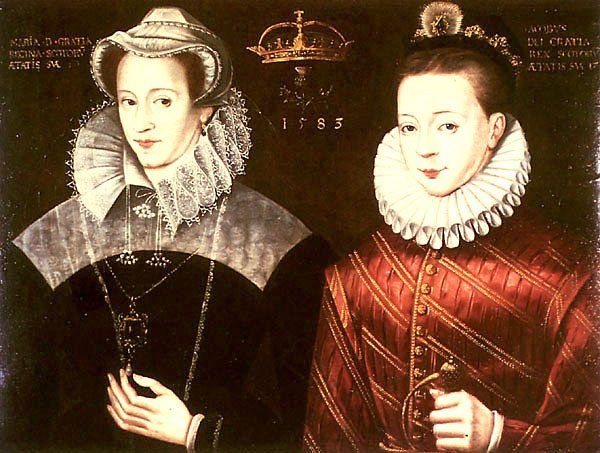 Mary Stuart, Queen Maria I. of Scotland, and her s...
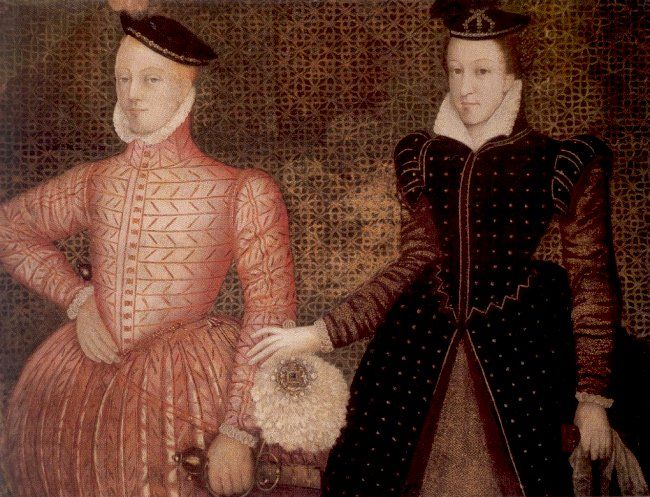 English: Mary, Queen of Scots, and her second husb...
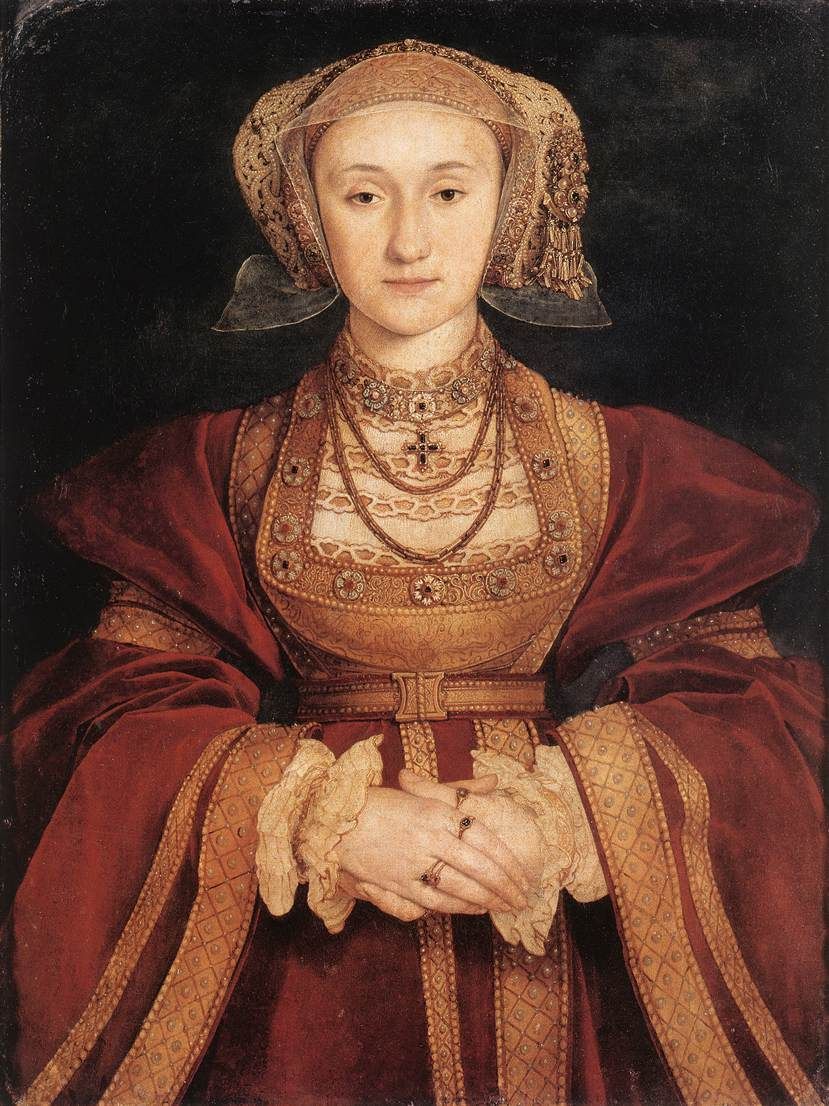 Painting of Anne of Cleves, fourth wife of the Eng...