The time period from about 1650 to 1920 was ever changing in the world of drama. Neo-classicism sprung up from Greek and Roman models in Europe during the Enlightenment, Romanticism struck the Globe in the 1800's based on principles like emotion, intuition and seeking God. During and after the 1800's naturalism and realism began to play major roles in the area of drama. Naturalists such as August Strindberg and realists such as Henrik Ibsen demonstrate an entirely different view of what drama is all about.
During the time period known universally as the Enlightenment, an artistic movement came about in Europe that reflected in many ways the Greek and Roman tradition. Ancient Greeks and Romans focused their art on harmony, symmetry, and balance, while keeping an equal emphasis on logic and aesthetic. During the enlightenment there was a major importance placed upon science, reason and thought. These human, but multifaceted functions are displayed in many neo-classicism plays.
 Abduction of Europe
 Europe Simulator
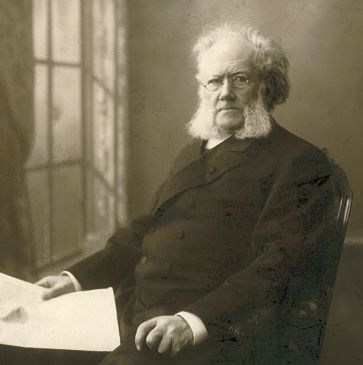 English: Detail of photograph taken in 1900 of Hen...
Plays such as Racine's Phaedra clearly demonstrate the notion of common sense and the idea that if you have a problem or cause a problem you will be punished. This play is very typical of the neo-classics because it is based on the ancient Greek play Hippolyths written by Euripidies in ancient Greece. Hippolyths is very closely related to its modern version Phaedra. All neo-classic era plays were in some way based on the French Academy's rules for drama which involved a concrete moral, no monologues and truth along with few other qualifications. Most plays that possess some or all of these qualities are from the neo-classicism era. After the 1700's a new way of thinking developed that didn't involve as much truth or structure. Free flowing emotionally based romanticism paved the way for drama in the 19th century.
The 1800's...