Titanium the Metal of tomorrow
In 1791, the Reverend William Gregor, an English clergyman and mineralogist, reported that he had discovered a magnetic black sand near the beaches of Cornwall, England. The mineral was named menachanite after the local parish of Menaccan. A few years after Gregor's discovery, M.H. Klaproth, a German chemist, separated TiO2 from the mineral rutile. Klaproth named the new element titanium after the giants of Greek mythology. However, it was not until 1910 that M.A. Hunter, an American chemist, produced pure titanium.
Titanium is a hard, silvery-gray metallic element. Its atomic number is 22 and its symbol is Ti. It is the 9th most common element in the Earth's crust. It also is found in meteorites, the moon, and the sun.
Titanium metal has a number of useful physical properties. It is very resistant to corrosion, hard, has a high melting temperature and is lightweight. Its strength is similar to steel, but is 45% lighter. Titanium alloys can be twice as strong as aluminum alloys.

Titanium has no known nutritional benefit for animals. It does, however, have some slight benefits for plant health. And has been found to be very compatible with the human body and is often used in surgical instruments and medical implants such as in dental procedures.
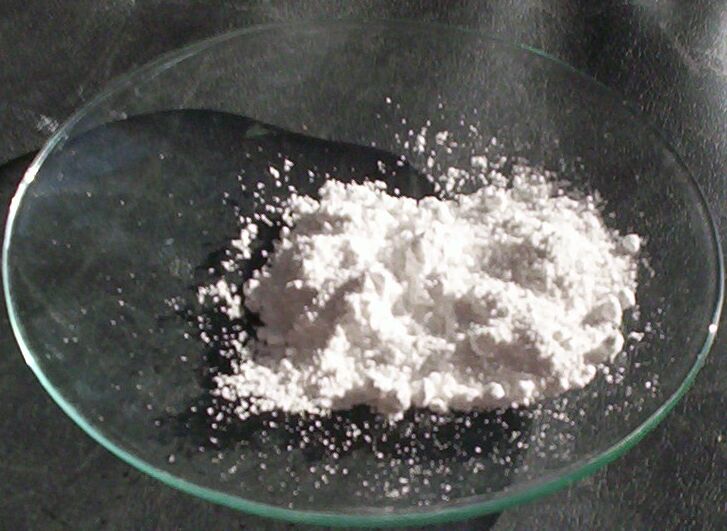
Titanium is a strong lightweight metal often used in airplanes. When titanium combines with oxygen, it forms titanium dioxide (TiO2), a brilliant white pigment used in paint, paper, and plastics. Major deposits of titanium minerals are found in Australia, Canada, India, Norway, South Africa, Ukraine, and the United States.
Most titanium is used in its oxide form. TiO2 is a white pigment used in paint, varnishes, plastics, paper, and other products such as fabrics, printing inks, roofing granules, and special coated fabrics.
Titanium is lighter than steel but still is very...
Reviews of: "Titanium the Metal of tomorrow"
:
More Chemistry
essays:
History Of Titanium; Speeches
... hard, silvery-gray metallic element. Its atomic number is 22 and its symbol is Ti. It is the 9th most common element in the Earth's crust. It also is found in meteorites, the moon, and the sun. Titanium ...
Albert Einstein: The man of the Century. Breif biography of Albert Einstein, then a sumarization of his main points of work. The Theory of Reletivity, General Theory of Reletivity,and the paradoxes.
... discovered, and their formation has been sufficiently explained. When a star that is at least three times more massive than the sun expends all of its fuel, there is no longer energy being created to counteract the star's strong gravitation ...
The Effects Of Bacteria On The Rusting Process
... Atomic Weight: 55.847 Electron Configuration: [Ar]4s23d6 Iron, the 26th element in the periodic table of elements, is a silvery-gray lustrous transition metal. It's widely known for having many uses, the most important being its strong structure and ...
About the components, history, etc. of titanium
... in the aerospace industry, for both airframes and engines, where lightweight strength and ability to withstand extremes of temperature are important. Titanium is as strong as steel, but much lighter. It is twice as strong as aluminum. It ...
History Of Titanium
... mythology, the sons of the Earth Goddesses) by a German chemist, Martin Kloproth. WHAT IS TITANIUM? Titanium has an atomic number of 22, meaning it has 22 protons, 22 neutrons and 22 electrons. Titanium is a hard, silvery-grey metallic element ...
ON THE PROBLEM OF CRYSTAL METALLIC LATTICE IN THE DENSEST PACKINGS OF CHEMICAL ELEMENTS
... and the uniform compression modulus are close to the theoretical values only for alkaline metals. The volume-centered lattice, Z=1 casts no doubt. The coordination number equals 8. The exterior electrons of the final shell or subcoats in metal atoms ...
Report on the bionic ear and why it is made out of the materials it is made from.
... Ti Atomic Number: 22 Atomic Weight: 47.88 Melting Point: 2041.4 K Boiling Point: 4098 K Titanium is just as strong as steel but is 25% lighter and it is twice as strong as aluminum. This ... on the two elements. Platinum Symbol: Pt Atomic Number: 78 Atomic Weight: 195.075(s) Melting Point: 2041.4 K ...
NSW HSC CHEMISTRY - the development of rubber and electrolysis of Sodium Hydroxide the products and their uses.
... electrons. The resultant atoms may be liberated as a gas, or deposited as a solid on the electrode, in amounts that are proportional to the amount of current passed, as discovered by English chemist Michael ...
Wowowowow
v. good
2 out of 2 people found this comment useful.