It is debatable whether Medea is or not a tragic heroine. It can be argued that Medea is a tragic heroine. However, Medea is not a tragic heroine. According to Aristotle's poetics, a tragic heroine or (protagonist) is someone who gains information previously unknown, leading to important insight. In lamer terms, a tragic protagonist made an error in judgment and didn't realize until it was too late. However, Medea is certainly not a tragic protagonist. The reason is because Medea did all those evil and cruel things not by accident but purposely to kill people in order to get what she wants. Therefore, Medea is not a tragic heroine.
We can't say that the protagonist of the play Medea did not have her reason for seeking revenge on her husband Jason. Jason was very mean and not fair to Medea. For example, after she helped Jason to secure the Golden Fleece and becoming the king of Corinth by killing her own brother, Jason has abandoned Medea and his own children in order to remarry with Glauce, the daughter of Creon, king of Corinth.
 English: Fragment from a vellum codex of Euripides...
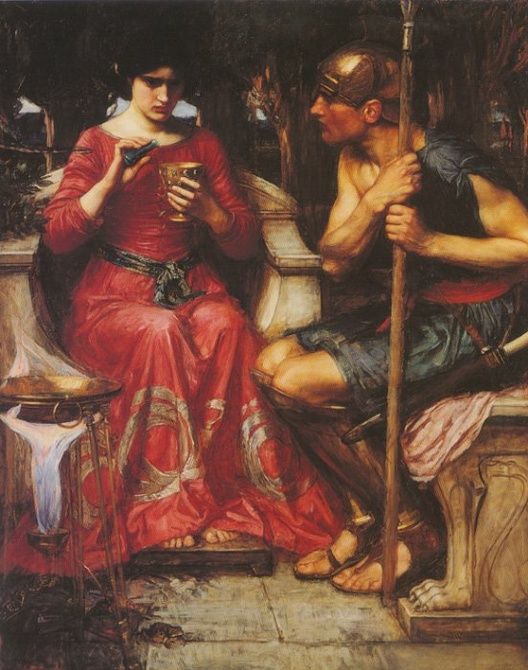 English: Jason and Medea by John William Waterhous...
 English: Maria Germanova as Medea
Without Medea, Jason would have never been successful in life.
Jason's arguments with Medea introduce his total "lack of backbone as a character". He is always making excuses for himself telling Medea with the ridiculous claim that their divorce was for her benefit. Medea's criticisms of Jason provide a much more convincing account of his actions than his self-defense. He is always offering people to bare minimum whatever he can manage without sacrificing his self interest. Also, Medea's commitment shows elements of heroism, whereas Jason's makes him a limited, heartless character.
After Jason rejected his wife, Medea becomes in total hopelessness. Medea not only turns against Jason, but against the entire world of...
Medea
One word that wasn't there and should have been......'hubris'. Also you do mention the effect of Medea's actions on Jason, but what about her. Medea must live on knowing that she had commited the most heinous crim. She slaughtered (yes that is the right word to use) her own sons.
3 out of 3 people found this comment useful.