Totalitarianism in the Soviet Union, Italy, and Germany.
Totalitarianism in the Soviet Union, Italy, and Germany
(by the way, all my essays are not very in depth because we have to write 2-3 600 word essays every week!)
A totalitarian government is a modern autocratic regime in which the state controls all phases of society. It not only seeks to control the economical and political aspects of society, but also tries to direct the daily lives of its citizens. Totalitarianism strives to influence the attitudes, beliefs, and opinions of its people through manipulation of the press and the media. It teaches young men to value their bodies more than their minds, thus creating a politically languid mass of law-conforming puppets. Its ultimate goal is to establish a perfect society based upon its own idealistic aspirations. Different totalitarian systems have different goals. The major totalitarian states that arose during the period following World War I were the Soviet Union under Stalin, fascist Italy under Mussolini, and Nazi Germany under Hitler.
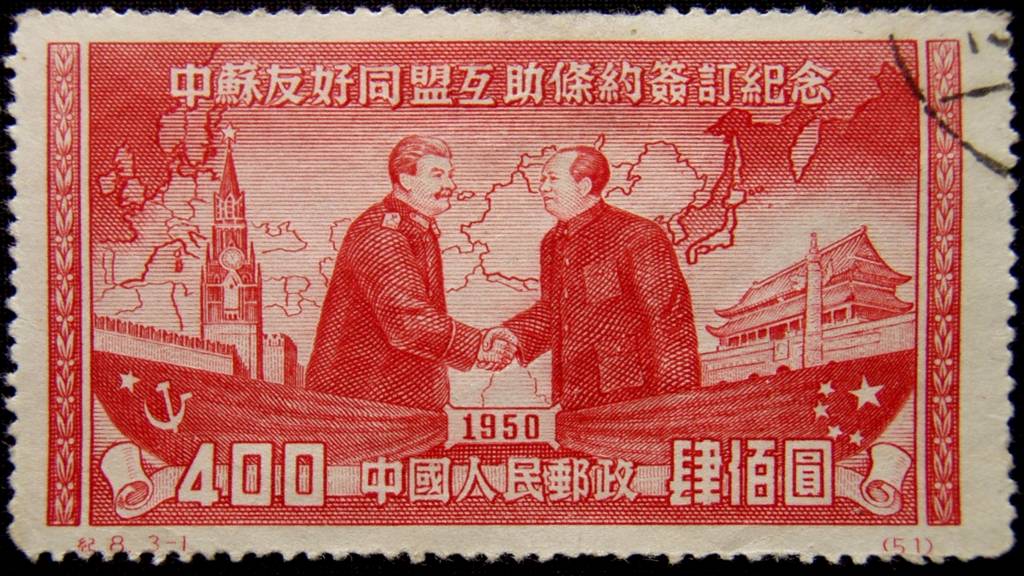
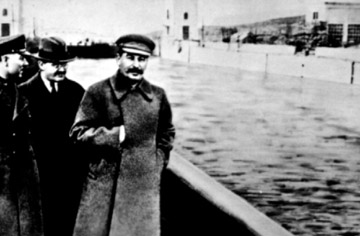
The first real totalitarian government after World War I was Stalin's Soviet Union. The failure of the Communist's proletarian struggle to achieve any significant goals compelled Stalin to undertake some drastic changes to the Communist party. Stalin's idea of "Socialism in One Country" deviated away from the foundations of Communism and emphasized the importance of nationalism. He also postponed Lenin and Marx's idea of "Permanent Revolution". In taking power away from the proletariats, Stalin achieved dictatorial status as the sole leader of the Soviet nation. As dictator, he controlled many aspects of social life, as well as dominating economic and political supremacy. For example, he directed the Great Purge, in which he used violence and aggression to maintain absolute control over the Soviet Union. However, unlike the totalitarian governments of Italy and Germany, Stalin initiated a democratic constitution that...
More International Organizations & Conflicts
essays:
The Affect of Revolutionary Political Ideas and Conditions on Modern World History from World War I to the 1970s.
... men and supplies were needed, further bankrupting the economies of several of the Allied powers for years to come after World War I. "Although seeds of fascist ideology can be found in nineteenth-century intellectual thought, fascism emerged as a political ...
Why were the French unable to defeat the Viet Minh in the first Indo China War?
... Allies World War I. The Vietnamese, for the best part of the conflict represented by the Viet Minh were tired of Colonial oppression, and following Japans announcement on an Independent State of ...
Failure of the League of Nations in the Inter-War Period
... the territorial settlement and arms restrictions imposed on Germany after World War I," while British and the U.S. thought that Germany must ...
The Treaty of Versailles
... of World War I should have been given a chance to re-establish themselves socially, politically, and ... the world: the United States and the Soviet Union. The ... for war costs. In addition, the size of the German state was reduced, while that of Italy and France was enlarged. The Weimar government set ...
The Treaty of Versailles set the stage for further unrest
... and economic power, in an attempt to punish them for World War I, and to make reparations to those countries that had been ... the political impact. The treaty triggered a number of political reactions. First, the government of ...
How harsh was the treaty of Versailles?
... of Versailles (1919) was the peace treaty, which officially ended World War I between the Allies and the German Empire. After six months ... governments who wanted to punish severely the German Empire. The league of Nations did not have the purpose to condemn the German Empire but as the United States ...
Diarmement
... immediatelyafter World War I,the view developed that it was the existence of the massive military machines of the European powers that had made war possible ... Coolidge tried to change at the Geneva Conference of 1927.Italy and France refused to accept any limits,and so the ...
Was the Second Bombing on Nagasaki Necessary? List three reasons why or why not. I Said it wasn't and then listed three reasons
... role in the end of the war as the first bomb and therefore was unnecessary. The US did not want the Soviet Union to be involved in the anticipated ... , 1945 was meant to show the powerful new weapon to the entire world. The United States wanted to be recognized as the most powerful nation, and winning ...