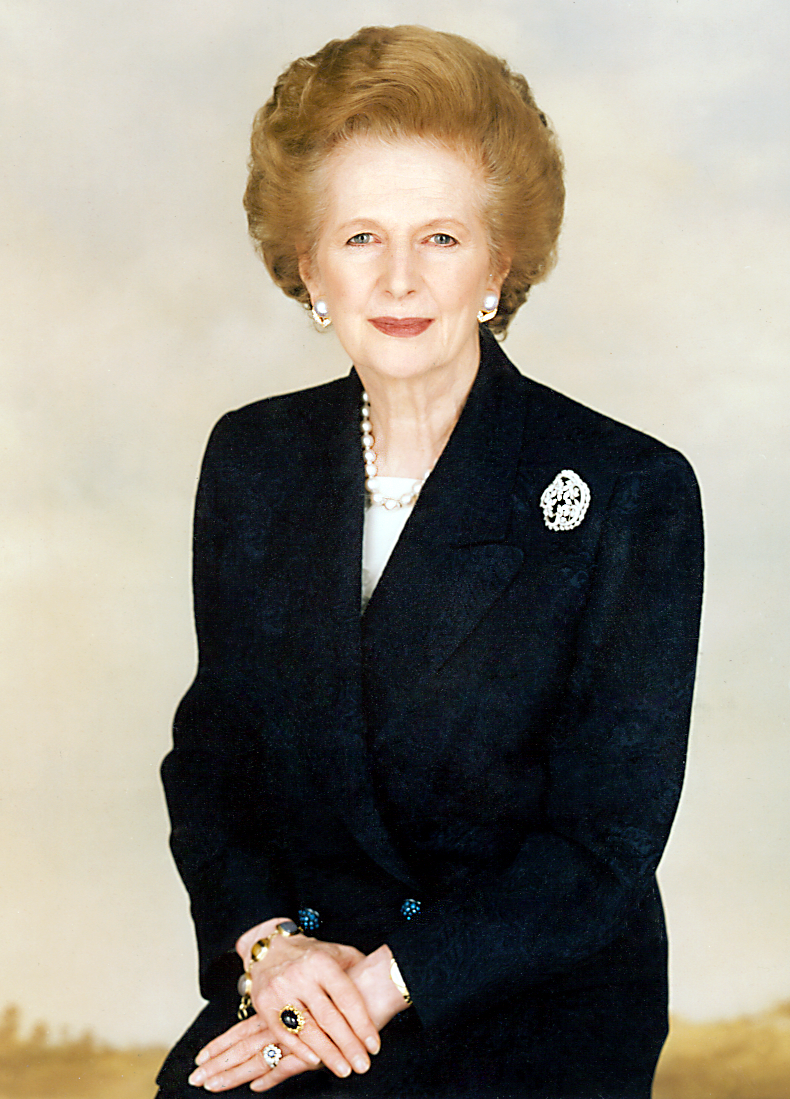
Trade Unions Before and After Margaret Thatcher
In this essay, I will deal with the trade unions in Britain. This essay is especially focused on their background, their conditions before Mrs. Thatcher, under Mrs. Thatcher and after Mrs Thatcher. Through changing ideological, political, and economic conditions, the Conservative government of Margaret Thatcher also changed the conditions of trade unions. In this essay I will see trade unions background, then their conditions after 1950s till Thatcher, and trade union structure under Thatcher, and then its condition after Thatcher with a conclusion.
First of all, the question is: what is trade union? Trade union is an organization in which workers come together in order to do something, to achieve their common goals under this organization. Generally, these goals are working conditions, working hours, wages, andBALKAYA 2/9so on. The trade union enters in an agreement with the employer in the name of union members and discusses labour contracts with employers.
When we have a look at trade unions history, it is seen that it was not so powerful in 1860s. In the United Kingdom, Trade unions were first decriminalized under the Royal Commission in 1867. Its establishment aim was to give advantages to both employers and to employees. In the United Kingdom, the Trade Unions movement was just 5% of the working class in 1867. In those years the trade unions were not supported by laws. Also they were uncoordinated. Permanent trade unions were established from the 1850s. In 1860, the London Trades Council was founded in 1860. Then in 1868, The Trades Union Congress (TUC) was established. In 1867, in the United Kingdom the legal status of trade unions was established by Royal Commissions. Unions were legalized in 1871.
The early trade unions were not fully supported by laws; they could easily have been crushed. But by 1900, they...
More Politicians
essays:
The Thatcher Years This essay is about the charismatic leader that took Britain by storm for over ten years and managed to crush the corrupt powers of the trade unions with her iron fist.
... primarily economic areas Thatcher has devolved power to others i.e. shareholders. Margaret Thatcher spent ... of government-industrial relations where more economic power was given to the British people and workers, and less to the labour union elite ...
New Labour
... Britain working again," Labour's 1992 election manifesto attacks the Conservative Government's economic policy. Labour tries ...
Franklin Delano Roosevelt What is this about? Everything FDR did during his presidency.
... has no stabilizing force besides people's trust in the government. Next, the Securities and Exchange Commission guards against fraud in places like the New York Stock ...
Alfred E. Smith. 12pg term paper includes bibliography, endnotes, outline.
... grim working conditions for garment workers were dramatically demonstrated in 1911 and Smith was given the opportunity to clearly acquaint himself with the Industrial conditions of the city. Smith help set up the New York State Factory Investigating Commission and ...
Political Career of Richard Nixon
... the Union message to Congress, Nixon outlined six sweeping proposals. He again called for the sharing of federal revenues with state and local governments. Nixon ...
The Leadership of Margaret Thatcher, the first woman Prime Minister of Britain.
... political economics in the world. Transforming a defunct socialist society would prove no easy feat for this revolutionist, but through a unique turn of events a leader rises. Margaret Thatcher was ... control trade unions that had destroyed three governments before her. Once Thatcher convinced ...
Thsi is a biliography on President Bill Clinton. This essy explains his accomplishments during presidency. 2204 Words.
... minimum wage from $4.25 to $5.15, signed on August 20; a measure making it easier for workers to transfer their health insurance between employers and not be denied coverage for preexisting conditions, signed ...
'Indicate left and turn right'. To what extent does it represent Blair's policy?
... current members of the health, civil service and education schemes should retire later, at 65, under the pressure of the Trade Union Congress. Compare to the previous Labour governments, New Labour has ...