The Tragedy of Oedipus the King
Man must accept responsibility for both his own actions and the consequences of those mistakes he comes to make. No excuse or point of finger should take away from his duties of taking responsibility. The events in Oedipus the King, written by Sophocles, shows an underlying relationship of man's free will existing within the order or fate, which the Greeks believed guided the vast universe. Man was free to choose and was ultimately held responsible for his own actions. The concept of fate and free will both play an important part in Oedipus' destruction. Although he was a victim of this fate, he was not controlled by it. Oedipus was destined from birth to someday marry his mother and to murder his father. This prophecy, as warned by the oracle of Apollo at Delphi, would inevitably come to pass, no matter what he may have done to avoid it.
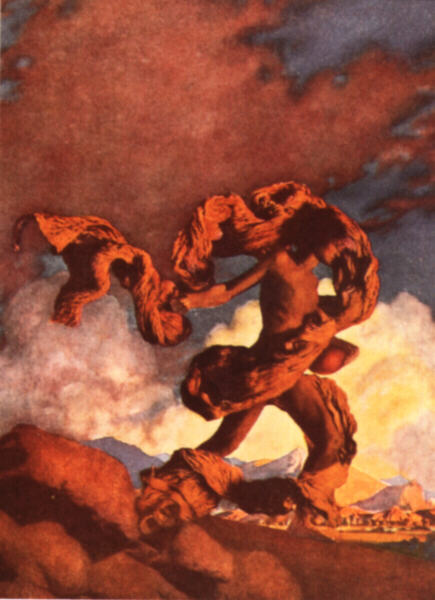 Cadmus Sowing the Dragon's teeth, by Maxfield Parr...
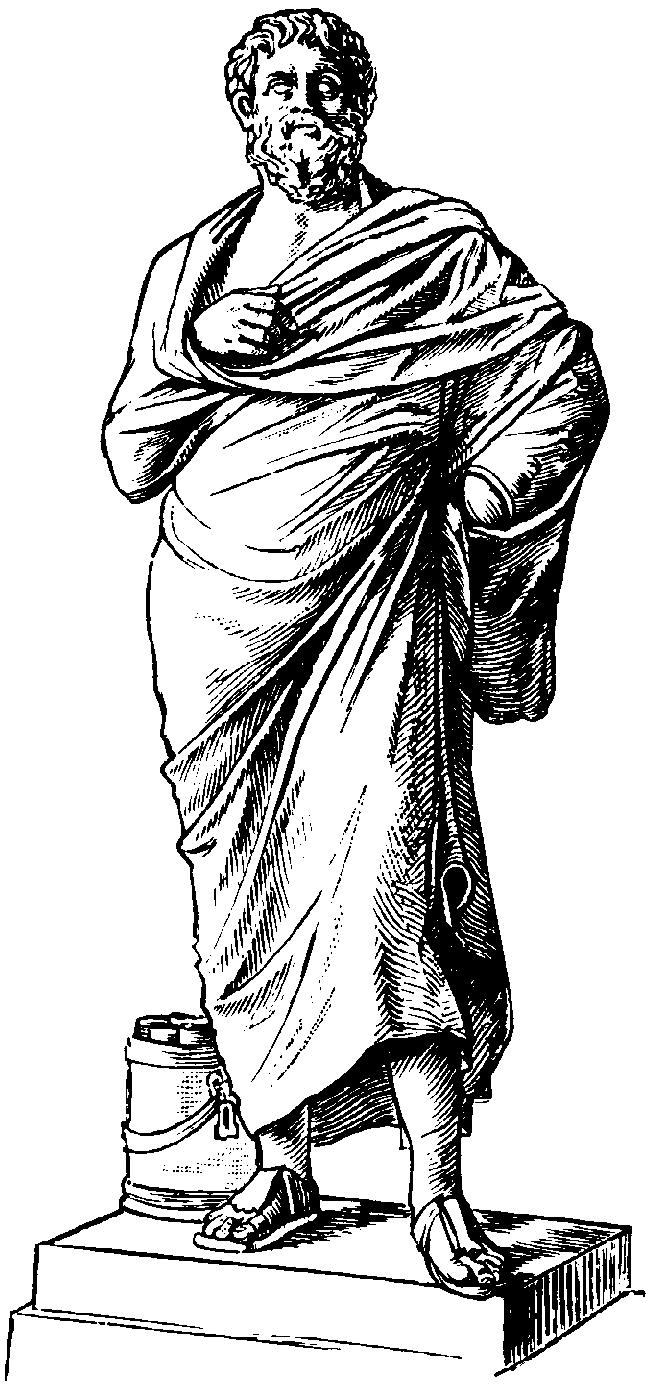 This image was first published in the 1 st (1876&n...
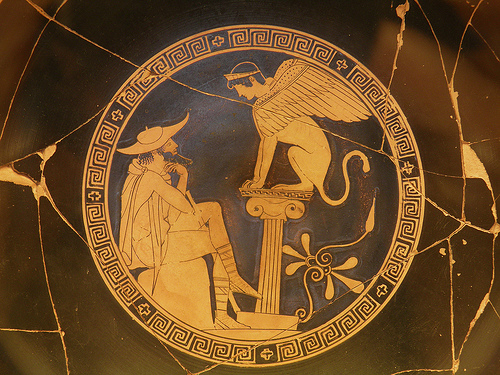 Oedipus and the Sphinx of Thebes, Red Figure Kylix...
His past actions were determined by fate, but what he did in Thebes, raising himself to the level of the gods by circumventing the divine will, he did so from his own will, leading to his tragic flaw of hubris.
In order for the Greek audience to relate to the tragic figure, he had to have some type of flaw. This brought the character down to a human level, presenting the fear of, "it could happen to me." Oedipus' pride, disbelief in the gods, and quest for the truth, ultimately contributed to his destruction. When Oedipus was told that he was responsible for the murder of Laius, he becomes enraged and calls the old oracle a liar, pushing himself up to god-type status. The chorus warns us of man's need to have reverence for the gods, and the dangers of too much pride,