In 23 years of field work, Napoleon Chagnon has observed and recorded the histories of 60 Yanomami villages. In recent years, his writings have contributed to the label of the Yanomami as a 'fierce' people. He has created an image of these people which is not only questionable from an anthropological perspective, but also an image that has brought detriment to their society as a whole. By analyzing Chagnon's interpretations of the Yanomami lifestyle, one sees that his ideas are highly influenced by western standards of life and can be rethought using basic non-biased logic.
One of the central arguments that the Yanomami are a violent people is the presence of unokai in Yanomami society, a word Chagnon translates as 'killer.' These unokai are, as defined by Chagnon, men who have either killed another person or were involved in the attack which led to the killing. Although his arguments presented in a 1988 article of Science magazine do not go into great detail about the process of gaining the title of unokai, he centers many of his points around the unokai and their actions.
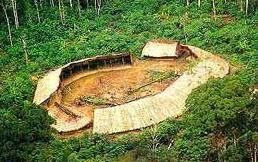 ShabanoYanomami.jpg
 Focus
Focus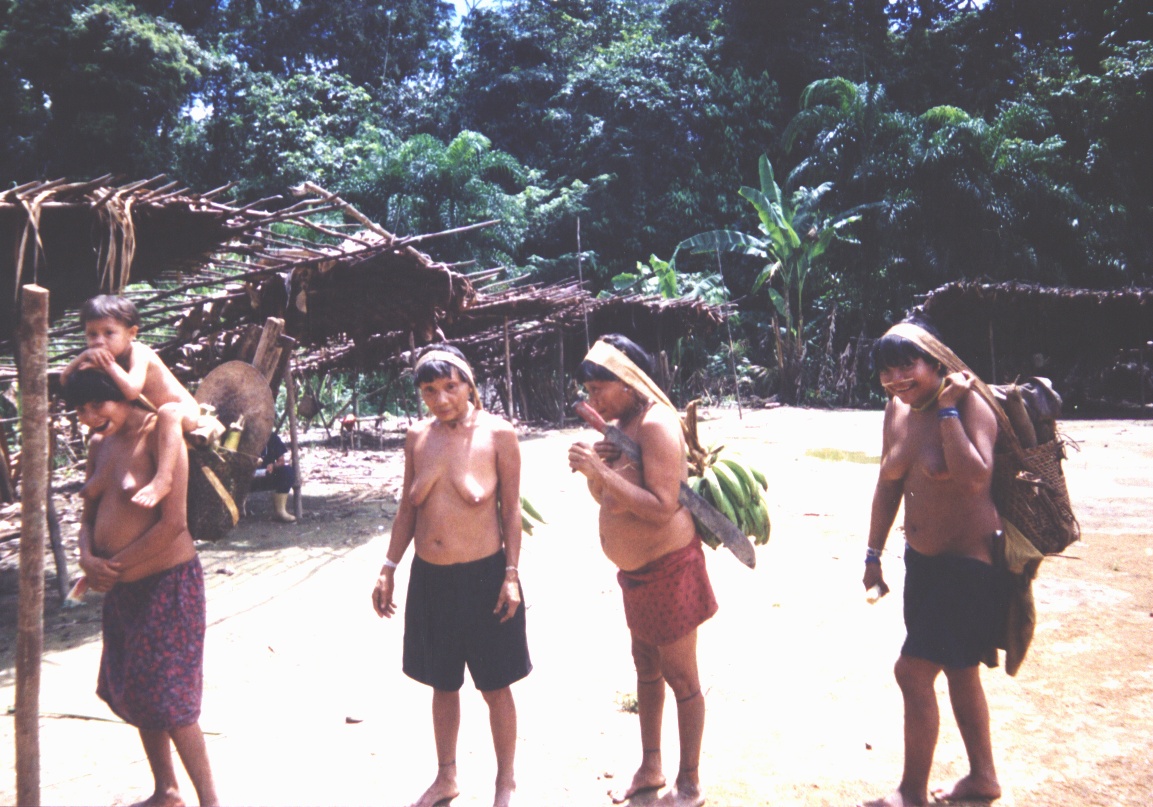 Yanomami en el Estado Amazonas (21)
Of the 283 deaths Chagnon recorded in 23 years among the Yanomami, he attributes 153 of these to unokai who were living when the article was published. He goes on to state that almost everyone in the villages he has visited had a family member or kinsman killed by blood revenge or because of a unokai hunting party. Because of this supposed high incidence of violence and its effect on a large portion of the population, he leads the reader to the conclusion the Yanomami are an exceedingly savage society and that the unokai epitomize this idea.
Chagnon's ideas are in contrast to those presented by Bruce Albert in his 1989 article in Current Anthropology. Albert, a noted anthropologist, has conducted research among the Yanomami and has developed different theories about their 'violent tendencies.' One of the most interesting is Albert's definition of unokai. He refutes Chagnon's definition, stating that when a person is called unokai, it is seen as 'a state of symbolic impurity that is said to result from the supernatural incorporation by the killer of the blood and flesh of a slain enemy, whether this enemy was killed by an arrow, by shamanism, by sorcery, or by the killing of his animal alter ego.' Unokai is thus a temporary state under Albert's definition, not the permanent state to which Chagnon's definition lends itself. This brings to mind the plea of 'temporary insanity' in the American judicial system. It also broadens the scope of people who can be classified as unokai. Anyone who shoots an arrow at the intended victim must undergo the cleansing ritual associated with unokai. If 15 men shoot at the victim and only one strikes its target, all 15 are still considered unokai. Although they have not actually killed, they are included in Chagnon's data as killers.
Even natural deaths can be attributed to unokai. Since the Yanomami do not believe that death is a natural state, many passings are attributed to sorcery by members of enemy tribes. These accused killers must in turn perform the cleansing ritual to ward of the spirits of the dead and can be considered unokai. Chagnon argues that there are two types of unokai: one who is responsible for a physical killing ('unokai a yai') and one who is responsible for a spiritual killing ('unokai a horemou.') This notion is dismissed by J. Lizot, an anthropologist who has studied Yanomami language for 20 years. During all of his fieldwork, he has never heard the two terms and goes on to state that the two phrases are also grammatically incorrect.
This reclassification of unokai brings a degree of invalidity to Chagnon's conclusions. The number of men who are considered killers in his studies would decrease dramatically if this new definition was applied. In turn, the view of the level of violence in the society would decrease as well. When the spiritual aspect of unokai is also taken into consideration, the level of violence decreases even more. Similarly, the number of losses of a close relative due to violence decreases dramatically, especially when you take into account that in many of these tribes almost all of the members are closely related. Even one or two killings can be linked by kin relations to affect the entire village population.
As we have seen in previous articles, language has a large influence on culture. In this case, a misinterpretation of meaning led to serious political and social ramifications. When the Brazilian government learned of Chagnon's arguments, it had a justification for plans to use Yanomami land for mining operations. The government argued that these 'violent' tribes needed and wanted development and exposure to the western ideals of law. This not the outcome Chagnon had intended from the writing of the article (hopefully), but he should have realized the possibilities for trouble when writing the piece.
Further investigation into the Yanomami language could be one answer to the problems presented above. Without a full understanding of the meaning and social contexts which envelop the term unokai, it is unsafe to draw any conclusions from its uses. Chagnon's assumption that the Yanomami's unokai would be equivalent to our notion of killer is based completely on western notions of law and order. By imposing our society's standards onto other cultures, Chagnon made a fatal ethnocentric error and has started a chain of events which may ruin the society he has studied so passionately. One can only hope that the truth about this delicate society can be brought forth and accepted before they become one of countless indigenous peoples whose cultures are eradicated by our notions of progress.
Don't use this essay if you go to U. Of M.!!!!!
The Unokai
how misinterpretation can lead to misunderstanding