Utopia is an ideal society where in the government, laws, and social settings is picture perfect. Sir Thomas More during the 16th century invented this idea. And up to this day, it is still a very intriguing issue, whether or not a dream society can come true. Many great politicians and leaders have been distinguished throughout history yet none of them were able to find the perfect equation or solution to be able to establish or put into reality an ideal society or Utopia. From this, we can draw out that although utopia is an ideal kind of society, it is utterly unreal for utopias cannot exist in a world full of unrest. In this paper, I presented a variety of ideas on Utopia by famous writers and philosophers. This includes the realistic and idealistic points of utopia and why it can never come true. I emphasize on the irony that utopia aspires people to strive for a better society and at the same time bring them down for nothing can be perfect in this world.
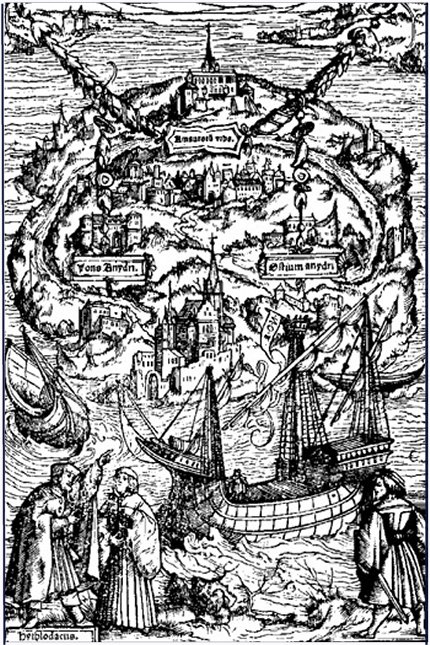 English: Woodcut by Ambrosius Holbein for the 1518...
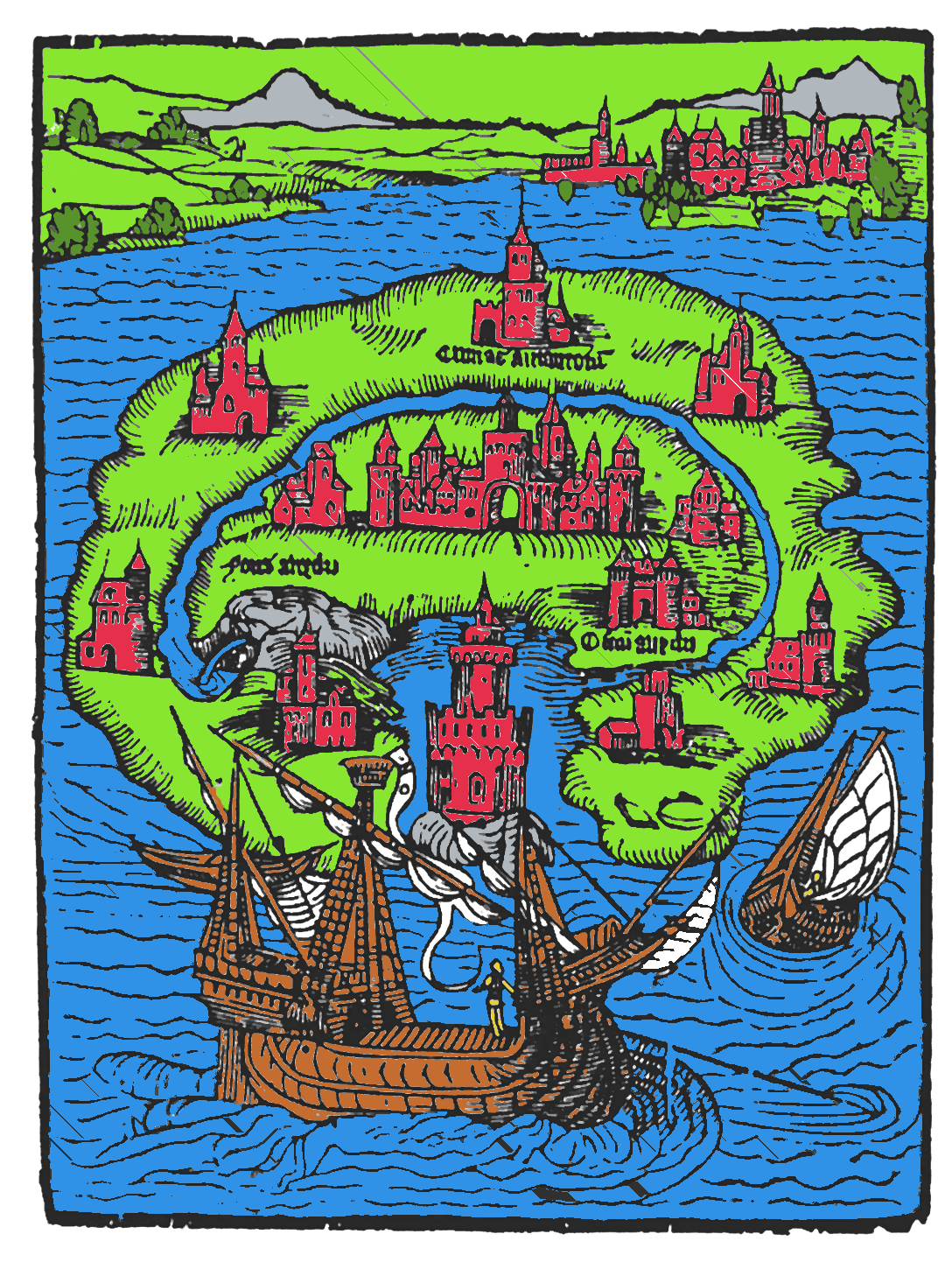 Deutsch: Titelholzschnitt aus Thomas Morus' Roman ...
 Deutsch: Titelholzschnitt aus Thomas Morus' Roman ...
In the survey that I have conducted, I stated situations based on the utopian ideas and principles of Thomas More. I asked the respondents to asses whether or not the statement is true. The respondents were asked to rate from strongly agree, agree, uncertain, agree, and disagree. Out of the thirty respondents, none of them agreed with any utopian idea and very few were uncertain. Hence, none of the respondents believe that something as good as utopia is probable.
Sir Thomas More was one of the most scholarly men during the Renaissance - an epoch in history when interests in arts, intellect, and new perspectives about the world flourished. His fascination and remarkable skill in humanities, Catholicism, and law merited him progressively more principal...