Vietnam is one of the most homogeneous societies in Southeast Asia. Although more than 60 different ethnic groups live in the country, ethnic Vietnamese constitute nearly 90% of the total population and are in the majority throughout the country except in the mountains. The Vietnamese are descended from peoples who settled in the Yuan delta area more than 3,000 years ago and later moved southward along the central coast into the Mekong delta. They speak Vietnamese, which exhibits many similarities to other tongues spoken in the region but is sometimes considered a separate language group (see Southeast Asian languages).
The so-called overseas Chinese, descended from ethnic Chinese who migrated into the country during the 17th and 18th centuries, settled for the most part in large cities and became involved in commerce, manufacturing, fishing, and coal mining. During the traditional and colonial periods the Chinese were placed under separate administration.
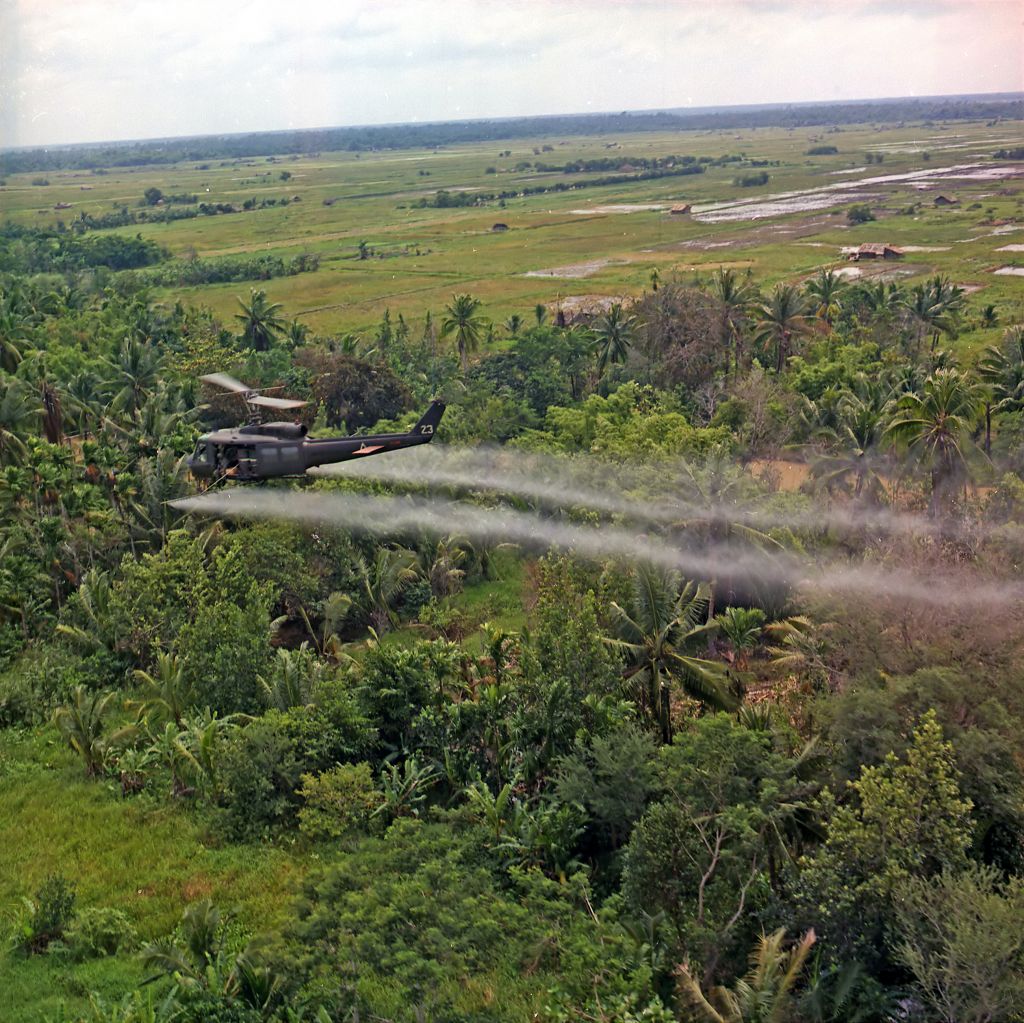 Vietnam. Defoliation Mission. A UH-1D helicopter f...
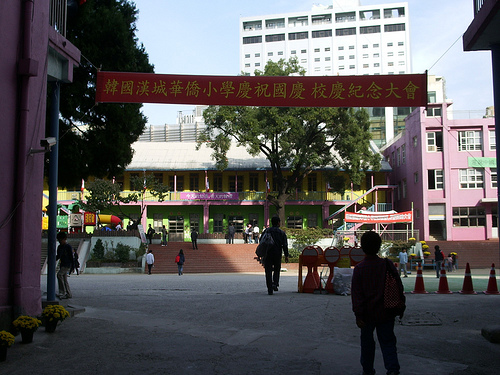 Seoul Chinese Elementary School 韓國漢城華僑...
 English:
Recent governments, however, have attempted to assimilate them. Thousands of ethnic Chinese fled abroad in 1978 in the wake of a government decision to nationalize commerce and industry in the south; about 2 million reportedly remain in the country.
Tribal peoples, sometimes referred to as Montagnards, number about 3 million. Descended from a wide variety of ethnic backgrounds, they live primarily in the Central Highlands and in the mountains of the north, where they practice slash-and-burn agriculture. Other smaller groups are the Khmer (about 500,000) and the Cham (about 50,000), remnants of ancient states absorbed by the Vietnamese during their southward expansion.
Although the majority of ethnic Vietnamese traditionally considered themselves Buddhist or Confucianism, there are about 3 million Roman Catholics, most of who now live in the south. Members of two religious sects, the Cao Dai (an amalgam of Eastern and Western traditions) and the Hoa Hao (a...