Violation of Human Rights in "The Crucible"
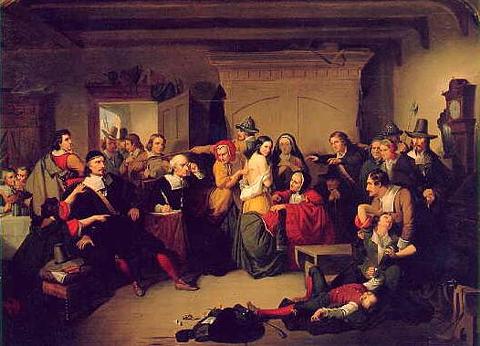
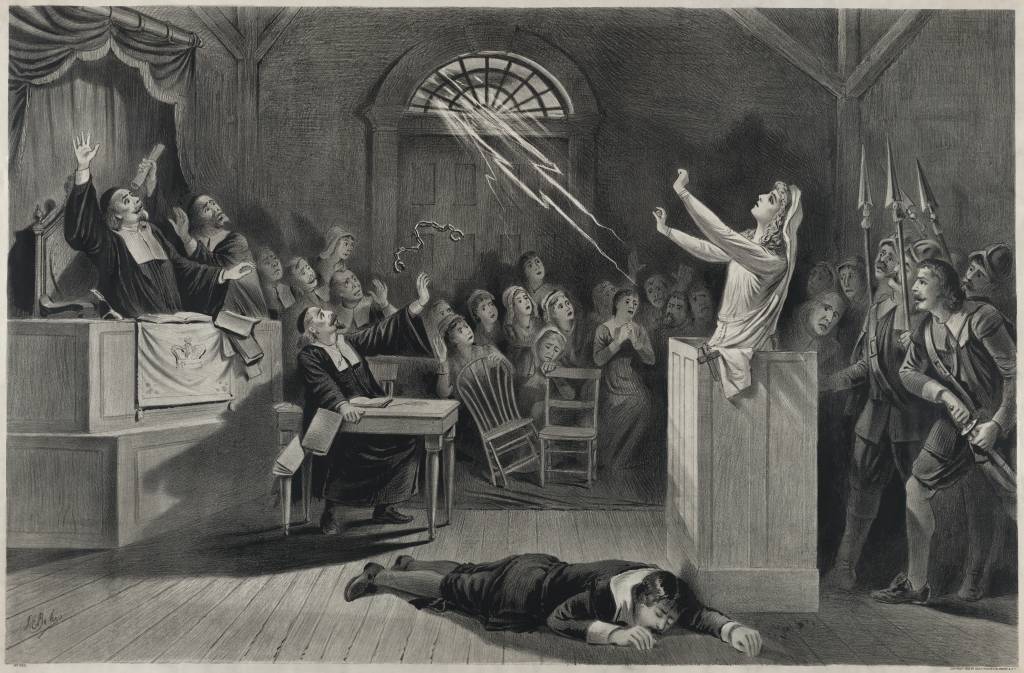
During the Salem witch trials, many violations of today´s Universal Declaration of Human Rights occurred. Inclusively, some are still being done today. Upon having a victim under an acusation, many articles were not respected. This is shown in the manner in which past time juries treated the accused. In my opinion, the articles that during those times were violated were article four, five, article six, and seventeen.
Article four presents the idea of preventing a cruel or unaccepted treatment towards the victim. It reads the following, 'no one shall be subjected to torture or to cruel, inhuman or degrading treatment or punishment'. During the witch trials in Salem, those who were declared guilty, depending on the charges he/she was accused of, the victim might suffer a punishment of being hanged, and one person suffered being crushed under rocks. If the declaration had been functioning during those past moments, it would have occured, most likely, that the victims of the illegal charge of witchcraft, might have been given a life-time jail sentence and not the death-penalty by being hanged or crushed.
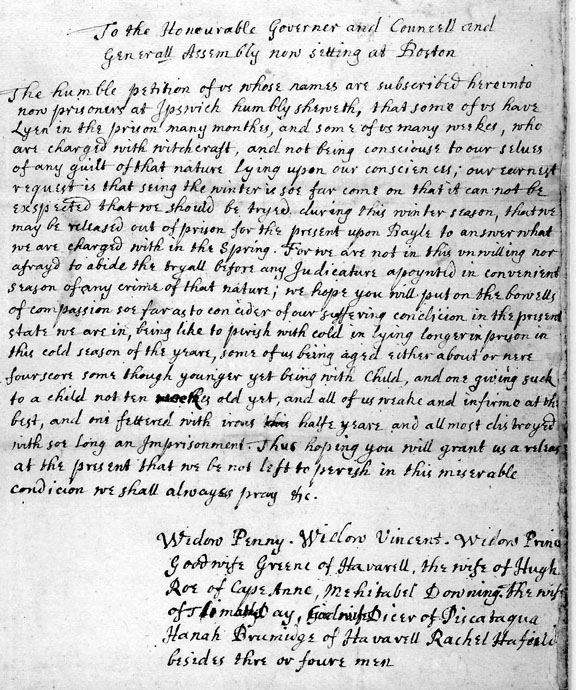
Another article that had been clearly violated during the Salem witch trials was article five, which states that 'everyone has the right to recognition everywhere as a person before the law'. Many thought of the women accused of practicing witchcraft to be diabolic and inhuman ; in fact, they were thought of human figures of the devil. This would clearly interfere with the judge´s veredict and it would be almost impossible for the victimis to save themselves from being condemned to death. If these victims of whom most were in their late fifties, had been seen as people who are just like us, they would have been saved from such destiny.
Article Six is also a great, and maybe the...
More Drama
essays:
The Crucible
... The Crucible, by Arthur Miller, is a play about the Salem Witch Trials, in Salem, Massachusetts, in the year 1692. In this play, the characters are obsessed with goodness, and evil. In the 17th century, it was not acceptable to be ... Trials, in Salem, Massachusetts, in the year 1692. In this play, the characters are obsessed with goodness, and evil. In the 17th century, it was not acceptable to be evil, or have evil thoughts. Most fun was also considered evil. Characters ...
Discusses characters in "The crucible" by Arthur Miller
... , a play by Arthur Miller that was first produced in 1953, is based on the true story of the Salem Witch Trials of 1692. Miller wrote the play to parallel the situations in the mid-twentieth century of Alger Hiss, Owen ... Putnams, driven by their need for revenge and their greed, contributed to the huge travesty of justice that was the Salem Witch Trails. The motive of Abigail Williams is equally easy to decipher. Abigail is the ringleader of the group of ...
The Transformation of John Proctor
... . By delaying approaching the courts, John is trying to increase his chance of having nothing to do with the Salem witch trials. When Hale is searching for a motive for why the girls might be lying about witchcraft, and Proctor doesn ... physical presence was gone, but his spiritual influence stayed behind. Through his death, he helped put an end to the witch trials, thus saving the lives of many innocent people, including his wife's. He may have lost his good reputation ...
Arthur Miller's The Crucible.
... 's social structure precipitated the murders of many innocent people. Arthur Miller's depiction of the Salem witch trials, The Crucible, deals with a community that starts out looking like it is tightly knit and church loving. It turns out that ... , then they were considered for the blame. The fear of what was unknown created uneasiness within Salem's population. The circumstances surrounding the witch trials gave residents something to blame the supernatural on. The condemning of Tituba was mainly due to ...
Imagine that you are an actor and have been asked to take on the role of 'Hale' in 'The Crucible'. Discuss how you would like to portray your character on the stage.
... of 'Reverend John Hale' in a stage production of 'The Crucible'. 'The crucible is a play based on the Salem witch trials, which took place in the sixteenth century, and is centred around the them of naming names and passing the ... witch trials, which took place in the sixteenth century, and is centred around the them of naming names and passing the blame. Arthur Miller wrote 'The Crucible', and I believe his purpose writing this play was to show the consequence of ...
The crucible 2
... failings including those mentioned above, fear, and hysteria. Reverend Parris is the character that initiates the hysteria of the Salem witch trials, in a community where authorities wasted no time minding the business of it’s citizens, what should have been ... the play and even the motives of Arthur Miller himself and therefore show how conflict stems from certain recognisable human failings including those mentioned above, fear, and hysteria. Reverend Parris is the character that initiates the hysteria of the Salem witch ...
Comparing events in history to
... they all occurred because the person behind the scenes wanted to have more power. Through the use of the Salem witch trials, Miller forces readers to deal with shameful episodes in 20th century history of the United States of America like ... and subversion.” (DiBacco et all, R47) All this person did was just scare many Americans just like in the Salem Witch trials. I guess that was McCarthy’s crucible, to make Americans think that a large amount of Communists worked for ...
An increasing problem on high
... search for other reasons and explanations for bad incidents has alway been present. The book, "The Crucible," by Arthur Miller, focuses on the Salem Witch trials. The book was written about the same time as the "Red Scare, " and the McCarthy ... we have psychologically evolved less than we actually believe, but the tendency for human beings to search for other reasons and explanations for bad incidents has alway been present. The book, "The Crucible," by Arthur Miller, focuses on the Salem Witch ...