I've read some numbers of feminism related essays and articles in my years as a student in the English department. A lot of times I felt like a minority in most scenarios since most of my classmates are female. I understand of course that it is not that simple issue of good and bad. But every time during discussions on the matter, I always feel a bit sorry for being "the evil men." These discussions are endlessly repetitive with most students condemning and criticizing men for being the biased and women being the sympathized. It wasn't long before I develop a sense of dread towards feminism. It's not because I disagree with the points or observations raised in these writings. They had interested and persuaded me in all ways possible. But my experience seems to be repeating themselves over and over as different feminists continues to attack and complain without giving any substantial resolutions.
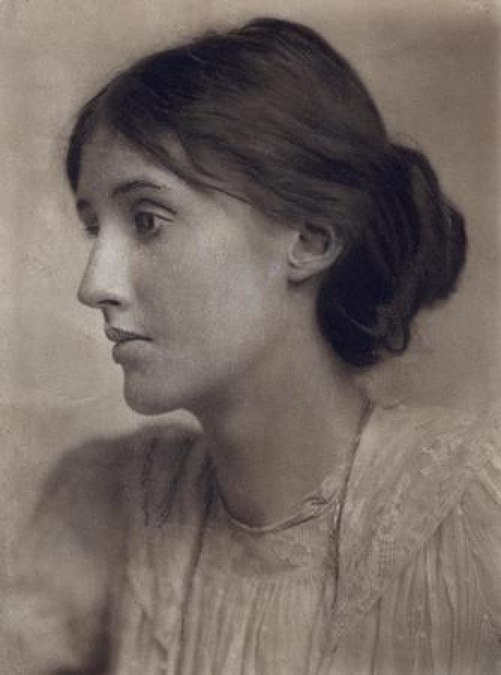 Portrait of Virginia Woolf by George Charles Beres...
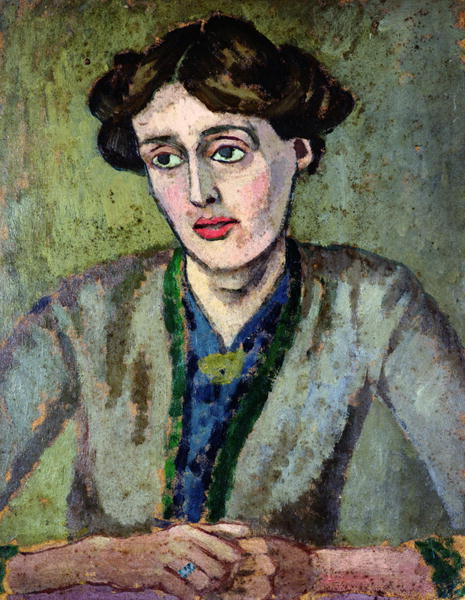 English: Portrait of Virginia Woolf
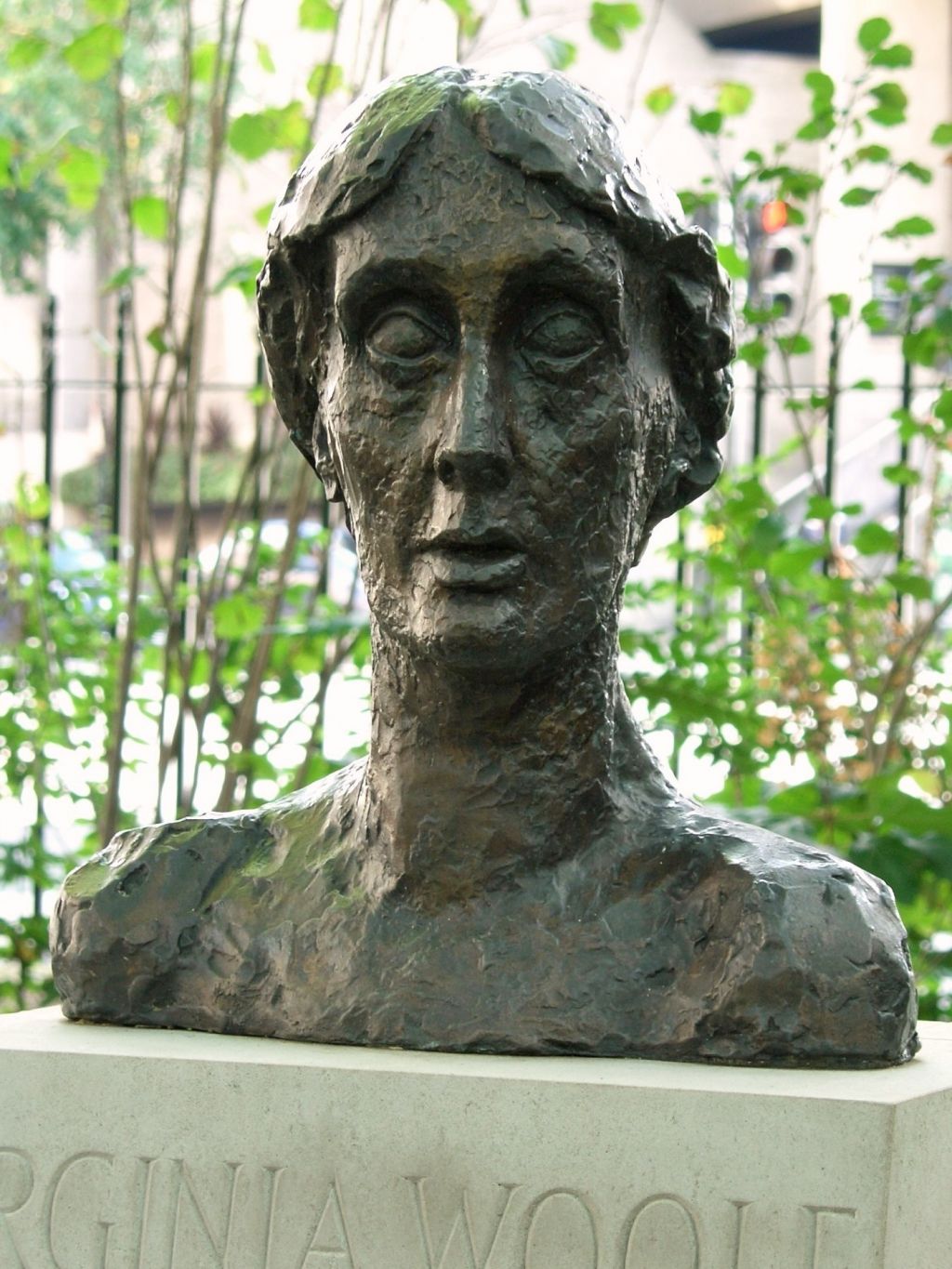 English: Bust of Virginia Woolf, Tavistock Square,...
Virginia Woolf is different. I didn't have much expectation before reading this article. Maybe in a way, I was blinded by my own phantom. Yet I find this reading experience much more intriguing. This is a writer that isn't afraid to admit her lacking of answers and limits of knowledge. She asks good questions instead of perpetual complaints. The essay is really a chance to understand her streams of thought on the matter. The logic of this essay is fairly straightforward and easy to follow. It isn't blinded by pure sentimentality that often is quite biased itself.
I find this essay significantly inspiring even by today's standards. It's timeless in its main idea, that of "the phantom." Maybe to women at that time, the phantom speaks to women only as "the Angel in the House." But I think to define it only as that is limiting its ideological potential. The phantom can be anything. Everyone, regardless of race, class, sex is haunted by their own phantoms. It represents an obstacle of the mind. It's something we as individuals have to learn to break in order to improve ourselves or refresh ourselves. When we do, it's enlightenment, it's liberation.
The phantom also symbolizes a stereotypical image projected by "the man"/ society which set limits on how we think and act. Woolf's phantom is an invisible standards not only in writings but living as a whole. She writes in the end that "Indeed it will be a long time, I think, before a woman can sit down to write a book without finding a phantom to be slain, a rock to be dashed against."For me, it's an ongoing dilemma between what's right and what's easy. As a university student, my life consists of assignments and exams. It's not difficult to turn in some paper with average grades. That's really all I need. A paper. Or should I really try my best to analyze something and speak honestly about it afterwards? Why bother though? I mean numerically speaking, it may just be 5 points of difference while risking the chance of turning in something that might displease everyone. That, in a way, is the phantom haunting me as a student. It's lurking behind me asking and provoking me to write what the professor wants, to give something that is exactly the same as others. An obvious answer. Supposedly, studying is never about grades, but about what we learn and what we take away from it on our own. But how many educators or students really take it that seriously anyway?One can almost say the same thing about life after school. The phantom here is working in the same manner by telling us what should be done and what makes us happy. Ultimately, most people take the easy, safe, expectable path. A steady income at a secure corporation, a normal family, a beautiful car, a nice house. Not a lot of people have the courage to stare at the phantom in the face and choke it to death.
There are other people out there who claim they are with lots of hearts, passion, and dreams but were forced to make certain decisions in their life due to reality. They claim that underneath, they are really unhappy but decide to sacrifice themselves to live for others. In this case, the phantom is our perception of reality because in the end it's not who you are underneath, but what you do that defines you. Perhaps that's why Woolf thought that "It is far harder to kill a phantom than a reality." It has always been your choice to decide how you want to live your life. Never blame others or "reality" for your decisions.
What I love about this article is that Woolf may stop here with this observation. And I think most writers would stop here, once again with no resolutions. It's enough of a critical statement for a paper. But Woolf knows that killing the phantom is merely the first step of the process. Once we take away what's always been there, what else is left? When "she had rid herself of falsehood, that young woman had only to be herself." But again what is "herself?" What does it mean to really be "yourself?" This is the "real" question. Woolf didn't give an answer. The reason for that isn't because she's really out of time. I think what she's trying to say is that from now on, it's a journey that people should take on their own. She can only show us the door, we as individuals are the ones that have to walk through it.
BibliographyNorton Anthology of English Literature, 8th Ed, Vol 2
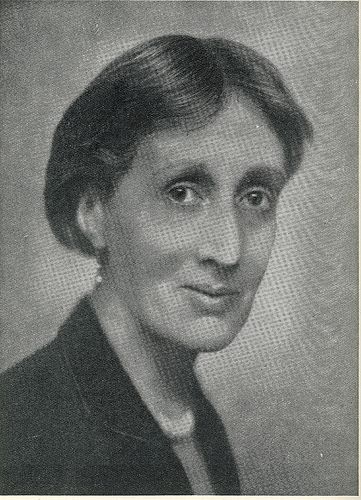 Virginia Woolf Smiling? Surely not…
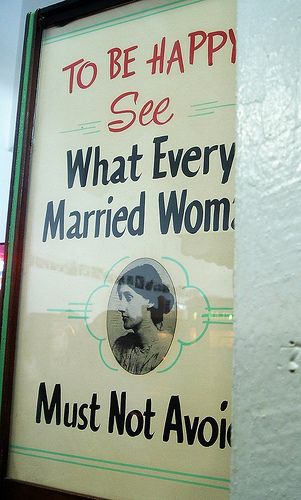 Virginia Woolf???
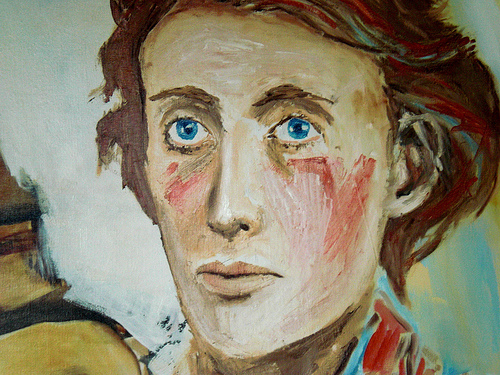 Virginia Woolf (Detail)