Symphony No. 40 in G Minor (K. 550)
I. Work Analysis
Being an admirer of the music of Wolfgang Amadeus Mozart, I chose to analyze Mozart's Symphony No. 40 in G Minor. An early analyst and critic of Mozart's music, Otto Jahn called the Symphony No. 40 "a symphony of pain and lamentation." Another critic said it was "nothing but joy and animation" (Kramer 480). While these two remarks may be used as extreme ways to interpret the symphony, its character and mood are captivating and touching.
The standard instrumentation for this piece includes woodwinds (flutes, oboes, clarinets, and bassoons), strings (violins, violas, cellos, and basses), and brass (horns). The instrumentation does not include any percussion or heavy brass. The horns are used sparingly, only to add density to the tone or emphasize the crescendos and sforzandos.
The symphony itself is comprised of four movements:
Movement One - Molto allegro
Movement Two - Andante
Movement Three - Allegretto
Movement Four - Allegro assai
The first movement of the symphony opens in a minor key with a piano but agitated principal theme that repeats itself throughout the movement.
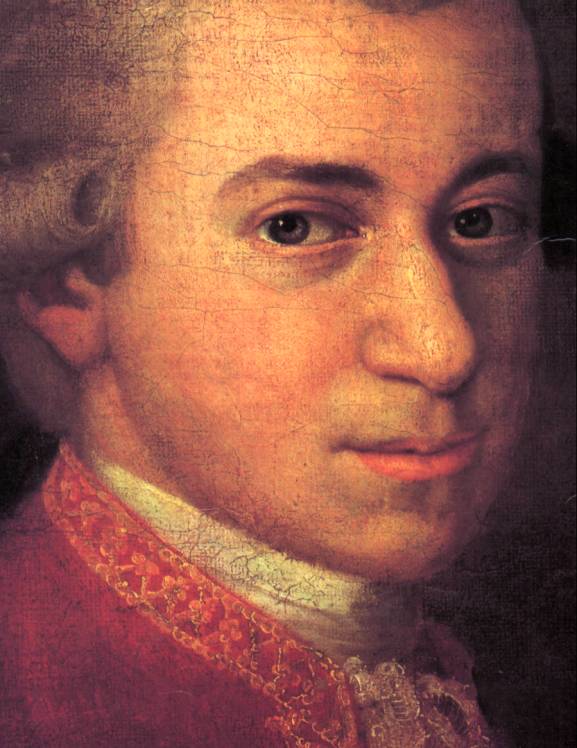 Mozart, about 1780. Detail of Mozart family portra...
 The above is regarded by historians as the most ac...
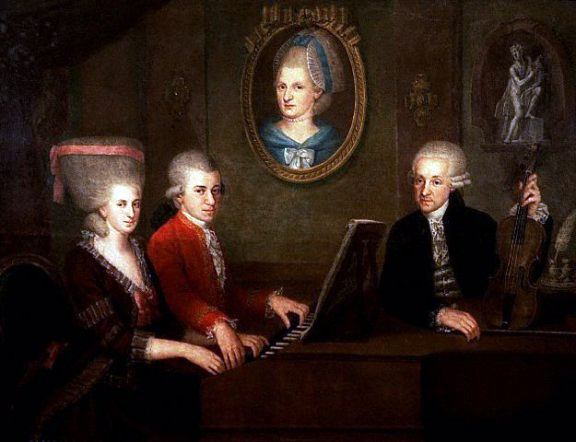 Family portrait: Maria Anna ("Nannerl") Mozart, he...
Such an opening is not a usual one; a listener may have expected some sort of an introduction to precede such a theme, but Mozart decides to omit any prelude, thereby establishing a certain feeling of restlessness or anxiety. The first movement exhibits frequent interchanges between piano and forte. Of all the sections of the first movement, only the development is played in a major key with disjunct motion. This, combined with other expressive elements, further contributes to the movement's general uneasy mood. The meter here is duple simple, and it remains constant throughout the movement. The first movement is presented in the Sonata-allegro form, with a motivic structure quality in...