When NASA was chartered in 1958, women had begun to make their mark, not
just in support roles, but also, as pioneer engineers, scientists, pilots, mathematicians and
technicians. The contribution of women to the mission of the National Aeronautics and
Space Administration dates back to NASA's predecessor, the National Advisory
Committee for Aeronautics (NACA). The contribution of women to flight and
aeronautics dates back almost to the first successful powered flight on December 17,
1903.
Destinies sometimes seem to reveal themselves early in a person's life. For
Annie Jump Cannon, her early fascination with stars and rainbows cast from prisms was
a clue to what her life's work would be. At sixteen, Annie was among the first of the
young women from Delaware to attend college. Although she displayed a talent for
music, she chose to focus her studies on physics at Wellesley College. Following
graduation, Annie also developed skills in the new art of photography, and traveled to
Spain to photograph the solar eclipse in 1892.
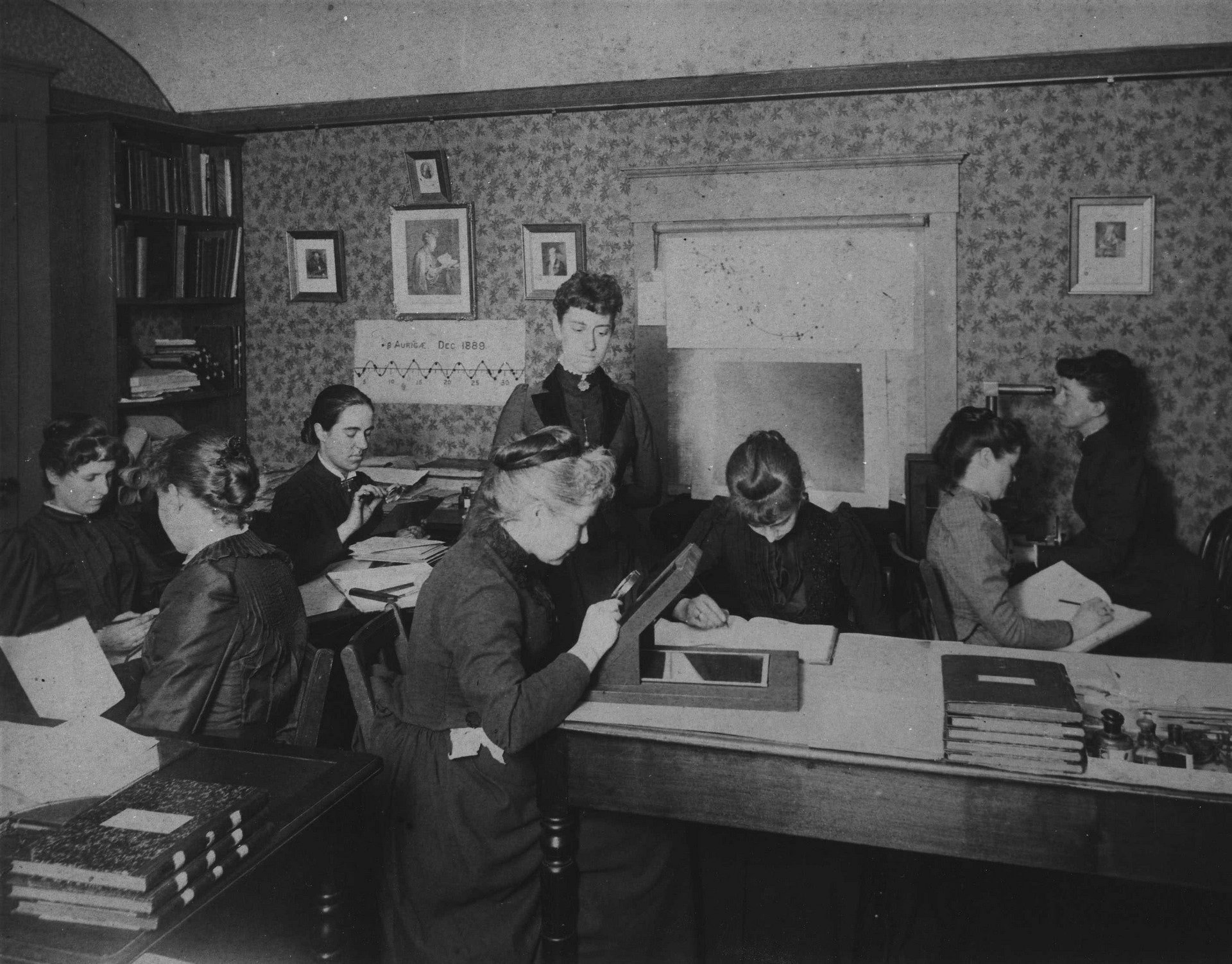 English: "Pickering's Harem," so-called, for the g...
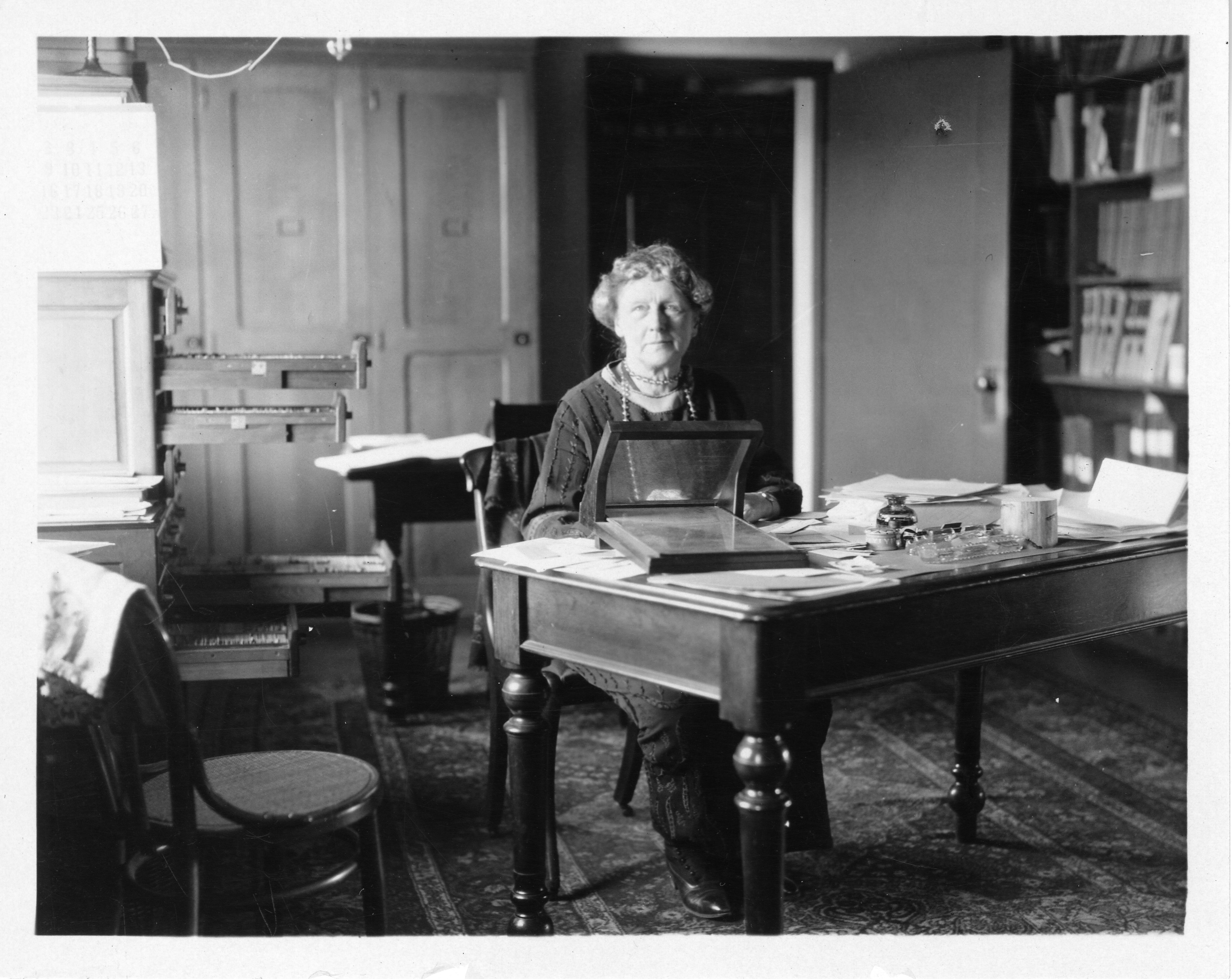 Annie Jump Cannon at her desk at the Harvard Colle...
 Lane Leavitt
Two years later, Annie Cannon returned to
Wellesley to assist in the physics lab. she studied mathematics and advanced physics, and
added courses in astronomy. With her interests in stars, photography and spectrums, she
was a natural for a career in astronomy, which she was beginning to realize.
In 1897, Annie Cannon joined the staff at the Harvard College Observatory, where she
was to work for over forty years. During her lifetime of studying spectrograms
Juarez2
(photographic plates), she learned to read the stars' spectra with ease. "They aren't just
streaks to me," she said. "Each new spectrum is the gateway to a wonderful new world. It
is almost as if the distant stars had really acquired speech and were able to tell of their
constitution and physical condition." Annie Cannon ultimately named...