Introduction
World War 1 was like nothing that had ever happened in the world before. Although it was inevitable, the horrific loss of life was pointless. Almost no-one except the politicians ruling agreed with it, which has been proven by soldier's diaries, and most famously the football match between the British and the Germans on Christmas Day 1914. All-in-all, World War 1 resulted in a revolution in infantry tactics which fundamentally altered how wars were fought. The armies which clashed in August 1914 operated on essentially 19th century doctrines, large units of riflemen were screened by cavalry and supported by artillery. Commanders were expecting decisive engagements to settle the war rapidly. The British, French, Germans, and Russians that marched off in war on August 1914 all assumed that the War would be over in a few months if not weeks. No one anticipated a struggle that would endure over 4 years.
 British trench near the Albert–Bapaume road at O...
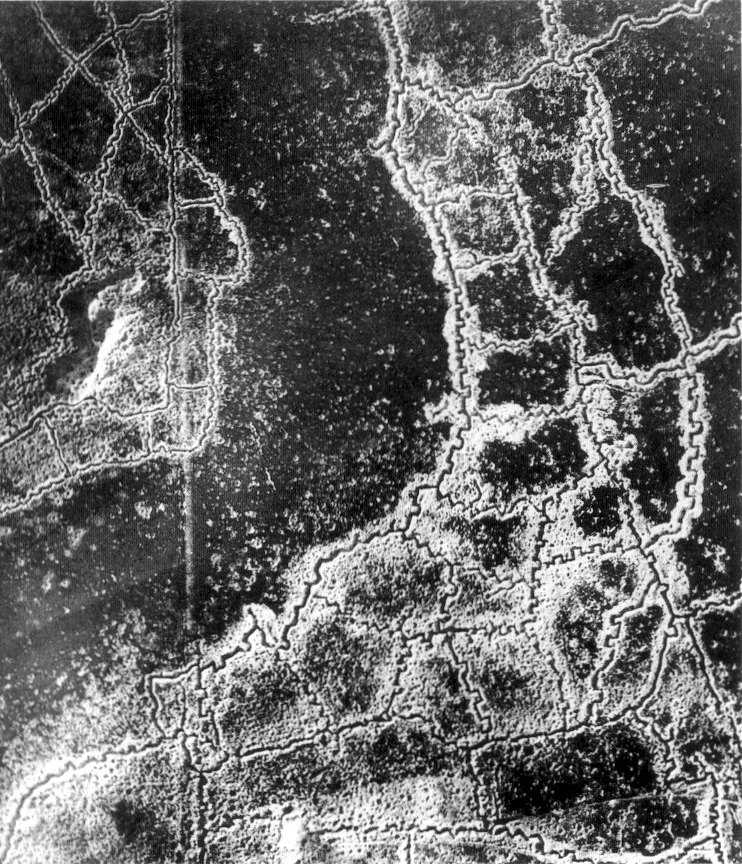 An aerial reconnaissance photograph of the opposin...
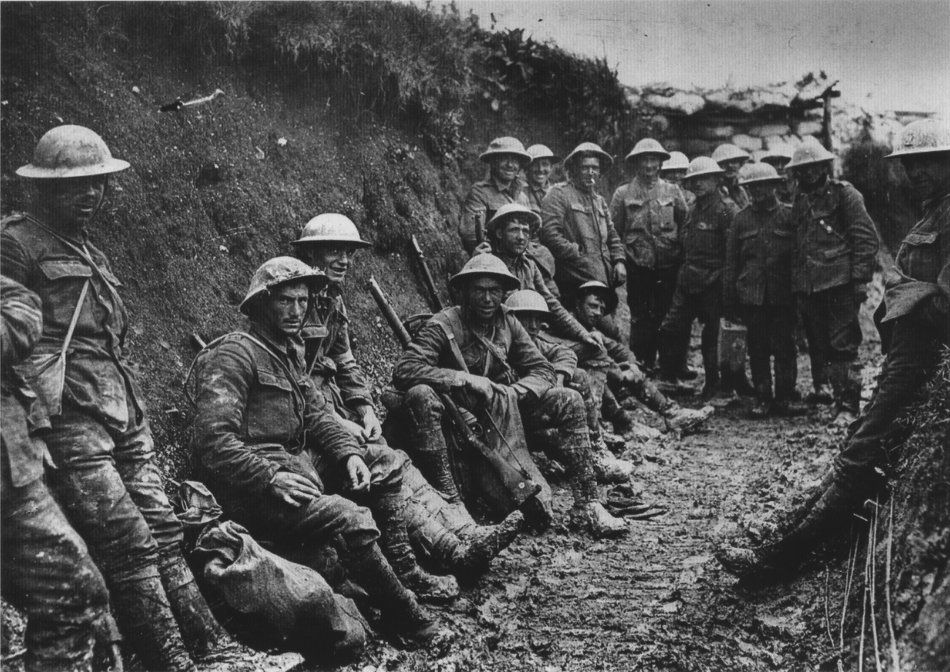 A ration party of the Royal Irish Rifles in a comm...
Sweeping maneuvers exposed the cavalry and infantry to the killing power of modern weapons. Modern weapons, especially artillery and machine guns as well as accurate rapid-fire rifles proved devastating, especially when used against the tactics field commanders employed in the initial phases of the War. Field operations by 1916 had, after the loss of millions, been fundamentally changed. The professional armies of 1914 were devastated and were replaced by conscripted replacements. What began as a rapid war of movement soon settled down to static trench warfare and became a brutal war of attrition. Both the Germans and the French and British began digging trenches to stay alive. Eventually parallel trench systems stretched from the Swiss border to the English Channel. There were about 40,000 kilometers of trenches on the Western Front alone. And so Trench warfare became the biggest part of World War 1...
Conditions in the Trenches...